
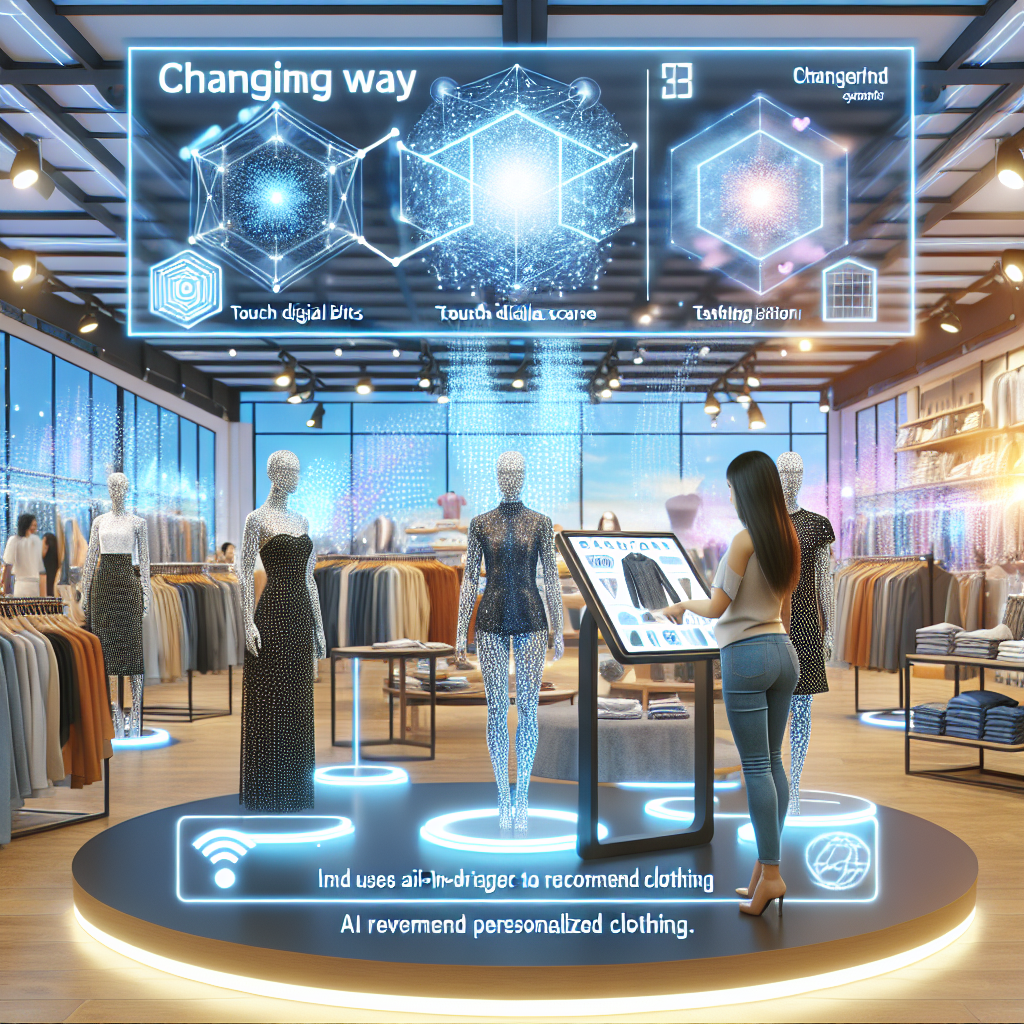
Artificial Intelligence (AI) has revolutionized many industries, and the fashion industry is no exception. From personalized recommendations to virtual try-on experiences, AI is changing the way we shop for clothes in ways we never imagined possible. In this article, we will explore the ways in which AI is transforming the fashion shopping experience and how it is reshaping the future of retail.
Personalized Recommendations
One of the most common applications of AI in the fashion industry is personalized recommendations. AI algorithms analyze a customer’s past purchases, browsing history, and preferences to suggest items that are most likely to appeal to them. This not only helps customers discover new and relevant products but also increases the likelihood of making a purchase.
By analyzing vast amounts of data, AI can create detailed customer profiles and predict future buying behaviors. This level of personalization helps retailers tailor their offerings to individual customers, leading to a more engaging shopping experience and higher conversion rates.
Virtual Try-On Experiences
Another exciting development in AI-driven fashion shopping is virtual try-on experiences. Using advanced computer vision technology, retailers can create virtual fitting rooms that allow customers to try on clothes virtually before making a purchase. This not only reduces the need for physical fitting rooms but also helps customers make more informed decisions about their purchases.
Virtual try-on experiences are particularly useful for online retailers, as they bridge the gap between the online and offline shopping experiences. Customers can see how clothes will look on them without having to visit a physical store, leading to a more seamless and convenient shopping experience.
Predictive Analytics
AI is also being used in fashion retail to predict trends and forecast demand. By analyzing social media trends, search patterns, and other data sources, AI algorithms can identify emerging trends and help retailers make informed decisions about their inventory and marketing strategies.
Predictive analytics can help retailers optimize their supply chain, reduce overstocking, and improve customer satisfaction. By accurately predicting demand, retailers can ensure that they have the right products in stock at the right time, leading to better sales and profitability.
Chatbots and Virtual Assistants
AI-powered chatbots and virtual assistants are becoming increasingly popular in the fashion industry. These bots can help customers find products, answer questions, and provide personalized recommendations in real-time. By leveraging natural language processing and machine learning algorithms, chatbots can simulate human-like conversations and provide a more engaging shopping experience.
Chatbots and virtual assistants are available 24/7, providing customers with instant support and assistance whenever they need it. This level of personalized service helps retailers build stronger relationships with their customers and improve customer satisfaction.
FAQs
Q: How does AI-powered personalized recommendations work?
A: AI algorithms analyze customer data, such as past purchases, browsing history, and preferences, to suggest items that are most likely to appeal to them. By creating detailed customer profiles and predicting future buying behaviors, AI can tailor recommendations to individual customers.
Q: What are the benefits of virtual try-on experiences?
A: Virtual try-on experiences allow customers to try on clothes virtually before making a purchase, reducing the need for physical fitting rooms and helping customers make more informed decisions. This technology bridges the gap between online and offline shopping experiences, leading to a more seamless and convenient shopping experience.
Q: How can predictive analytics help retailers?
A: Predictive analytics can help retailers predict trends and forecast demand, allowing them to optimize their supply chain, reduce overstocking, and improve customer satisfaction. By accurately predicting demand, retailers can ensure that they have the right products in stock at the right time, leading to better sales and profitability.
Q: How do chatbots and virtual assistants improve the shopping experience?
A: Chatbots and virtual assistants provide customers with instant support and assistance, helping them find products, answer questions, and provide personalized recommendations in real-time. By simulating human-like conversations, chatbots can provide a more engaging shopping experience and build stronger relationships with customers.