
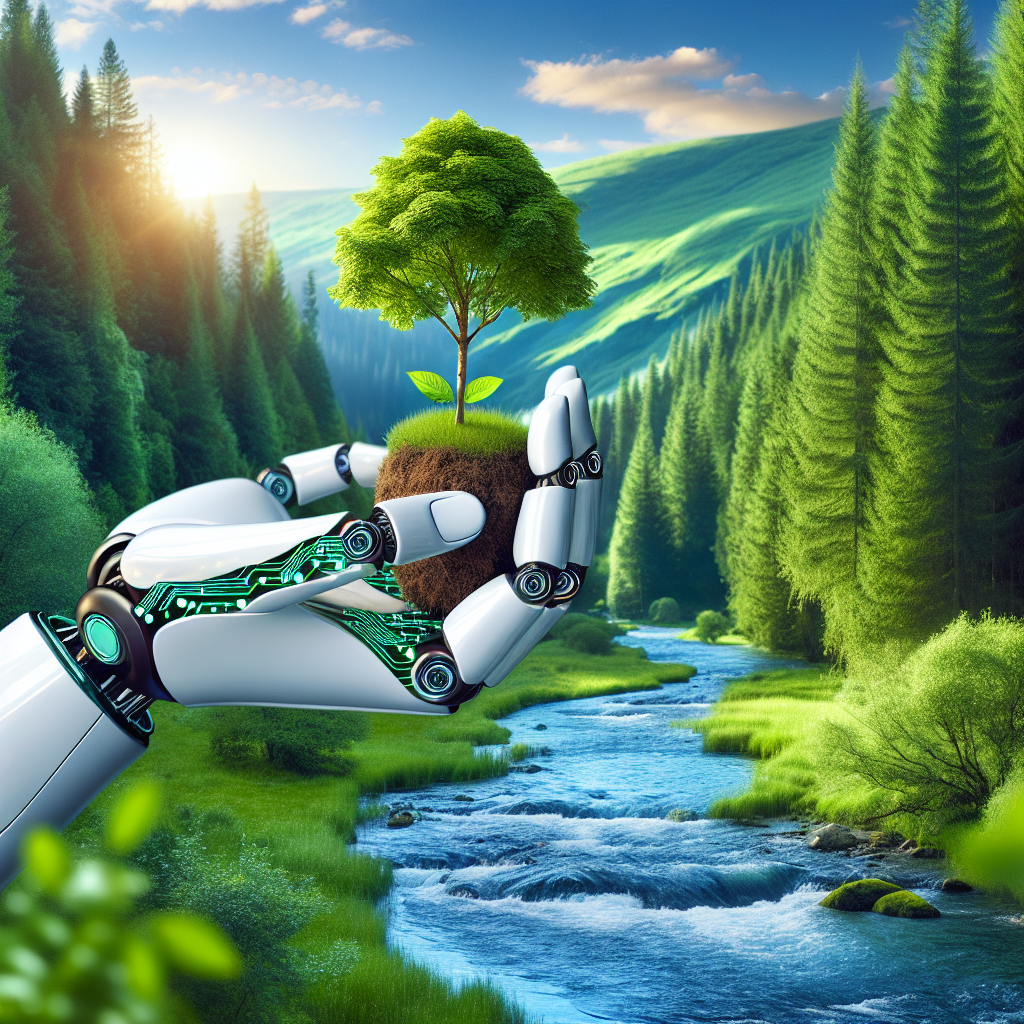
Implementing AI Deployment in Environmental Conservation
Artificial Intelligence (AI) is revolutionizing the way we approach environmental conservation. With the increasing threats of climate change, deforestation, pollution, and loss of biodiversity, AI technologies are being leveraged to enhance conservation efforts and protect our planet for future generations.
AI has the potential to provide valuable insights, automate processes, and optimize resource allocation in environmental conservation. From monitoring wildlife populations to predicting natural disasters, AI is being used in various applications to address environmental challenges. In this article, we will explore the benefits of implementing AI deployment in environmental conservation and how organizations can leverage AI technologies to achieve their conservation goals.
Benefits of AI Deployment in Environmental Conservation
1. Monitoring and Surveillance: AI technologies such as drones, satellite imagery, and sensors can be used to monitor and track wildlife populations, illegal poaching activities, and deforestation in real-time. AI algorithms can analyze vast amounts of data to detect patterns and anomalies, enabling conservationists to take timely action to protect endangered species and habitats.
2. Predictive Analytics: AI can be used to predict environmental changes and natural disasters such as wildfires, floods, and hurricanes. By analyzing historical data and environmental factors, AI algorithms can forecast potential risks and help authorities implement preventive measures to mitigate the impact of disasters on ecosystems and communities.
3. Conservation Planning: AI can assist in developing conservation strategies and land management plans by analyzing geospatial data, climate models, and biodiversity information. AI algorithms can optimize resource allocation, identify priority areas for conservation, and simulate the impact of different scenarios on ecosystems to inform decision-making processes.
4. Species Identification: AI technologies such as computer vision and machine learning can be used to identify species, track animal movements, and monitor biodiversity in the wild. By analyzing images and audio recordings, AI algorithms can classify species, estimate population sizes, and assess the health of ecosystems to guide conservation efforts.
5. Data Analysis and Insights: AI can process large datasets and extract valuable insights to inform conservation actions. By leveraging AI tools for data mining, pattern recognition, and predictive modeling, conservationists can gain a deeper understanding of environmental trends, threats, and opportunities to drive evidence-based decision-making.
6. Collaboration and Knowledge Sharing: AI can facilitate collaboration among conservation organizations, researchers, and policymakers by providing a platform for sharing data, best practices, and insights. By using AI-powered tools for communication, analysis, and visualization, stakeholders can work together to address complex environmental challenges and achieve common conservation goals.
Implementing AI Deployment in Environmental Conservation
To implement AI deployment in environmental conservation effectively, organizations need to follow a strategic approach that integrates AI technologies into existing conservation practices. Here are some key steps to consider when deploying AI in conservation efforts:
1. Define Conservation Goals: Start by identifying the conservation objectives, priorities, and challenges that AI technologies can help address. By understanding the specific needs of the environment and stakeholders, organizations can tailor AI solutions to meet conservation goals effectively.
2. Assess Data Availability: Evaluate the availability and quality of environmental data needed for AI deployment, such as satellite imagery, sensor data, field observations, and historical records. Identify gaps in data collection, storage, and analysis to ensure that AI algorithms have access to relevant information for decision-making.
3. Choose AI Tools and Techniques: Select AI technologies and algorithms that are suitable for the conservation tasks at hand, such as machine learning, deep learning, computer vision, and natural language processing. Consider the scalability, interpretability, and accuracy of AI models to ensure reliable results in conservation applications.
4. Build Partnerships and Capacity: Collaborate with AI experts, data scientists, and technology providers to develop customized solutions for environmental conservation. Build the capacity of conservation staff to use AI tools effectively through training, mentorship, and knowledge sharing to maximize the impact of AI deployment.
5. Pilot Projects and Evaluation: Implement small-scale pilot projects to test AI technologies in real-world conservation scenarios and evaluate their effectiveness in achieving conservation outcomes. Monitor performance metrics, feedback from stakeholders, and lessons learned to refine AI deployment strategies for broader adoption.
6. Scale-Up and Integration: Expand the use of AI technologies across multiple conservation programs, regions, and stakeholders to maximize the impact of AI deployment in environmental conservation. Integrate AI solutions with existing conservation tools, workflows, and systems to streamline data management, analysis, and decision-making processes.
Frequently Asked Questions (FAQs)
Q: What are the ethical considerations of using AI in environmental conservation?
A: Ethical considerations of using AI in environmental conservation include data privacy, bias in algorithms, transparency in decision-making, and accountability for AI outcomes. Organizations should uphold ethical standards, engage with stakeholders, and conduct impact assessments to ensure responsible AI deployment in conservation efforts.
Q: How can AI help address climate change and reduce greenhouse gas emissions?
A: AI can help address climate change by optimizing energy efficiency, predicting climate patterns, and monitoring carbon emissions. AI technologies can analyze climate data, optimize renewable energy systems, and support climate mitigation strategies to reduce greenhouse gas emissions and promote sustainable development.
Q: What are the challenges of implementing AI deployment in environmental conservation?
A: Challenges of implementing AI deployment in environmental conservation include data availability, technical expertise, funding constraints, regulatory barriers, and resistance to change. Organizations need to address these challenges through capacity building, collaboration, and innovation to leverage AI technologies effectively for conservation outcomes.
Q: How can AI support biodiversity conservation and protect endangered species?
A: AI can support biodiversity conservation by monitoring species populations, identifying habitat threats, and predicting species distributions. AI technologies can analyze genetic data, track animal movements, and assess ecosystem health to inform conservation actions and protect endangered species from extinction.
Q: What are some examples of successful AI deployment in environmental conservation?
A: Examples of successful AI deployment in environmental conservation include Wildbook for Wildlife, Global Forest Watch, Project Premonition, and ConservationFIT. These AI-powered platforms use machine learning, computer vision, and data analytics to monitor wildlife populations, track deforestation, predict disease outbreaks, and support conservation research worldwide.
In conclusion, implementing AI deployment in environmental conservation offers significant opportunities to enhance conservation efforts, protect ecosystems, and promote sustainability. By leveraging AI technologies for monitoring, predictive analytics, conservation planning, species identification, data analysis, and collaboration, organizations can achieve their conservation goals more effectively and efficiently. With the right strategies, partnerships, and capacity building, AI can play a crucial role in safeguarding our planet for future generations and preserving biodiversity for years to come.