
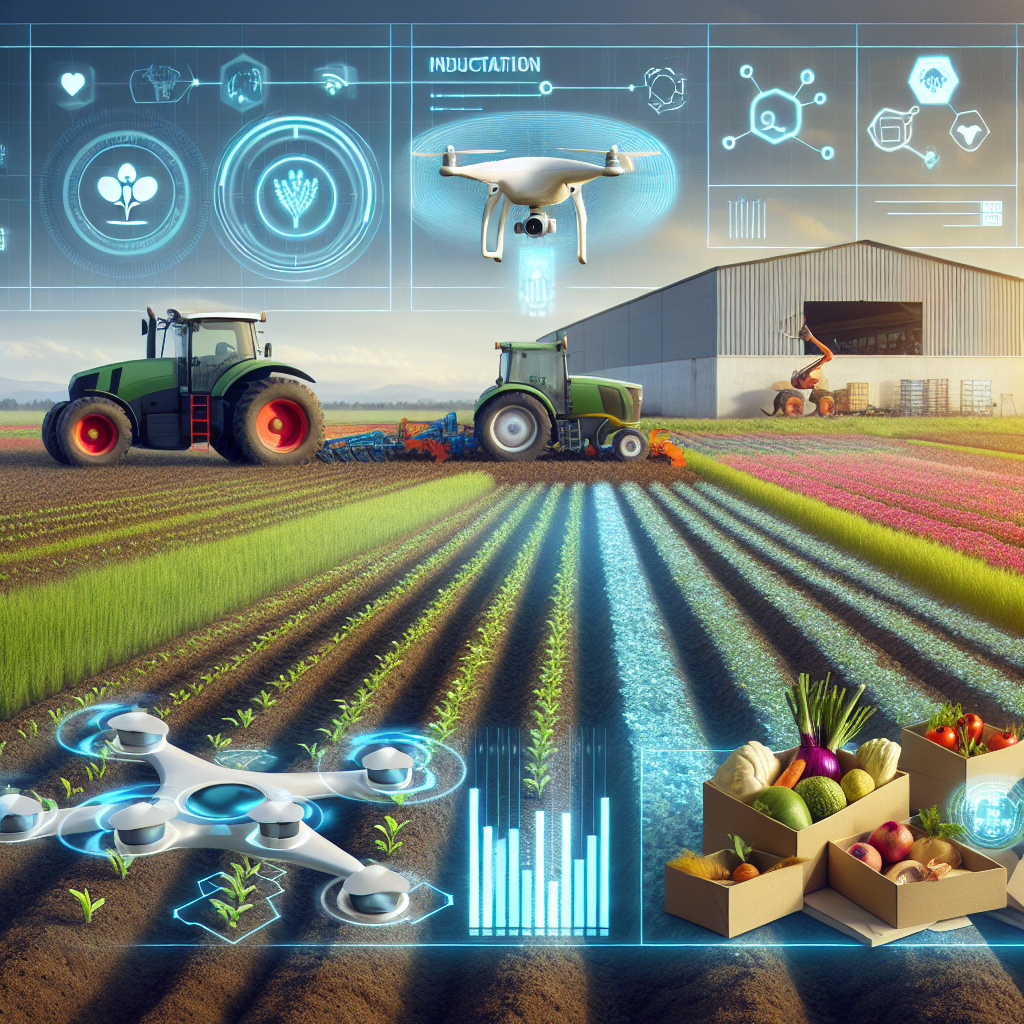
Artificial Intelligence (AI) is transforming various industries, and the food and agriculture supply chain is no exception. Implementing AI deployment in this sector can lead to improved efficiency, increased productivity, and better decision-making. In this article, we will explore the benefits of using AI in food and agriculture supply chains and provide insights on how to successfully implement AI technologies.
Benefits of AI Deployment in Food and Agriculture Supply Chains
1. Increased Efficiency: AI technologies can automate repetitive tasks such as inventory management, supply chain optimization, and forecasting. This can help streamline operations and reduce the time and resources required to complete these tasks.
2. Improved Decision-Making: AI algorithms can analyze and interpret vast amounts of data to provide valuable insights and predictions. This can help food and agriculture companies make informed decisions, such as when to plant crops, how to optimize distribution routes, and when to restock inventory.
3. Enhanced Product Quality: AI can monitor and analyze various factors that affect product quality, such as temperature, humidity, and storage conditions. This can help companies ensure that their products meet quality standards and reduce the risk of spoilage or contamination.
4. Cost Savings: By optimizing processes and reducing waste, AI deployment can help food and agriculture companies save costs. For example, AI-powered inventory management systems can prevent overstocking or stockouts, leading to reduced storage costs and increased profitability.
5. Sustainability: AI technologies can help food and agriculture companies minimize their environmental impact by optimizing resource usage, reducing waste, and improving sustainability practices. This can help companies meet sustainability goals and comply with regulations.
Implementing AI Deployment in Food and Agriculture Supply Chains
To successfully implement AI technologies in food and agriculture supply chains, companies need to follow a structured approach. Here are some key steps to consider:
1. Identify Pain Points: Start by identifying the specific challenges and pain points in your food and agriculture supply chain that AI can help address. This could include issues such as inventory management, supply chain optimization, quality control, or sustainability.
2. Set Clear Objectives: Define clear objectives and goals for implementing AI technologies in your supply chain. These objectives should be aligned with your overall business strategy and focus on improving efficiency, reducing costs, enhancing product quality, or achieving sustainability goals.
3. Choose the Right AI Technologies: There are various AI technologies that can be used in food and agriculture supply chains, such as machine learning, predictive analytics, computer vision, and natural language processing. Choose the technologies that best match your objectives and align with your existing infrastructure.
4. Data Collection and Preparation: AI technologies rely on high-quality data to provide accurate insights and predictions. Ensure that you have access to relevant data sources, such as production data, weather data, market trends, and customer feedback. Clean and prepare the data to ensure its accuracy and reliability.
5. Pilot Testing: Before fully deploying AI technologies in your supply chain, conduct pilot tests to evaluate their effectiveness and feasibility. Start with a small-scale pilot project to test the technology in a controlled environment and gather feedback from stakeholders.
6. Integration and Scaling: Once the pilot testing is successful, integrate AI technologies into your food and agriculture supply chain and scale up the deployment. Ensure that the technology is seamlessly integrated with existing systems and processes, and provide training to employees on how to use the technology effectively.
7. Monitor and Evaluate: Continuously monitor the performance of AI technologies in your supply chain and evaluate their impact on key performance indicators. Make adjustments as needed to optimize the technology and ensure that it continues to deliver value to your business.
Frequently Asked Questions (FAQs)
Q: What are some common AI technologies used in food and agriculture supply chains?
A: Some common AI technologies used in food and agriculture supply chains include machine learning, predictive analytics, computer vision, and natural language processing. These technologies can help companies optimize processes, improve decision-making, and enhance product quality.
Q: How can AI help food and agriculture companies improve sustainability practices?
A: AI technologies can help food and agriculture companies improve sustainability practices by optimizing resource usage, reducing waste, and minimizing environmental impact. For example, AI-powered supply chain optimization systems can help companies identify the most efficient distribution routes and reduce carbon emissions.
Q: What are the challenges of implementing AI technologies in food and agriculture supply chains?
A: Some challenges of implementing AI technologies in food and agriculture supply chains include data quality issues, integration with existing systems, employee training, and regulatory compliance. Companies need to address these challenges to ensure the successful deployment of AI technologies.
Q: How can companies measure the return on investment (ROI) of AI deployment in food and agriculture supply chains?
A: Companies can measure the ROI of AI deployment in food and agriculture supply chains by tracking key performance indicators such as cost savings, productivity improvements, quality enhancements, and sustainability gains. By comparing these metrics before and after implementing AI technologies, companies can quantify the impact of AI deployment.
In conclusion, implementing AI deployment in food and agriculture supply chains can bring numerous benefits, including increased efficiency, improved decision-making, enhanced product quality, cost savings, and sustainability. By following a structured approach and choosing the right AI technologies, companies can successfully integrate AI into their supply chains and drive innovation and growth in the industry.