
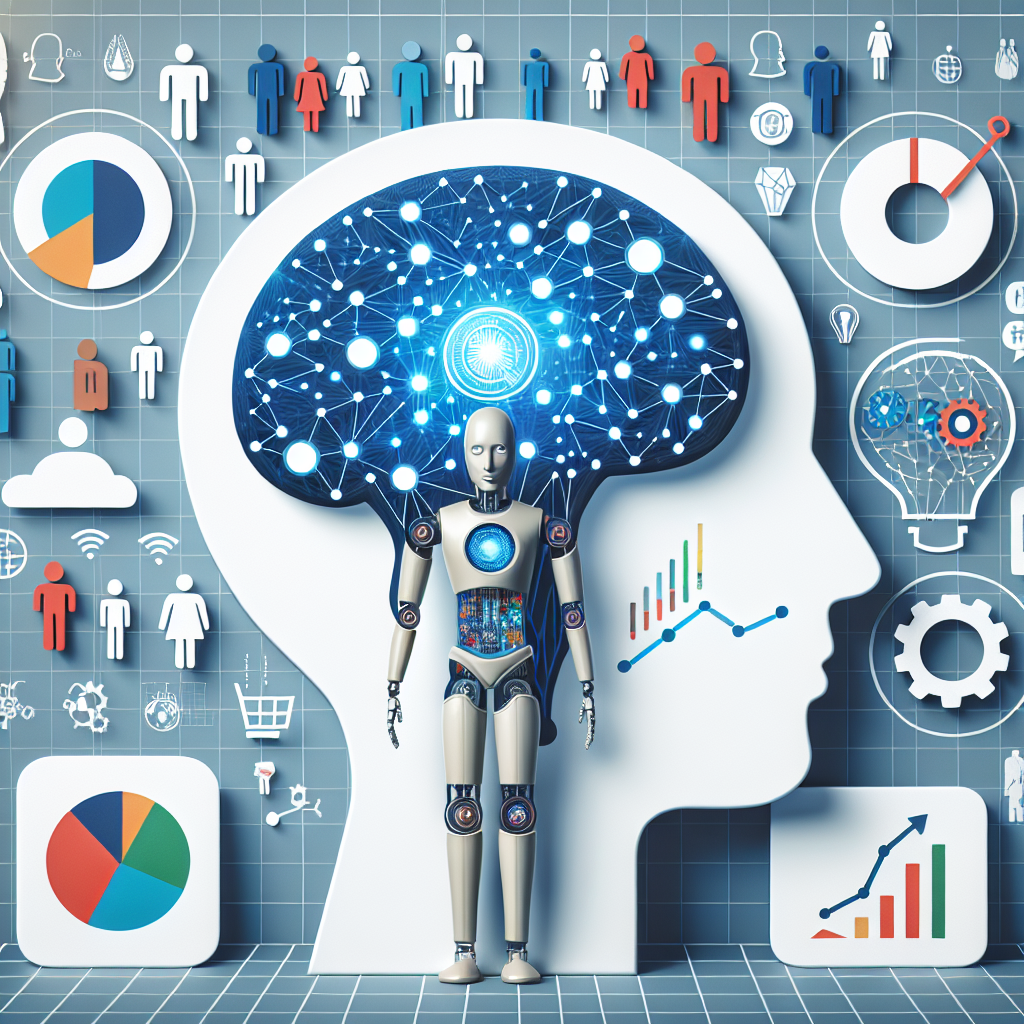
In today’s competitive business landscape, organizations are constantly seeking ways to gain a competitive edge and drive customer engagement. One effective strategy that many companies are turning to is implementing artificial intelligence (AI) in customer segmentation for marketing. By leveraging AI technology, businesses can gain valuable insights into their customer base, tailor their marketing strategies, and ultimately increase customer retention and revenue.
Customer segmentation is the process of dividing customers into groups based on common characteristics such as demographics, behavior, or preferences. This allows businesses to create targeted marketing campaigns that are more likely to resonate with specific customer segments. Traditionally, customer segmentation has been done manually, which can be time-consuming and prone to human error. However, AI technology is revolutionizing this process by automating the segmentation process and enabling businesses to gain deeper insights into their customer base.
There are several ways in which AI can be used to improve customer segmentation for marketing purposes. One common method is through machine learning algorithms, which can analyze large amounts of data to identify patterns and trends in customer behavior. By analyzing data such as purchase history, browsing behavior, and social media interactions, AI algorithms can identify distinct customer segments and predict future purchasing behavior.
Another way in which AI can enhance customer segmentation is through predictive analytics. By using historical data to predict future customer behavior, businesses can identify high-value customers, target them with personalized marketing campaigns, and ultimately increase revenue. For example, AI algorithms can predict which customers are most likely to churn and proactively reach out to them with targeted offers to retain their business.
AI technology can also be used to enhance customer segmentation by enabling real-time personalization. By analyzing customer data in real-time, businesses can deliver personalized marketing messages and offers to customers based on their current preferences and behavior. This can help businesses to increase customer engagement, drive conversions, and ultimately improve the customer experience.
Overall, implementing AI in customer segmentation for marketing can provide businesses with a number of benefits, including:
1. Improved targeting: AI algorithms can identify distinct customer segments and target them with personalized marketing campaigns that are more likely to resonate with their preferences and behavior.
2. Increased revenue: By targeting high-value customers with personalized offers and promotions, businesses can increase sales and revenue.
3. Enhanced customer experience: By delivering personalized marketing messages and offers to customers, businesses can improve the customer experience and drive customer loyalty.
4. Real-time insights: AI technology enables businesses to analyze customer data in real-time, allowing them to make data-driven decisions and adjust their marketing strategies on the fly.
While implementing AI in customer segmentation for marketing can provide businesses with a number of benefits, there are also some challenges to consider. One of the main challenges is ensuring the accuracy and reliability of AI algorithms. AI algorithms rely on large amounts of data to make predictions, and if the data is incomplete or inaccurate, the algorithms may produce unreliable results. Businesses must therefore invest in high-quality data collection and data cleaning processes to ensure the accuracy of their AI algorithms.
Another challenge to consider is the potential for bias in AI algorithms. AI algorithms are only as good as the data they are trained on, and if the data is biased, the algorithms may produce biased results. Businesses must therefore be mindful of the potential for bias in their data and take steps to mitigate it, such as using diverse training data and regularly auditing their algorithms for bias.
Despite these challenges, the benefits of implementing AI in customer segmentation for marketing far outweigh the risks. By leveraging AI technology, businesses can gain valuable insights into their customer base, tailor their marketing strategies, and ultimately increase customer retention and revenue. As AI technology continues to evolve, businesses that embrace AI in their marketing strategies will be well-positioned to stay ahead of the competition and drive success in today’s digital economy.
FAQs:
1. What is AI customer segmentation?
AI customer segmentation is the process of dividing customers into groups based on common characteristics such as demographics, behavior, or preferences using artificial intelligence technology. By leveraging AI algorithms, businesses can gain deeper insights into their customer base and create targeted marketing campaigns that are more likely to resonate with specific customer segments.
2. How does AI improve customer segmentation?
AI technology can improve customer segmentation in several ways, including through machine learning algorithms that can analyze large amounts of data to identify patterns and trends in customer behavior, predictive analytics that can predict future customer behavior, and real-time personalization that can deliver personalized marketing messages and offers to customers based on their current preferences and behavior.
3. What are the benefits of implementing AI in customer segmentation for marketing?
Some of the benefits of implementing AI in customer segmentation for marketing include improved targeting, increased revenue, enhanced customer experience, and real-time insights. By leveraging AI technology, businesses can gain valuable insights into their customer base, tailor their marketing strategies, and ultimately increase customer retention and revenue.
4. What are the challenges of implementing AI in customer segmentation for marketing?
Some of the challenges of implementing AI in customer segmentation for marketing include ensuring the accuracy and reliability of AI algorithms and mitigating bias in AI algorithms. Businesses must invest in high-quality data collection and data cleaning processes to ensure the accuracy of their AI algorithms, and take steps to mitigate bias in their data and algorithms.
5. How can businesses mitigate bias in AI algorithms?
Businesses can mitigate bias in AI algorithms by using diverse training data, regularly auditing their algorithms for bias, and implementing processes for transparency and accountability. By taking steps to mitigate bias in their data and algorithms, businesses can ensure that their AI customer segmentation efforts are fair and accurate.