
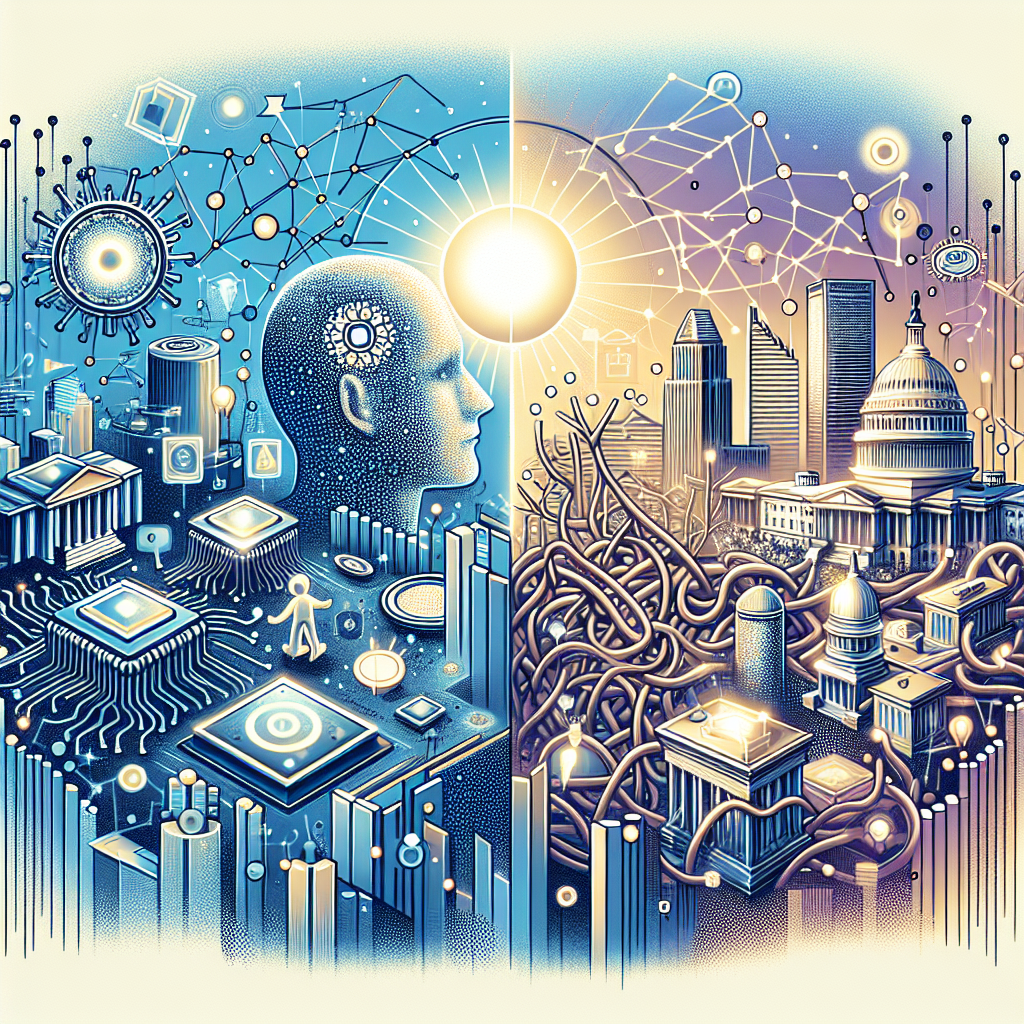
Implementing AI in Government: Opportunities and Challenges
Artificial Intelligence (AI) is revolutionizing the way governments operate, offering new opportunities to improve efficiency, effectiveness, and service delivery. From predictive analytics to virtual assistants, AI has the potential to transform the public sector and empower governments to better serve their citizens. However, there are also challenges and risks associated with implementing AI in government. In this article, we will explore the opportunities and challenges of using AI in the public sector and discuss how governments can navigate the complexities of this emerging technology.
Opportunities of Implementing AI in Government
1. Improved Efficiency: AI can automate routine tasks and processes, allowing government agencies to operate more efficiently and deliver services faster. For example, AI-powered chatbots can handle citizen inquiries and requests, reducing the workload on government staff and improving response times.
2. Enhanced Decision-Making: AI algorithms can analyze vast amounts of data and provide insights that can inform policy decisions and resource allocation. By leveraging AI for data analysis, governments can make more informed and evidence-based decisions.
3. Predictive Analytics: AI can help governments predict and prevent future problems by analyzing historical data and identifying patterns and trends. For example, AI can be used to predict demand for public services, detect fraud, or identify areas at risk of natural disasters.
4. Personalized Services: AI can enable governments to deliver personalized services to citizens based on their preferences and needs. For example, AI can recommend relevant information or services to citizens based on their interactions with government websites and platforms.
5. Cost Savings: By automating routine tasks and processes, AI can help governments reduce operational costs and improve resource efficiency. For example, AI-powered systems can optimize energy consumption in government buildings or streamline procurement processes.
Challenges of Implementing AI in Government
1. Data Privacy and Security: AI systems rely on vast amounts of data to function effectively, raising concerns about data privacy and security. Governments must ensure that they have robust data protection measures in place to safeguard sensitive information and comply with relevant regulations.
2. Bias and Fairness: AI algorithms can perpetuate existing biases in data and decision-making, leading to discriminatory outcomes. Governments must be vigilant in addressing bias and ensuring that AI systems are fair and transparent in their operations.
3. Skills Gap: Implementing AI in government requires specialized skills and expertise that may be lacking in the public sector. Governments will need to invest in training programs and partnerships with the private sector to build AI capabilities within their organizations.
4. Ethical Considerations: AI raises complex ethical questions, such as accountability, transparency, and the impact on society. Governments must grapple with these ethical considerations and ensure that AI is used responsibly and in the public interest.
5. Public Trust: Building public trust in AI is crucial for its successful implementation in government. Citizens may be wary of AI-powered systems due to concerns about privacy, bias, and job displacement. Governments must engage with citizens and stakeholders to address these concerns and build trust in AI.
FAQs
Q: What are some examples of AI applications in government?
A: Some examples of AI applications in government include predictive analytics for crime prevention, chatbots for citizen services, facial recognition for law enforcement, and sentiment analysis for public opinion monitoring.
Q: How can governments ensure transparency and accountability in AI systems?
A: Governments can ensure transparency and accountability in AI systems by making their algorithms and decision-making processes open to scrutiny, conducting regular audits of AI systems, and establishing clear lines of responsibility for AI operations.
Q: How can governments address bias in AI algorithms?
A: Governments can address bias in AI algorithms by ensuring diverse and representative data sets, monitoring AI systems for discriminatory outcomes, and implementing bias mitigation techniques such as algorithmic fairness testing.
Q: What are the key considerations for governments when implementing AI?
A: Key considerations for governments when implementing AI include data privacy and security, bias and fairness, skills development, ethical considerations, and building public trust in AI.
In conclusion, implementing AI in government offers a range of opportunities to improve efficiency, effectiveness, and service delivery. However, governments must also navigate the challenges and risks associated with this emerging technology to ensure that AI is used responsibly and in the public interest. By addressing issues such as data privacy, bias, skills development, ethics, and public trust, governments can harness the full potential of AI to better serve their citizens and communities.