
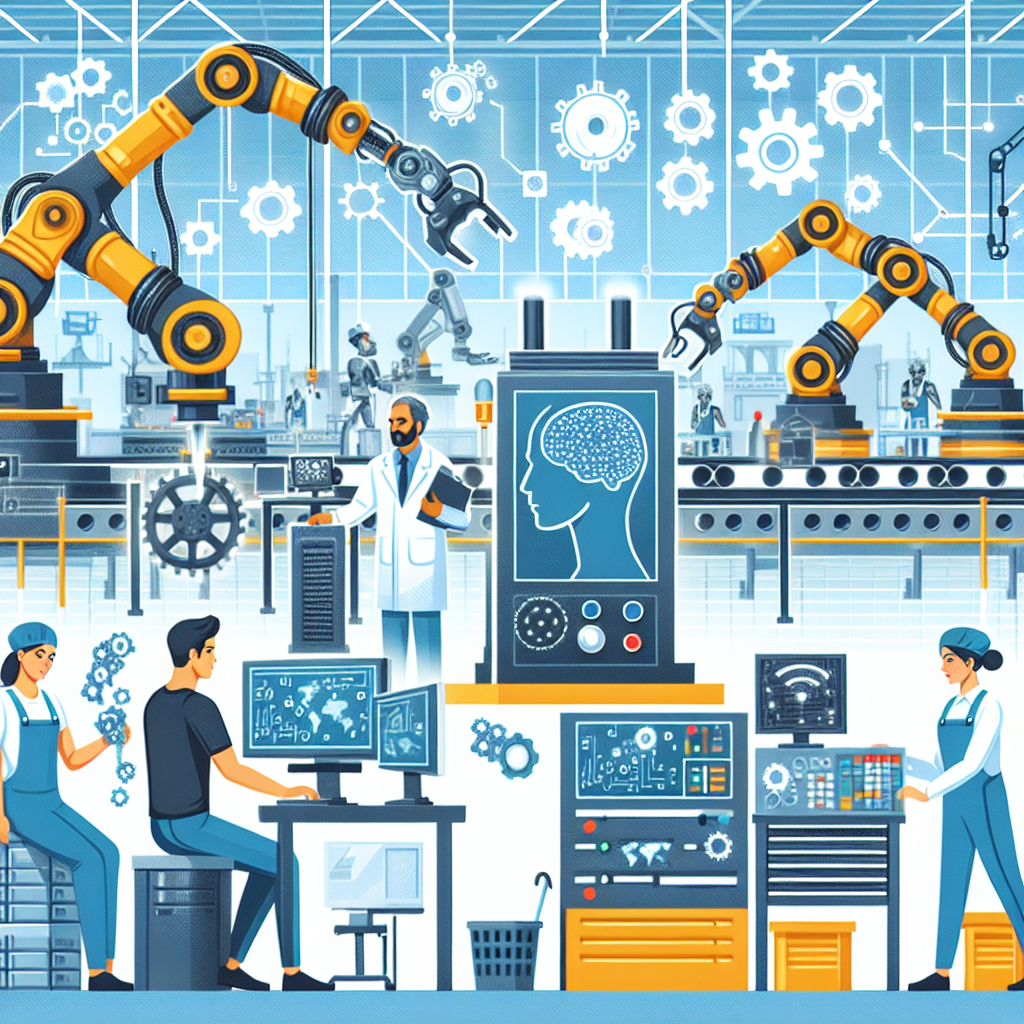
Artificial Intelligence (AI) has been revolutionizing various industries, and the manufacturing sector is no exception. AI has the potential to transform the manufacturing workforce by automating operations, optimizing processes, and improving efficiency. Implementing AI in the manufacturing workforce can lead to cost savings, increased productivity, and better decision-making. In this article, we will discuss the benefits of implementing AI in the manufacturing workforce, the challenges that may arise, and how companies can successfully integrate AI into their operations.
Benefits of Implementing AI in the Manufacturing Workforce
1. Increased Efficiency: AI can help manufacturers streamline their operations by automating repetitive tasks and optimizing processes. This can lead to increased productivity, reduced downtime, and faster time-to-market.
2. Cost Savings: By automating tasks that were previously done manually, AI can help reduce labor costs and improve resource utilization. AI can also help manufacturers identify areas where costs can be reduced, such as through predictive maintenance and inventory management.
3. Improved Quality: AI can help manufacturers improve the quality of their products by detecting defects early in the production process. AI-powered quality control systems can identify issues that may not be visible to the human eye, leading to higher-quality products and reduced waste.
4. Enhanced Decision-Making: AI can provide manufacturers with real-time data and insights that can help them make better decisions. By analyzing large amounts of data, AI can identify patterns and trends that can help manufacturers optimize production processes and respond quickly to changes in the market.
Challenges of Implementing AI in the Manufacturing Workforce
While the benefits of implementing AI in the manufacturing workforce are clear, there are also challenges that companies may face when integrating AI into their operations. Some of the key challenges include:
1. High Initial Investment: Implementing AI in the manufacturing workforce requires a significant upfront investment in technology, training, and infrastructure. Companies may need to allocate resources and budget for AI implementation, which can be a barrier for some organizations.
2. Data Security and Privacy Concerns: AI systems rely on large amounts of data to operate effectively. Companies need to ensure that they have robust data security measures in place to protect sensitive information. In addition, companies must comply with data privacy regulations to avoid potential legal issues.
3. Workforce Reskilling: Implementing AI in the manufacturing workforce may require employees to learn new skills and adapt to new technologies. Companies need to provide training and support to help employees transition to a more AI-driven work environment.
4. Integration with Existing Systems: Integrating AI into existing manufacturing systems can be complex and time-consuming. Companies need to ensure that AI systems can communicate effectively with other systems and processes to avoid disruptions in operations.
How to Successfully Implement AI in the Manufacturing Workforce
Despite the challenges, many companies are successfully implementing AI in the manufacturing workforce and reaping the benefits. Here are some key strategies for successfully integrating AI into manufacturing operations:
1. Start with a Clear Strategy: Before implementing AI in the manufacturing workforce, companies should develop a clear strategy that outlines their goals, objectives, and expected outcomes. This strategy should include a roadmap for implementation, a timeline for deployment, and key performance indicators to measure success.
2. Identify Use Cases: Companies should identify specific use cases where AI can add value to their manufacturing operations. This could include predictive maintenance, quality control, supply chain optimization, or inventory management. By focusing on specific use cases, companies can demonstrate the value of AI to stakeholders and build momentum for further adoption.
3. Invest in Training and Education: To ensure the successful implementation of AI in the manufacturing workforce, companies should invest in training and education for employees. This could include workshops, seminars, online courses, and on-the-job training to help employees develop the skills they need to work effectively with AI technologies.
4. Collaborate with AI Experts: Companies may benefit from partnering with AI experts, consultants, or technology providers to help them implement AI in their manufacturing operations. These experts can provide guidance, support, and technical expertise to ensure a smooth and successful implementation.
5. Monitor and Evaluate Performance: Once AI systems are deployed in the manufacturing workforce, companies should monitor and evaluate their performance regularly. This could include tracking key performance indicators, analyzing data, and gathering feedback from employees. By monitoring performance, companies can identify areas for improvement and make adjustments as needed.
FAQs
Q: What are some common applications of AI in the manufacturing workforce?
A: Some common applications of AI in the manufacturing workforce include predictive maintenance, quality control, supply chain optimization, inventory management, and process optimization.
Q: How can AI help improve efficiency in manufacturing operations?
A: AI can help improve efficiency in manufacturing operations by automating repetitive tasks, optimizing processes, reducing downtime, and streamlining operations.
Q: What are some challenges companies may face when implementing AI in the manufacturing workforce?
A: Some challenges companies may face when implementing AI in the manufacturing workforce include high initial investment, data security and privacy concerns, workforce reskilling, and integration with existing systems.
Q: How can companies ensure the successful implementation of AI in the manufacturing workforce?
A: Companies can ensure the successful implementation of AI in the manufacturing workforce by developing a clear strategy, identifying use cases, investing in training and education, collaborating with AI experts, and monitoring and evaluating performance.
In conclusion, implementing AI in the manufacturing workforce offers numerous benefits, including increased efficiency, cost savings, improved quality, and enhanced decision-making. While there are challenges to overcome, companies that develop a clear strategy, identify use cases, invest in training, collaborate with experts, and monitor performance can successfully integrate AI into their operations. By embracing AI technologies, manufacturers can stay competitive, drive innovation, and achieve sustainable growth in the digital age.