
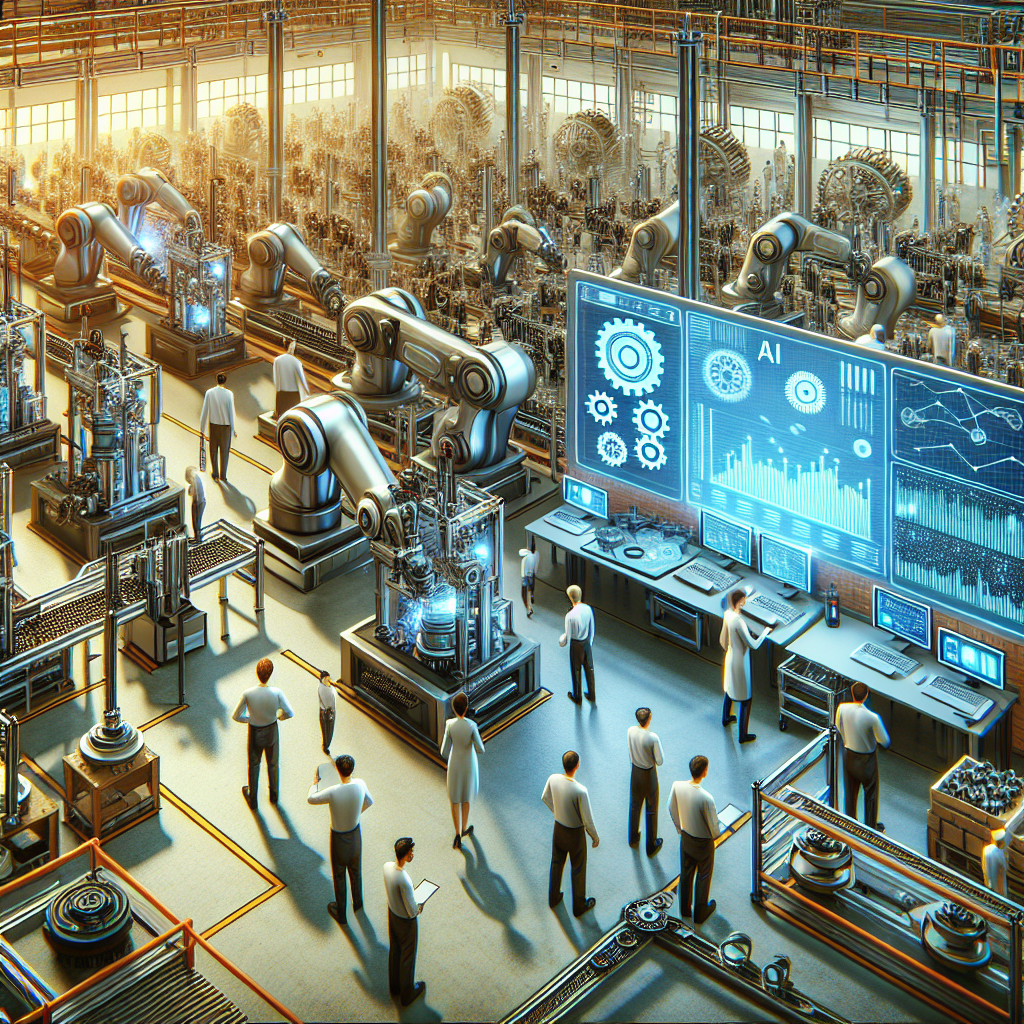
Implementing AI Solutions in Small and Medium-Sized Manufacturing Businesses
Artificial intelligence (AI) is rapidly transforming industries across the globe, and manufacturing is no exception. AI technology has the potential to revolutionize the manufacturing sector by streamlining processes, increasing efficiency, and improving overall productivity. Small and medium-sized manufacturing businesses can particularly benefit from implementing AI solutions to stay competitive in today’s fast-paced market.
In this article, we will explore the benefits of implementing AI solutions in small and medium-sized manufacturing businesses and discuss some common challenges and best practices for successful AI implementation.
Benefits of Implementing AI Solutions in Manufacturing Businesses
1. Increased Efficiency: AI technology can automate repetitive and time-consuming tasks, such as data entry, quality control, and inventory management. This can free up employees to focus on more strategic and value-added activities, leading to increased efficiency and productivity.
2. Improved Decision-Making: AI algorithms can analyze vast amounts of data in real-time to identify patterns, trends, and insights that human analysts may overlook. This can help manufacturing businesses make more informed decisions, such as optimizing production schedules, predicting maintenance needs, and identifying cost-saving opportunities.
3. Enhanced Quality Control: AI-powered systems can detect defects and anomalies in products with greater accuracy and speed than traditional methods. This can help manufacturing businesses ensure that their products meet quality standards and reduce the risk of costly recalls.
4. Predictive Maintenance: AI algorithms can analyze equipment performance data to predict when maintenance is needed before a breakdown occurs. This can help manufacturing businesses reduce downtime, extend equipment lifespan, and lower maintenance costs.
5. Supply Chain Optimization: AI technology can optimize supply chain operations by forecasting demand, identifying bottlenecks, and optimizing inventory levels. This can help manufacturing businesses streamline their supply chain processes, reduce lead times, and improve customer satisfaction.
Challenges of Implementing AI Solutions in Manufacturing Businesses
While the benefits of implementing AI solutions in manufacturing businesses are clear, there are also some common challenges that businesses may face when adopting AI technology:
1. Lack of Data: AI algorithms require large amounts of high-quality data to train and operate effectively. Small and medium-sized manufacturing businesses may struggle to collect, clean, and analyze the necessary data for AI implementation.
2. Cost: Implementing AI solutions can be costly, especially for small and medium-sized businesses with limited budgets. Businesses may need to invest in hardware, software, training, and maintenance to fully leverage AI technology.
3. Skill Gaps: AI implementation requires specialized skills and expertise that may not be readily available within small and medium-sized manufacturing businesses. Businesses may need to hire or train employees with AI expertise to successfully implement and manage AI solutions.
4. Integration with Existing Systems: Integrating AI solutions with existing manufacturing systems, such as ERP and MES systems, can be challenging. Businesses may need to invest in additional integration tools and services to ensure seamless communication between AI systems and existing systems.
Best Practices for Implementing AI Solutions in Manufacturing Businesses
To successfully implement AI solutions in small and medium-sized manufacturing businesses, consider the following best practices:
1. Start Small: Begin by identifying a specific use case or area of your manufacturing operations where AI technology can deliver the most value. Start with a small pilot project to test the feasibility and effectiveness of AI solutions before scaling up.
2. Invest in Data Quality: Ensure that you have access to high-quality data to train and operate AI algorithms effectively. Invest in data collection, cleaning, and analysis tools to ensure that your data is accurate, complete, and up-to-date.
3. Build Cross-Functional Teams: Assemble a cross-functional team with expertise in AI, data analytics, manufacturing operations, and business strategy to drive AI implementation. Collaborate closely with employees across different departments to ensure that AI solutions meet the needs of your entire organization.
4. Provide Training and Support: Invest in training programs to upskill employees on AI technology and tools. Provide ongoing support and resources to help employees adapt to new AI systems and workflows.
5. Monitor and Evaluate Performance: Continuously monitor and evaluate the performance of AI solutions to identify areas for improvement and optimization. Use key performance indicators (KPIs) to measure the impact of AI technology on your manufacturing operations.
FAQs
Q: How can AI technology help small and medium-sized manufacturing businesses improve quality control?
A: AI-powered systems can analyze images, videos, and sensor data to detect defects and anomalies in products with greater accuracy and speed than traditional methods. This can help businesses ensure that their products meet quality standards and reduce the risk of costly recalls.
Q: What are some examples of AI applications in manufacturing operations?
A: Some common examples of AI applications in manufacturing operations include predictive maintenance, demand forecasting, supply chain optimization, and production scheduling. AI technology can help businesses automate repetitive tasks, analyze data, and make informed decisions to improve efficiency and productivity.
Q: What are the key considerations for small and medium-sized manufacturing businesses when implementing AI solutions?
A: Small and medium-sized manufacturing businesses should consider factors such as data quality, cost, skill gaps, and integration with existing systems when implementing AI solutions. It is important to start small, invest in data quality, build cross-functional teams, provide training and support, and monitor and evaluate performance to ensure successful AI implementation.
In conclusion, implementing AI solutions in small and medium-sized manufacturing businesses can provide a wide range of benefits, including increased efficiency, improved decision-making, enhanced quality control, predictive maintenance, and supply chain optimization. While there are some challenges to overcome, following best practices and considering key considerations can help businesses successfully leverage AI technology to stay competitive in today’s rapidly evolving market.