
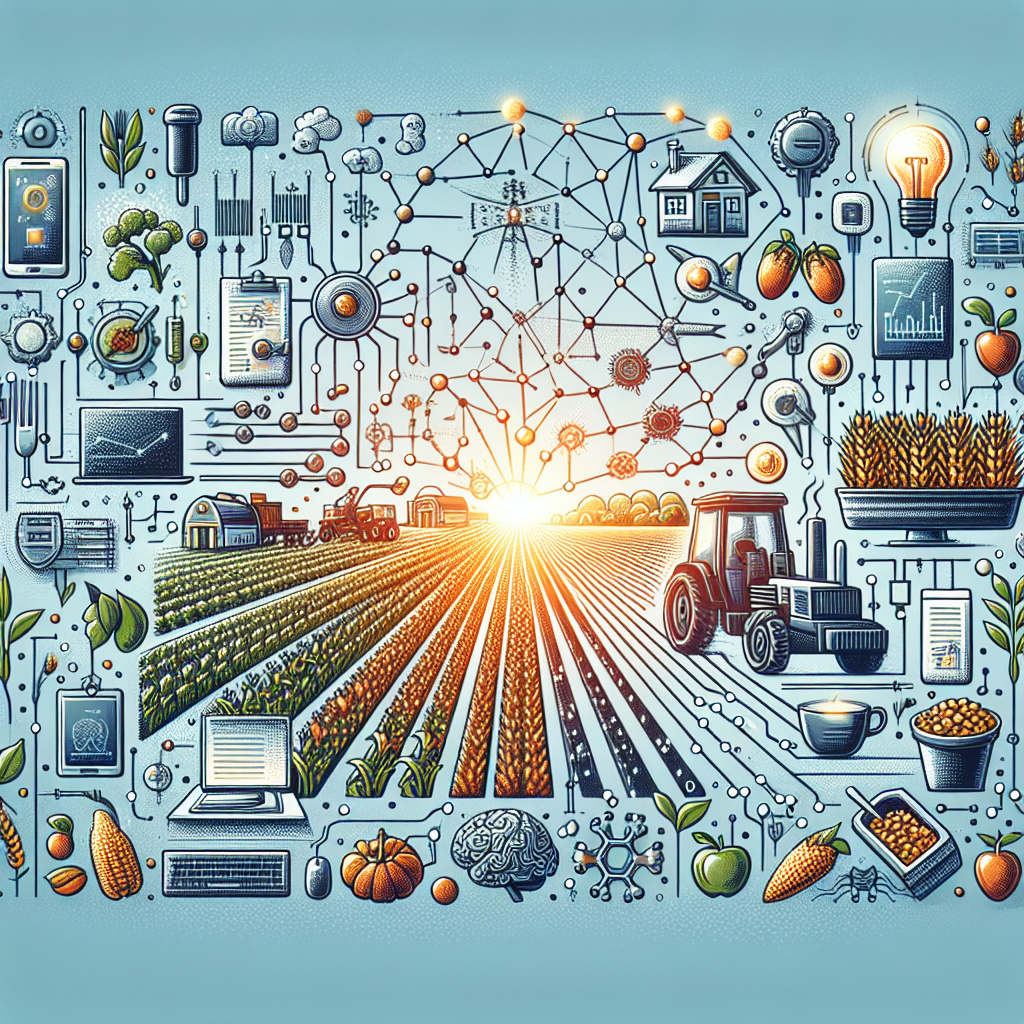
Food security is a critical issue that affects millions of people around the world. According to the World Food Programme, over 820 million people suffer from chronic hunger, while millions more face food insecurity due to factors such as conflict, climate change, and economic instability. In order to address this pressing issue, innovative solutions are needed to ensure that everyone has access to safe, nutritious, and affordable food. One such solution is the use of artificial intelligence (AI) to improve food security.
AI-driven innovations have the potential to revolutionize the way food is produced, distributed, and consumed. From precision agriculture to food traceability, AI technologies can help to increase crop yields, reduce food waste, and improve the efficiency of the food supply chain. By harnessing the power of AI, we can create a more sustainable and resilient food system that can better withstand the challenges of the 21st century.
One of the key areas where AI can make a significant impact on food security is in precision agriculture. Precision agriculture uses technologies such as sensors, drones, and AI algorithms to monitor and manage crop production more effectively. By analyzing data on soil conditions, weather patterns, and crop health, farmers can make more informed decisions about when to plant, irrigate, and harvest their crops. This can lead to higher yields, lower input costs, and reduced environmental impact.
AI can also help to improve food traceability, which is crucial for ensuring the safety and quality of the food supply chain. By using blockchain technology and AI algorithms, food producers can track the movement of food products from farm to fork, providing greater transparency and accountability. This can help to prevent food fraud, contamination, and spoilage, and ensure that consumers have access to safe and nutritious food.
Another area where AI-driven innovations can improve food security is in food distribution and logistics. By optimizing transportation routes, inventory management, and supply chain operations, AI technologies can help to reduce food waste and ensure that food reaches those who need it most. This is especially important in developing countries where food losses during transportation and storage can be as high as 30-40%.
In addition to these applications, AI can also help to improve access to nutritional information and promote healthy eating habits. By analyzing data on consumer preferences, dietary needs, and food availability, AI algorithms can provide personalized recommendations for healthier food choices. This can help to prevent malnutrition, obesity, and other diet-related health issues, and promote a more sustainable and equitable food system.
Overall, AI-driven innovations have the potential to transform the way we produce, distribute, and consume food, and improve food security for millions of people around the world. By harnessing the power of AI, we can create a more resilient and sustainable food system that can better meet the challenges of the 21st century.
FAQs
Q: How can AI help to increase crop yields?
A: AI technologies such as sensors, drones, and AI algorithms can help farmers to monitor and manage crop production more effectively. By analyzing data on soil conditions, weather patterns, and crop health, farmers can make more informed decisions about when to plant, irrigate, and harvest their crops, leading to higher yields.
Q: How can AI improve food traceability?
A: AI technologies such as blockchain and AI algorithms can help food producers to track the movement of food products from farm to fork, providing greater transparency and accountability in the food supply chain. This can help to prevent food fraud, contamination, and spoilage, ensuring that consumers have access to safe and nutritious food.
Q: How can AI help to reduce food waste?
A: By optimizing transportation routes, inventory management, and supply chain operations, AI technologies can help to reduce food waste and ensure that food reaches those who need it most. This is especially important in developing countries where food losses during transportation and storage can be as high as 30-40%.
Q: How can AI promote healthy eating habits?
A: By analyzing data on consumer preferences, dietary needs, and food availability, AI algorithms can provide personalized recommendations for healthier food choices. This can help to prevent malnutrition, obesity, and other diet-related health issues, promoting a more sustainable and equitable food system.