
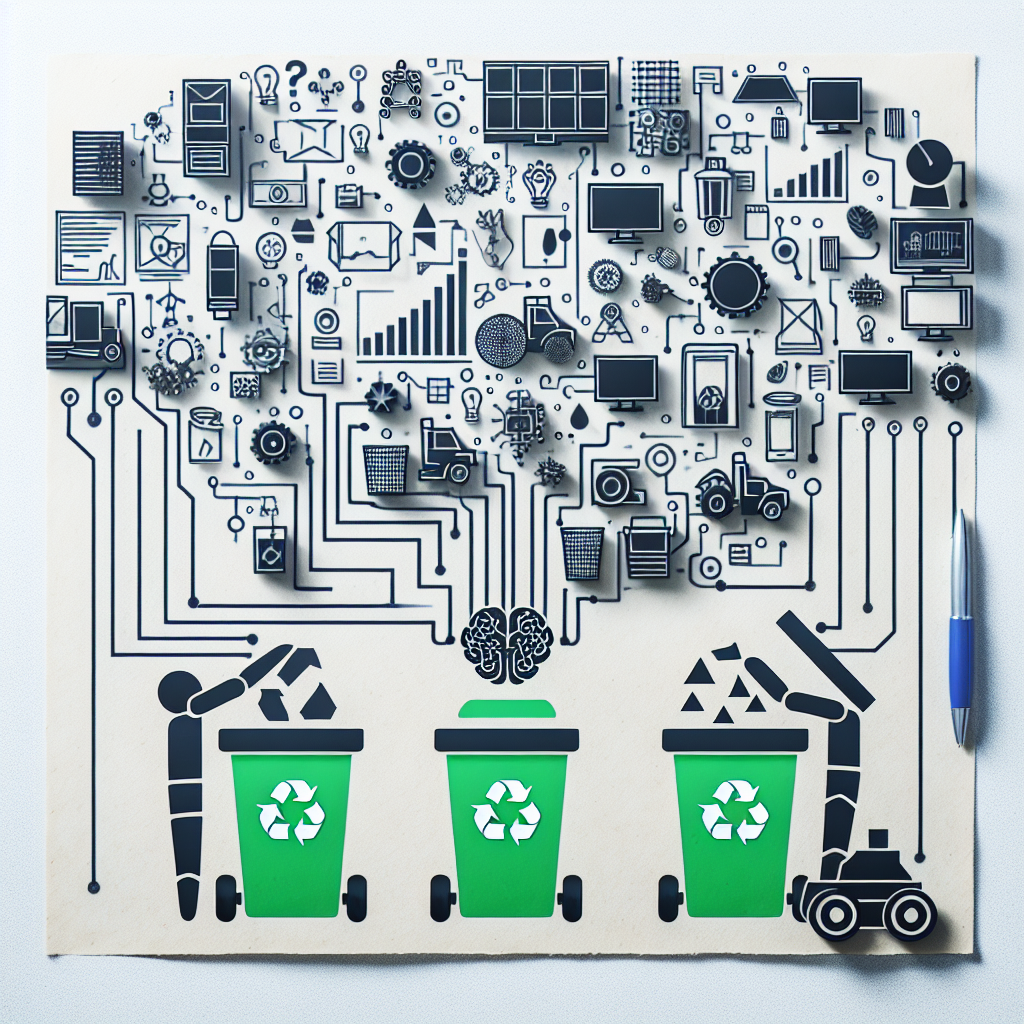
In recent years, waste management and recycling have become increasingly important topics as the world grapples with the environmental impact of excessive waste. With the rise of artificial intelligence (AI) technology, there is an opportunity to leverage these advanced tools to improve waste management and recycling processes. By incorporating AI into these systems, we can make significant strides in reducing waste, increasing recycling rates, and ultimately creating a more sustainable future.
One of the key ways in which AI can be used in waste management is through the implementation of smart waste management systems. These systems use sensors and other IoT devices to monitor waste levels in bins and dumpsters in real-time. By analyzing this data, AI algorithms can optimize waste collection routes, reduce collection frequency, and ultimately save time, fuel, and resources. This not only improves efficiency but also reduces the carbon footprint of waste collection operations.
Furthermore, AI can also be used to sort and process recyclable materials more effectively. Traditional recycling facilities rely heavily on manual labor to sort through mixed waste and separate recyclables. However, with the use of AI-powered robots and machine learning algorithms, these processes can be automated to increase speed and accuracy. By identifying and sorting recyclables more efficiently, AI can help increase recycling rates and reduce contamination, ultimately leading to a more effective recycling system.
Another area where AI can make a significant impact is in the development of predictive analytics for waste management. By analyzing historical data and trends, AI algorithms can predict future waste generation patterns and help municipalities and businesses better plan for waste collection and disposal. This can help prevent overflows, optimize waste collection schedules, and ultimately reduce the environmental impact of waste management operations.
Additionally, AI can also be used to optimize waste treatment processes, such as composting and anaerobic digestion. By monitoring and analyzing key parameters in these processes, AI can help improve efficiency, reduce energy consumption, and ensure that waste is being processed in the most environmentally friendly way possible. This can help reduce greenhouse gas emissions and other harmful pollutants associated with waste treatment.
Overall, leveraging AI for waste management and recycling has the potential to revolutionize the way we handle waste and move towards a more sustainable future. By incorporating advanced technology into these processes, we can improve efficiency, reduce costs, and minimize environmental impact. As we continue to develop and refine AI technologies for waste management, the possibilities for innovation and improvement are endless.
FAQs:
1. How can AI help improve waste collection processes?
AI can help improve waste collection processes by using sensors and IoT devices to monitor waste levels in bins and dumpsters in real-time. By analyzing this data, AI algorithms can optimize waste collection routes, reduce collection frequency, and ultimately save time, fuel, and resources.
2. How can AI help increase recycling rates?
AI can help increase recycling rates by sorting and processing recyclable materials more effectively. By using AI-powered robots and machine learning algorithms, recycling facilities can automate the sorting process to increase speed and accuracy, ultimately leading to higher recycling rates and reduced contamination.
3. How can AI help with predictive analytics for waste management?
AI can help with predictive analytics for waste management by analyzing historical data and trends to predict future waste generation patterns. By using this data, municipalities and businesses can better plan for waste collection and disposal to prevent overflows, optimize waste collection schedules, and reduce the environmental impact of waste management operations.
4. How can AI optimize waste treatment processes?
AI can optimize waste treatment processes, such as composting and anaerobic digestion, by monitoring and analyzing key parameters in these processes. By using AI to improve efficiency, reduce energy consumption, and ensure that waste is being processed in the most environmentally friendly way possible, we can reduce greenhouse gas emissions and other harmful pollutants associated with waste treatment.