
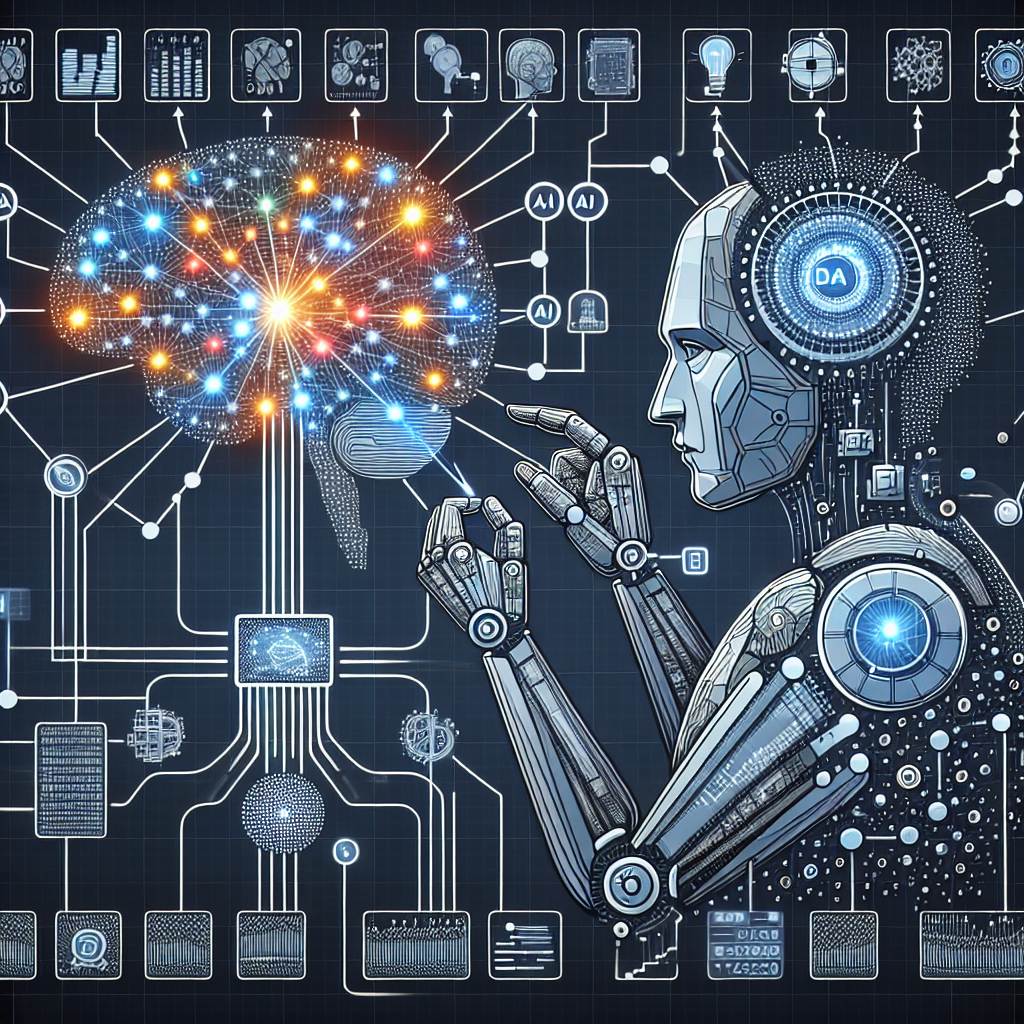
In the era of big data, organizations are faced with the challenge of integrating and linking vast amounts of data from multiple sources. This task can be daunting, as data is often siloed in different systems and formats, making it difficult to extract meaningful insights. However, with the advent of artificial intelligence (AI), organizations now have the capability to leverage AI for data linking and integration in big data.
AI technology, specifically machine learning algorithms, can be used to automatically identify and link related data points across different datasets. By analyzing patterns and relationships within the data, AI can help organizations create a unified view of their data, enabling them to make more informed decisions and drive business growth.
One of the key advantages of using AI for data linking and integration is its ability to handle large volumes of data quickly and accurately. Traditional methods of data integration, such as manual data entry or rule-based systems, are time-consuming and prone to errors. AI, on the other hand, can process huge amounts of data in a fraction of the time it would take a human, and with a much higher level of accuracy.
Another benefit of using AI for data linking and integration is its ability to adapt and learn from new data. Machine learning algorithms can continuously analyze and update data models, ensuring that the integrated data remains relevant and up-to-date. This flexibility is especially important in the fast-paced world of big data, where new data sources and formats are constantly emerging.
In addition to improving data quality and accuracy, AI can also help organizations uncover valuable insights and trends hidden within their data. By linking disparate datasets, AI can reveal correlations and patterns that would have been difficult to identify using traditional methods. These insights can be used to improve decision-making, optimize processes, and drive innovation within the organization.
Overall, leveraging AI for data linking and integration in big data can help organizations streamline their data management processes, improve data quality, and unlock the full potential of their data assets. By harnessing the power of AI, organizations can gain a competitive edge in today’s data-driven world.
FAQs:
Q: How does AI help with data linking and integration?
A: AI uses machine learning algorithms to automatically identify and link related data points across different datasets. By analyzing patterns and relationships within the data, AI can create a unified view of the data, making it easier for organizations to extract meaningful insights.
Q: What are the benefits of using AI for data linking and integration?
A: AI can process large volumes of data quickly and accurately, adapt and learn from new data, and uncover valuable insights hidden within the data. These benefits can help organizations improve data quality, streamline data management processes, and drive innovation.
Q: Can AI replace human data integration specialists?
A: While AI can automate many aspects of data linking and integration, human data integration specialists are still essential for overseeing and optimizing the process. Human expertise is needed to interpret the results of AI algorithms, ensure data quality, and make strategic decisions based on the integrated data.
Q: How can organizations get started with leveraging AI for data linking and integration?
A: Organizations can start by identifying their data integration needs and goals, evaluating AI tools and technologies that align with these goals, and developing a strategy for implementing AI in their data integration processes. Working with AI experts and data integration specialists can also help organizations navigate the complexities of AI implementation.