
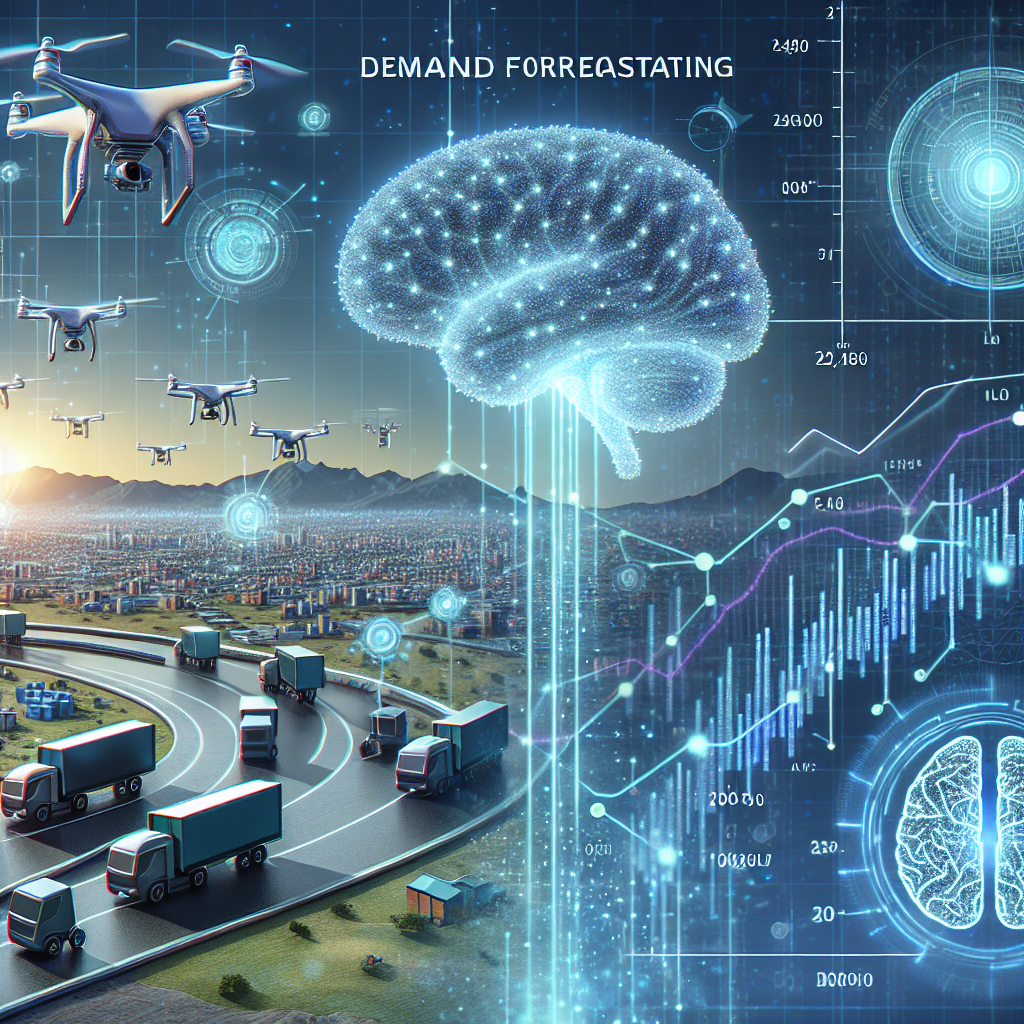
In the world of logistics, demand forecasting is a critical component of ensuring smooth operations and efficient supply chain management. By accurately predicting future demand for products and services, companies can optimize inventory levels, reduce stockouts, and improve customer satisfaction. Traditionally, demand forecasting has been a manual and labor-intensive process, but with the advent of artificial intelligence (AI), companies now have the opportunity to leverage advanced algorithms and machine learning techniques to enhance their forecasting capabilities.
AI-powered demand forecasting in logistics involves the use of sophisticated algorithms that analyze historical data, market trends, and other variables to predict future demand with a high degree of accuracy. By incorporating AI into their forecasting processes, companies can improve their ability to predict demand patterns, identify potential risks, and make data-driven decisions to optimize their supply chain operations.
One of the key advantages of using AI for demand forecasting in logistics is the ability to analyze vast amounts of data in real-time. AI algorithms can process large datasets quickly and efficiently, allowing companies to make more accurate forecasts based on up-to-date information. This real-time analysis enables companies to respond quickly to changing market conditions and adjust their inventory levels and supply chain strategies accordingly.
Another benefit of leveraging AI for demand forecasting in logistics is the ability to identify hidden patterns and trends in the data that may not be apparent to human analysts. AI algorithms can uncover correlations and relationships between variables that may not be obvious to human analysts, allowing companies to make more informed decisions about inventory levels, production schedules, and distribution strategies.
AI-powered demand forecasting also enables companies to incorporate external factors such as weather patterns, economic indicators, and social media trends into their forecasting models. By analyzing a wide range of data sources, companies can gain a more comprehensive understanding of the market dynamics that influence demand for their products and services. This holistic approach to demand forecasting can help companies anticipate changes in consumer behavior and adjust their supply chain strategies accordingly.
In addition to improving the accuracy of demand forecasting, AI can also help companies reduce costs and improve efficiency in their logistics operations. By optimizing inventory levels and streamlining supply chain processes, companies can minimize stockouts, reduce excess inventory, and improve overall operational efficiency. This can result in cost savings, increased profitability, and a competitive advantage in the marketplace.
FAQs:
Q: How does AI improve demand forecasting in logistics?
A: AI-powered algorithms can analyze vast amounts of data in real-time to predict future demand with a high degree of accuracy. By incorporating AI into their forecasting processes, companies can make more informed decisions about inventory levels, production schedules, and distribution strategies.
Q: What are the benefits of using AI for demand forecasting in logistics?
A: Some of the key benefits of leveraging AI for demand forecasting in logistics include improved accuracy, the ability to identify hidden patterns and trends in the data, and the ability to incorporate external factors such as weather patterns and social media trends into forecasting models.
Q: How can companies implement AI for demand forecasting in logistics?
A: Companies can implement AI for demand forecasting by partnering with AI software providers, hiring data scientists and AI experts, or investing in AI-powered forecasting solutions. By incorporating AI into their forecasting processes, companies can enhance their ability to predict future demand and optimize their supply chain operations.
Q: What are the potential challenges of using AI for demand forecasting in logistics?
A: Some of the potential challenges of using AI for demand forecasting in logistics include the need for high-quality data, the complexity of AI algorithms, and the need for expertise in data science and AI. Companies should be prepared to invest in data quality, training, and infrastructure to successfully implement AI for demand forecasting.
In conclusion, leveraging AI for demand forecasting in logistics can provide companies with a competitive advantage by improving the accuracy of their forecasts, reducing costs, and optimizing their supply chain operations. By incorporating AI into their forecasting processes, companies can make more informed decisions about inventory levels, production schedules, and distribution strategies, ultimately improving customer satisfaction and profitability. As AI continues to advance, companies that embrace this technology will be well-positioned to succeed in the rapidly evolving world of logistics and supply chain management.