
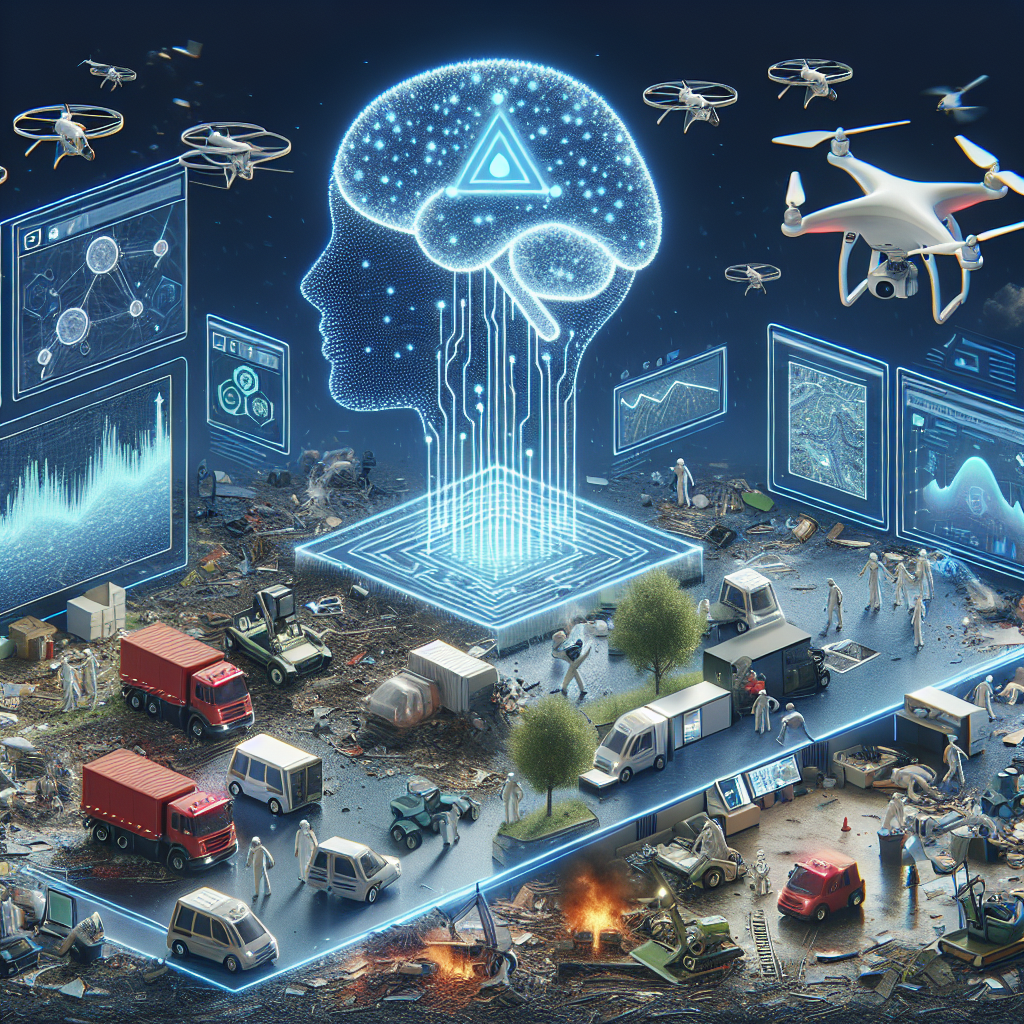
In recent years, the impact of natural disasters has been increasing, with events such as hurricanes, earthquakes, and wildfires causing widespread devastation and loss of life. In the face of these challenges, organizations are turning to advanced technologies such as artificial intelligence (AI) to improve disaster recovery efforts. Leveraging AI for disaster recovery can help to enhance response times, optimize resource allocation, and ultimately save lives.
One of the key advantages of using AI for disaster recovery is its ability to process vast amounts of data in real-time. By analyzing data from various sources such as satellite imagery, social media, and weather forecasts, AI algorithms can quickly identify areas that are most at risk and prioritize response efforts accordingly. This can help emergency responders to deploy resources more effectively and make informed decisions about where to focus their efforts.
AI can also be used to predict the impact of a disaster before it occurs, allowing organizations to take proactive measures to mitigate its effects. For example, AI-powered models can forecast the path of a hurricane or the spread of a wildfire, enabling authorities to evacuate residents, secure infrastructure, and prepare for the incoming disaster. By providing early warnings and accurate predictions, AI can help to minimize the loss of life and property damage associated with natural disasters.
In addition to its predictive capabilities, AI can also assist with post-disaster recovery efforts. By analyzing data from drones, sensors, and other sources, AI algorithms can assess the extent of the damage and identify areas that require immediate attention. This can help to speed up the recovery process, enabling communities to rebuild and recover more quickly.
Furthermore, AI can be used to optimize resource allocation during disaster recovery efforts. By analyzing data on factors such as population density, infrastructure, and emergency response capabilities, AI algorithms can help to determine the most efficient way to allocate resources such as food, water, and medical supplies. This can help to ensure that resources are distributed equitably and reach those who need them most urgently.
Overall, leveraging AI for disaster recovery can help to improve response times, enhance decision-making, and save lives. By harnessing the power of artificial intelligence, organizations can better prepare for and respond to natural disasters, ultimately reducing the impact of these events on communities and individuals.
FAQs:
Q: How can AI be used to predict natural disasters?
A: AI can analyze data from various sources such as satellite imagery, weather forecasts, and historical data to predict the likelihood and impact of natural disasters. By identifying patterns and trends in the data, AI algorithms can forecast the path of a hurricane, the spread of a wildfire, or the likelihood of an earthquake, enabling authorities to take proactive measures to mitigate the effects of the disaster.
Q: How can AI help with post-disaster recovery efforts?
A: AI can analyze data from drones, sensors, and other sources to assess the extent of the damage caused by a natural disaster. By identifying areas that require immediate attention, AI algorithms can help to prioritize response efforts and allocate resources more efficiently. This can help to speed up the recovery process and enable communities to rebuild and recover more quickly.
Q: What are the benefits of using AI for disaster recovery?
A: Using AI for disaster recovery can help to improve response times, enhance decision-making, and save lives. By analyzing vast amounts of data in real-time, AI algorithms can help emergency responders to deploy resources more effectively, predict the impact of a disaster before it occurs, and optimize resource allocation during recovery efforts. Overall, leveraging AI for disaster recovery can help to reduce the impact of natural disasters on communities and individuals.