
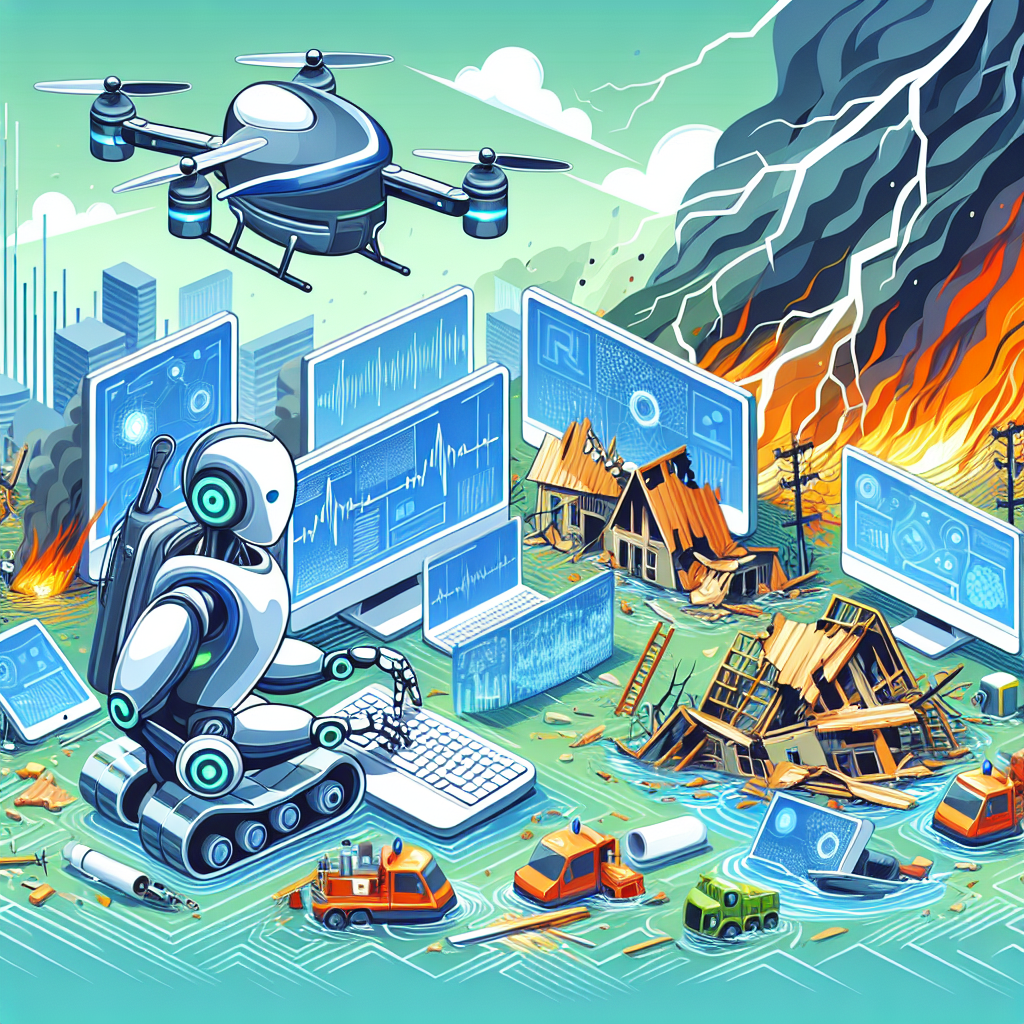
Leveraging AI for Disaster Response and Recovery
In recent years, artificial intelligence (AI) has become increasingly important in disaster response and recovery efforts. From predicting the impact of natural disasters to coordinating rescue operations and assessing damage, AI has the potential to revolutionize how we prepare for and respond to emergencies. In this article, we will explore the ways in which AI can be leveraged for disaster response and recovery, and how it can help save lives and protect communities.
Predicting and Monitoring Disasters
One of the key ways in which AI can be used in disaster response is in predicting and monitoring natural disasters. By analyzing vast amounts of data from sensors, satellites, and other sources, AI algorithms can identify patterns and trends that may indicate an impending disaster. For example, AI can be used to monitor changes in weather patterns, ocean currents, and seismic activity to predict the likelihood of events such as hurricanes, earthquakes, and floods.
In addition to predicting disasters, AI can also be used to monitor and track the progress of ongoing disasters. For example, AI-powered drones can be deployed to survey affected areas and assess the extent of damage. By using AI to analyze the data collected by these drones, emergency responders can quickly identify areas in need of assistance and prioritize their response efforts.
Coordinating Rescue Operations
During a disaster, coordination is key to ensuring that resources are allocated efficiently and effectively. AI can play a crucial role in coordinating rescue operations by analyzing data in real-time and providing actionable insights to emergency responders. For example, AI algorithms can optimize the routing of emergency vehicles to minimize response times and avoid congestion.
AI can also be used to analyze social media posts and other sources of information to identify individuals in distress and coordinate rescue efforts accordingly. By using natural language processing and sentiment analysis, AI algorithms can sift through vast amounts of data to identify urgent calls for help and prioritize them for response.
Assessing Damage and Planning Recovery
After a disaster has passed, AI can be used to assess the extent of damage and plan for recovery efforts. By analyzing satellite imagery, AI algorithms can quickly identify areas that have been most severely affected and prioritize them for assistance. AI can also be used to model the impact of different recovery strategies and identify the most effective ways to rebuild infrastructure and restore services.
In addition to assessing damage, AI can also be used to predict the long-term impact of disasters on communities and help them prepare for future events. By analyzing demographic data, infrastructure maps, and other sources of information, AI algorithms can identify vulnerabilities and recommend strategies for building resilience.
Frequently Asked Questions
Q: How can AI help in predicting natural disasters?
A: AI can analyze data from sensors, satellites, and other sources to identify patterns and trends that may indicate an impending disaster. By using machine learning algorithms, AI can predict the likelihood of events such as hurricanes, earthquakes, and floods.
Q: How can AI be used to coordinate rescue operations during a disaster?
A: AI can analyze data in real-time to provide actionable insights to emergency responders. For example, AI algorithms can optimize the routing of emergency vehicles to minimize response times and avoid congestion. AI can also analyze social media posts to identify individuals in distress and coordinate rescue efforts accordingly.
Q: How can AI assist in assessing damage and planning recovery efforts after a disaster?
A: AI can analyze satellite imagery to quickly identify areas that have been most severely affected and prioritize them for assistance. AI can also model the impact of different recovery strategies and recommend the most effective ways to rebuild infrastructure and restore services.
Q: What are the benefits of leveraging AI for disaster response and recovery?
A: By leveraging AI, emergency responders can make faster and more informed decisions, allocate resources more efficiently, and prioritize response efforts based on real-time data. AI can also help communities prepare for future disasters and build resilience against future events.
In conclusion, AI has the potential to revolutionize how we respond to and recover from disasters. By leveraging AI algorithms to predict natural disasters, coordinate rescue operations, assess damage, and plan for recovery, we can save lives, protect communities, and build resilience against future events. As AI technology continues to advance, we can expect to see even greater benefits in the field of disaster response and recovery.