
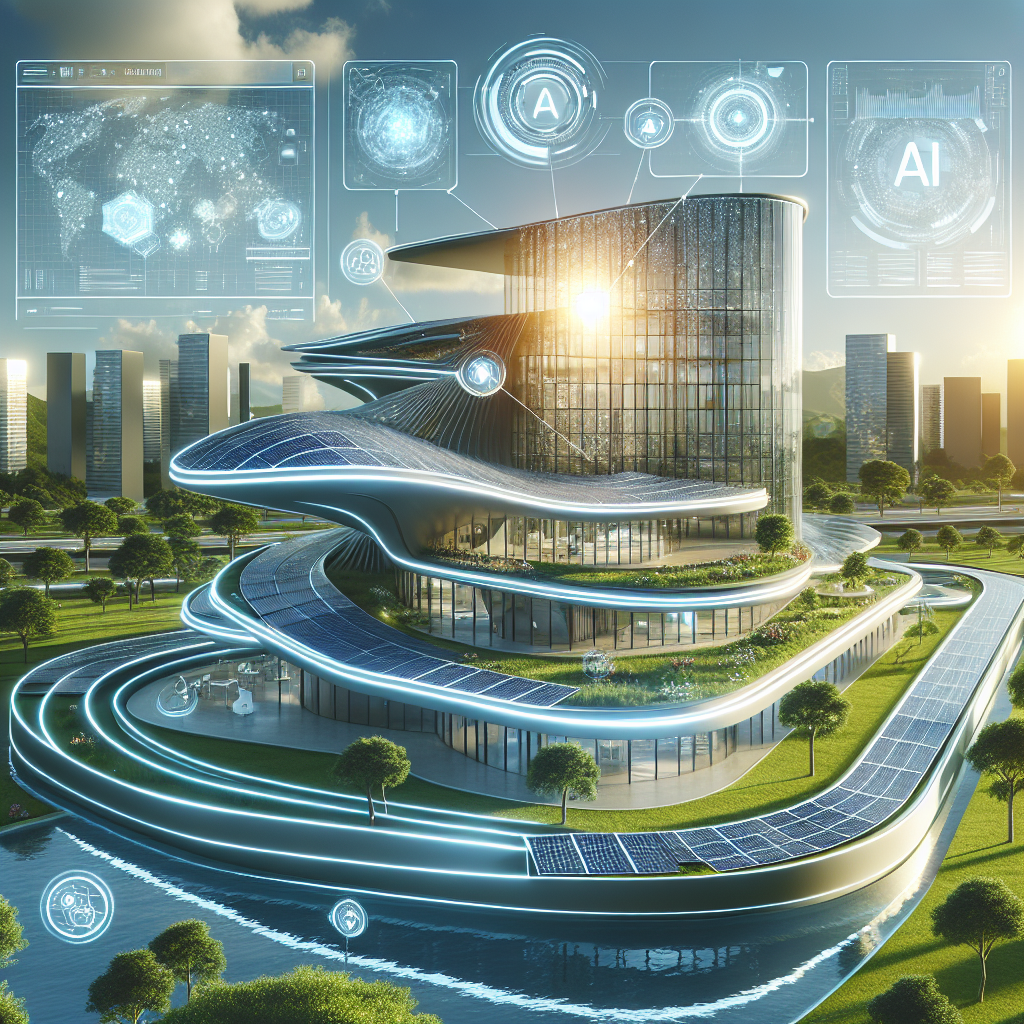
Leveraging AI for Energy-Efficient Design in Architecture
In recent years, the architecture industry has been undergoing a transformation with the integration of artificial intelligence (AI) technology into the design process. AI has the potential to revolutionize the way buildings are designed, constructed, and operated, leading to more sustainable and energy-efficient structures.
One of the key factors driving the adoption of AI in architecture is the growing emphasis on sustainability and energy efficiency. With the increasing awareness of climate change and the need to reduce carbon emissions, architects are under pressure to design buildings that are more environmentally friendly. AI can help architects achieve this goal by optimizing building layouts, materials, and systems to minimize energy consumption and reduce carbon footprint.
AI-powered tools can analyze vast amounts of data and simulate various design scenarios to identify the most energy-efficient solutions. For example, AI algorithms can analyze building orientation, solar exposure, and thermal performance to optimize natural lighting and heating, reducing the need for artificial lighting and heating systems. Additionally, AI can optimize building envelope design, HVAC systems, and renewable energy integration to further improve energy efficiency.
Furthermore, AI can help architects and engineers explore innovative design solutions that were previously considered too complex or costly. By leveraging AI, architects can push the boundaries of traditional design practices and create buildings that are not only energy-efficient but also aesthetically pleasing and functional. AI can generate design options, evaluate performance metrics, and provide real-time feedback, enabling architects to make informed decisions throughout the design process.
In addition to design optimization, AI can also enhance the construction and operation phases of a building’s lifecycle. AI-powered construction robots can automate repetitive tasks, improve precision, and reduce construction waste, leading to faster and more cost-effective construction processes. Moreover, AI-enabled building management systems can monitor energy usage, optimize building operations, and predict maintenance needs to ensure the long-term sustainability of the building.
Overall, the integration of AI in architecture holds great promise for creating energy-efficient and sustainable buildings that meet the needs of both present and future generations. By leveraging AI technology, architects can design buildings that not only reduce energy consumption and carbon emissions but also enhance occupants’ comfort, health, and well-being.
FAQs
Q: How does AI help architects design energy-efficient buildings?
A: AI can analyze building data, simulate design scenarios, and optimize building systems to minimize energy consumption and reduce carbon footprint. By leveraging AI, architects can identify the most energy-efficient design solutions and push the boundaries of traditional design practices.
Q: What are some examples of AI applications in architecture?
A: AI can be used to optimize building orientation, solar exposure, thermal performance, building envelope design, HVAC systems, and renewable energy integration. AI can also automate construction tasks, monitor energy usage, optimize building operations, and predict maintenance needs.
Q: How does AI improve the construction process?
A: AI-powered construction robots can automate repetitive tasks, improve precision, and reduce construction waste, leading to faster and more cost-effective construction processes. AI can also enhance safety, quality control, and project management in the construction industry.
Q: What are the benefits of leveraging AI for energy-efficient design in architecture?
A: The benefits of leveraging AI for energy-efficient design in architecture include reduced energy consumption, lower carbon emissions, cost savings, improved building performance, enhanced occupant comfort, and long-term sustainability. AI can also enable architects to explore innovative design solutions and create buildings that are aesthetically pleasing and functional.