
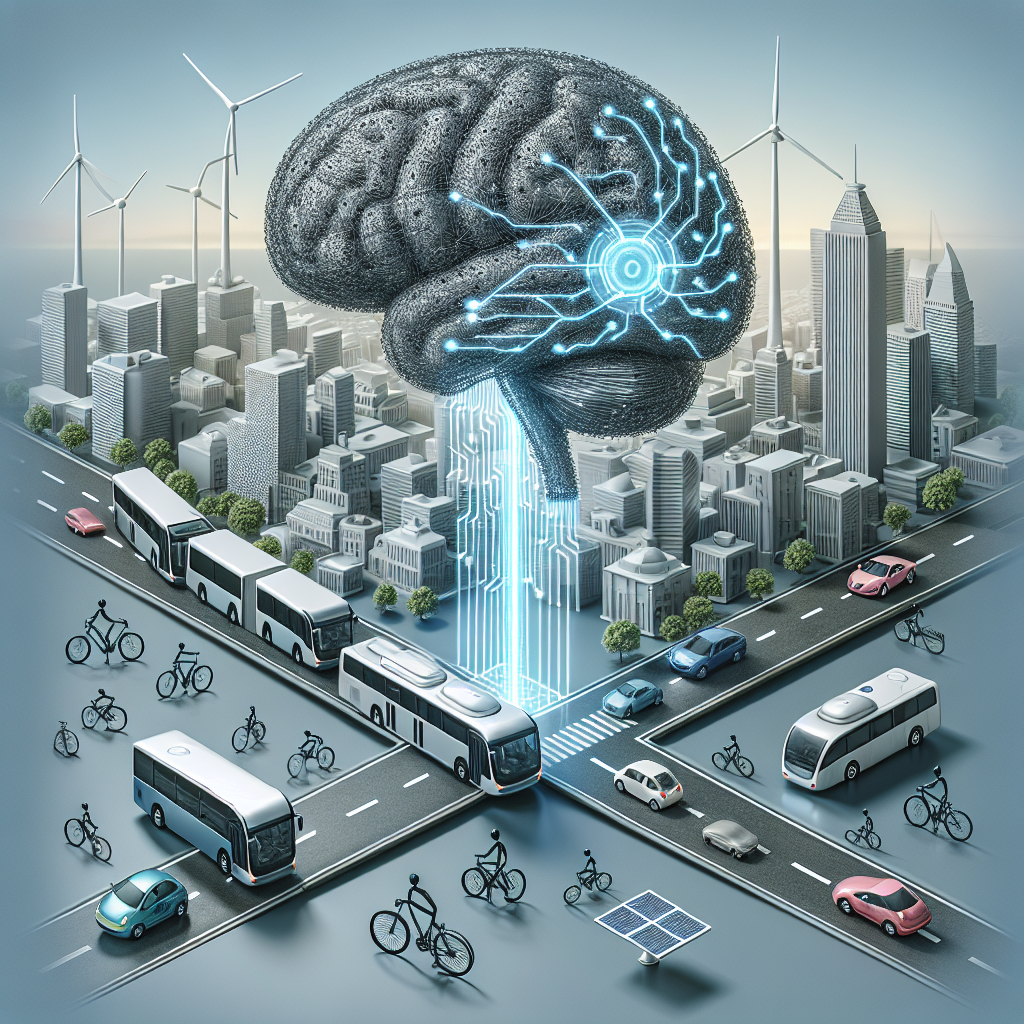
In recent years, the rise of artificial intelligence (AI) has significantly impacted various industries, including urban mobility and transportation. As cities around the world continue to grow and face increasing challenges in terms of congestion, pollution, and limited resources, leveraging AI technology has become crucial in creating sustainable solutions for urban transportation.
AI has the potential to revolutionize the way people move in cities by improving efficiency, safety, and accessibility of transportation services. From autonomous vehicles to smart traffic management systems, AI-powered solutions can help optimize transportation networks, reduce emissions, and enhance the overall mobility experience for residents.
One of the key benefits of leveraging AI for sustainable urban mobility is its ability to collect and analyze vast amounts of data in real-time. By integrating sensors, cameras, and other IoT devices, AI can gather valuable insights about traffic patterns, weather conditions, and passenger behavior. This data can then be used to optimize routes, predict demand, and improve the overall efficiency of transportation services.
AI can also play a crucial role in enhancing safety and security in urban transportation systems. For example, AI-powered algorithms can be used to detect and respond to traffic accidents, emergencies, and other incidents in real-time. By analyzing data from various sources, such as CCTV cameras and social media feeds, AI can help authorities quickly identify and address potential risks on the road.
Furthermore, AI can enable the development of autonomous vehicles, which have the potential to revolutionize the way people commute in cities. By combining AI with advanced sensors and machine learning algorithms, autonomous vehicles can navigate complex urban environments, interact with other vehicles, and adapt to changing road conditions. This technology has the potential to reduce accidents, congestion, and emissions, while also improving the overall accessibility of transportation services for people with disabilities or limited mobility.
In addition to autonomous vehicles, AI can also be used to optimize public transportation systems and reduce congestion in cities. By analyzing data on passenger demand, traffic flow, and environmental conditions, AI can help authorities better plan routes, schedules, and capacity of public transportation services. This can lead to more efficient and reliable services, as well as a reduction in greenhouse gas emissions and air pollution.
Overall, leveraging AI for sustainable urban mobility and transportation has the potential to transform the way people move in cities, making transportation services more efficient, safe, and accessible for all residents. By harnessing the power of AI technology, cities can address pressing challenges such as congestion, pollution, and limited resources, while also improving the overall quality of life for their residents.
FAQs:
Q: How does AI technology improve the efficiency of transportation services in cities?
A: AI technology can improve the efficiency of transportation services in cities by collecting and analyzing vast amounts of data in real-time. By integrating sensors, cameras, and other IoT devices, AI can gather valuable insights about traffic patterns, weather conditions, and passenger behavior. This data can then be used to optimize routes, predict demand, and improve the overall efficiency of transportation services.
Q: What role does AI play in enhancing safety and security in urban transportation systems?
A: AI plays a crucial role in enhancing safety and security in urban transportation systems by detecting and responding to traffic accidents, emergencies, and other incidents in real-time. By analyzing data from various sources, such as CCTV cameras and social media feeds, AI can help authorities quickly identify and address potential risks on the road.
Q: How can AI technology help in the development of autonomous vehicles?
A: AI technology can help in the development of autonomous vehicles by combining advanced sensors and machine learning algorithms to navigate complex urban environments, interact with other vehicles, and adapt to changing road conditions. This technology has the potential to reduce accidents, congestion, and emissions, while also improving the overall accessibility of transportation services for people with disabilities or limited mobility.
Q: What are some examples of AI-powered solutions for sustainable urban mobility?
A: Some examples of AI-powered solutions for sustainable urban mobility include autonomous vehicles, smart traffic management systems, and optimized public transportation services. These solutions use AI technology to collect and analyze data, optimize routes and schedules, and enhance the overall efficiency, safety, and accessibility of transportation services in cities.