
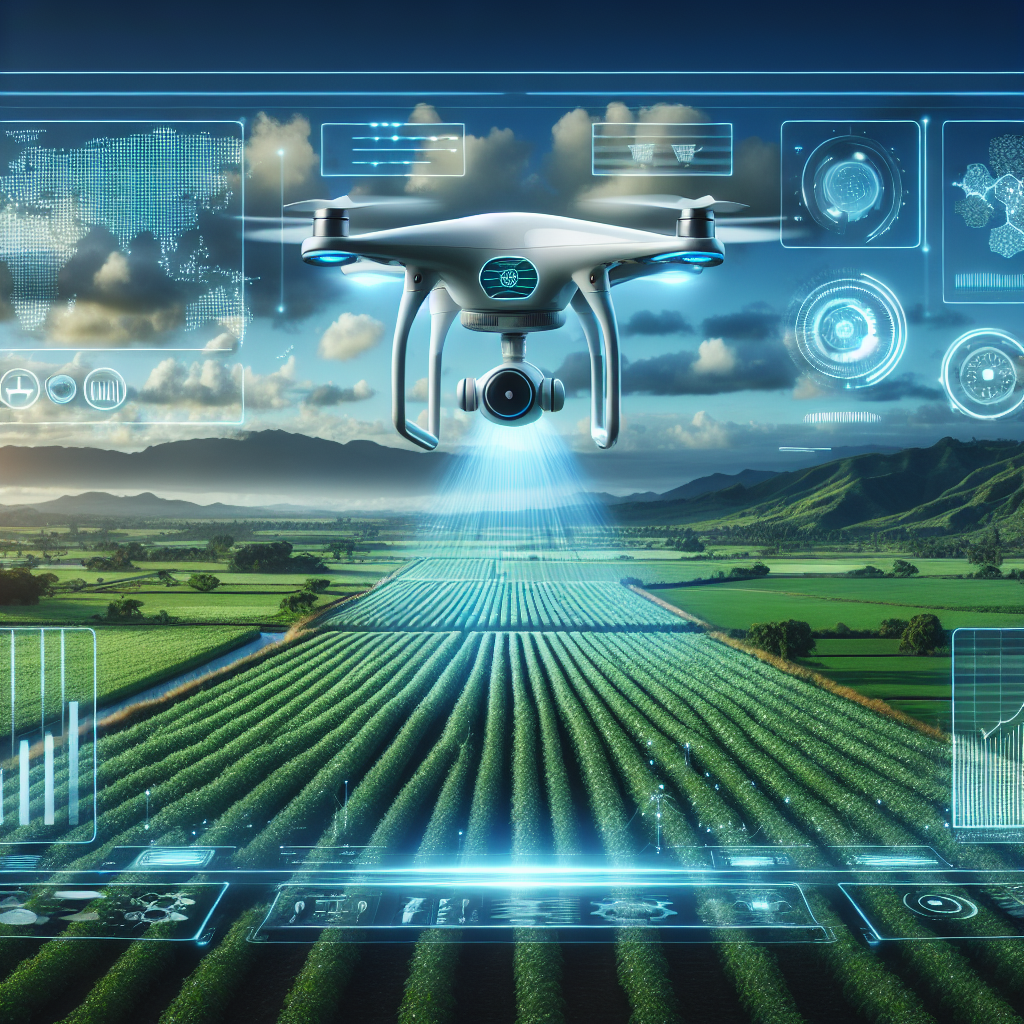
In recent years, the agriculture industry has seen a significant shift towards the adoption of technology to improve efficiency, productivity, and sustainability. One of the key technologies that is driving this change is artificial intelligence (AI). AI tools are being leveraged in smart agriculture to revolutionize farming practices and address the challenges faced by farmers in today’s world.
AI in agriculture involves the use of advanced algorithms and machine learning techniques to analyze large amounts of data collected from various sources, such as sensors, drones, satellites, and weather stations. These data-driven insights help farmers make informed decisions about crop management, irrigation, fertilization, pest control, and other aspects of farming.
One of the key benefits of using AI tools in agriculture is the ability to optimize resource usage. By analyzing data on soil composition, weather patterns, and crop health, AI algorithms can recommend the right amount of water, fertilizer, and pesticides to be used for each individual crop. This not only helps farmers reduce costs and increase yields but also minimizes the environmental impact of farming practices.
AI tools can also help farmers monitor crop health in real-time. By using drones equipped with cameras and sensors, farmers can capture high-resolution images of their fields and analyze them to detect diseases, pests, and nutrient deficiencies. This allows farmers to take proactive measures to prevent crop losses and improve overall yield.
In addition to crop monitoring, AI tools can also be used for predictive analytics in agriculture. By analyzing historical data on weather patterns, soil conditions, and crop performance, AI algorithms can forecast future trends and help farmers make informed decisions about planting, harvesting, and marketing their produce. This can significantly improve the profitability of farming operations and reduce the risk of crop failures.
Another application of AI in agriculture is in the field of precision agriculture. By using GPS technology and sensors, farmers can track the location and movement of farm equipment, monitor soil conditions, and apply inputs such as water and fertilizers with precision. This not only reduces waste and improves efficiency but also allows for more sustainable farming practices.
Overall, leveraging AI tools in smart agriculture can revolutionize the way we grow food and address the challenges faced by farmers in a rapidly changing world. By harnessing the power of data and analytics, farmers can make better decisions, optimize resource usage, and improve productivity and sustainability in their operations.
FAQs:
1. What are some of the key AI tools used in smart agriculture?
Some of the key AI tools used in smart agriculture include machine learning algorithms, computer vision technology, drones, sensors, and GPS technology.
2. How can AI tools help farmers optimize resource usage?
AI tools can analyze data on soil composition, weather patterns, and crop health to recommend the right amount of water, fertilizer, and pesticides to be used for each individual crop. This helps farmers reduce costs and increase yields while minimizing environmental impact.
3. How can AI tools help farmers monitor crop health?
By using drones equipped with cameras and sensors, farmers can capture high-resolution images of their fields and analyze them to detect diseases, pests, and nutrient deficiencies. This allows farmers to take proactive measures to prevent crop losses and improve overall yield.
4. How can AI tools help farmers with predictive analytics?
AI algorithms can analyze historical data on weather patterns, soil conditions, and crop performance to forecast future trends and help farmers make informed decisions about planting, harvesting, and marketing their produce.
5. How can AI tools help farmers with precision agriculture?
By using GPS technology and sensors, farmers can track the location and movement of farm equipment, monitor soil conditions, and apply inputs such as water and fertilizers with precision. This reduces waste, improves efficiency, and allows for more sustainable farming practices.