
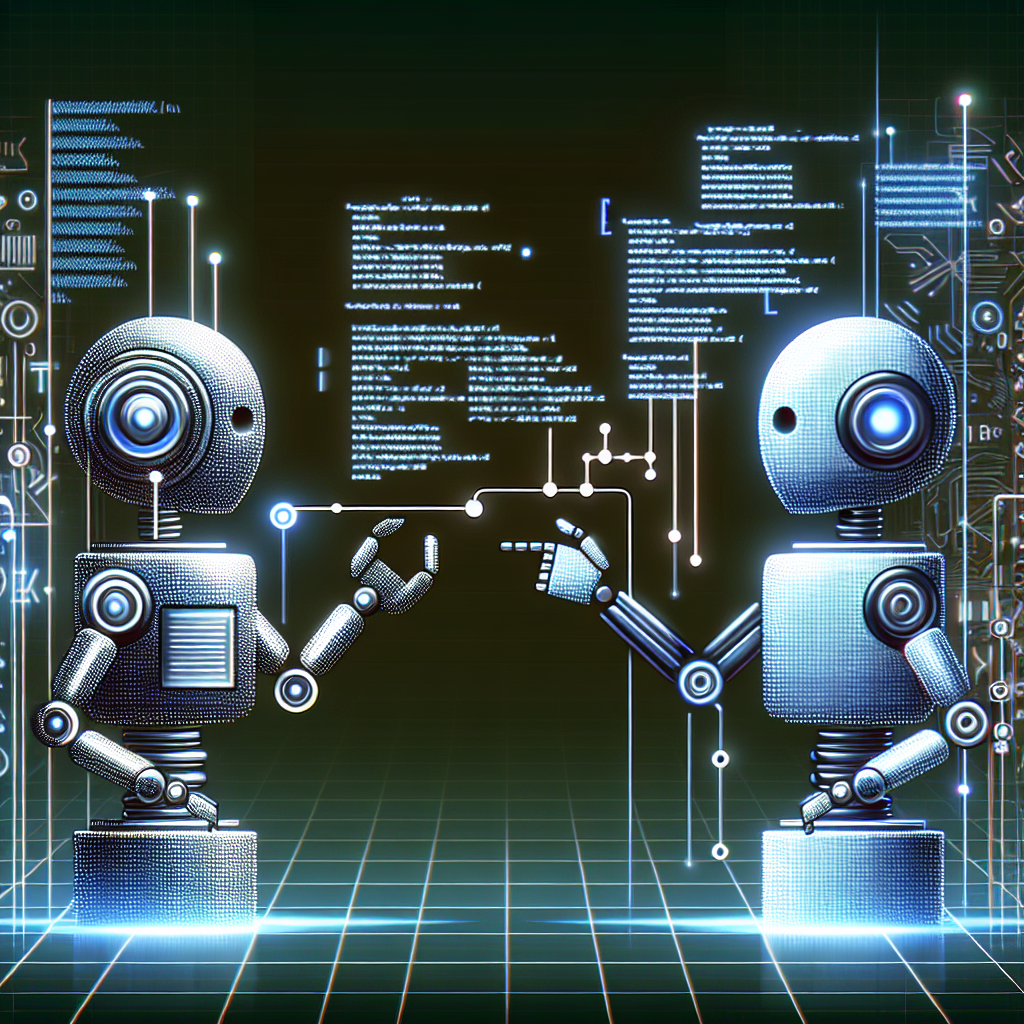
Natural Language Processing (NLP) in Conversational Agents: Trends and Insights
In recent years, there has been a significant advancement in the field of Natural Language Processing (NLP), leading to the development of conversational agents that can interact with users in a more natural and human-like way. These conversational agents, also known as chatbots or virtual assistants, are being used in various industries, including customer service, healthcare, finance, and education, to provide personalized and efficient services to users.
NLP is a subfield of artificial intelligence that focuses on the interaction between computers and humans using natural language. It involves the processing of human language data, including speech and text, to enable machines to understand, interpret, and generate human language.
Conversational agents powered by NLP technology have become increasingly popular due to their ability to understand and respond to user queries in a conversational manner. These agents can handle a wide range of tasks, such as answering questions, providing recommendations, scheduling appointments, and even making purchases on behalf of users.
One of the key trends in NLP for conversational agents is the use of deep learning techniques, such as neural networks, to improve the accuracy and performance of these agents. Deep learning models have been successful in tasks such as speech recognition, language translation, and sentiment analysis, making them an ideal choice for developing conversational agents that can understand and generate natural language.
Another trend in NLP for conversational agents is the integration of multimodal data, including text, speech, and images, to enhance the user experience. By combining different modalities, conversational agents can provide more contextually relevant responses and better understand user intent.
Furthermore, there has been a growing focus on developing conversational agents that can engage in more meaningful and empathetic conversations with users. This involves incorporating sentiment analysis and emotional intelligence into the NLP models to enable agents to recognize and respond to user emotions appropriately.
In addition to these trends, there are also ongoing efforts to make conversational agents more personalized and adaptive to individual user preferences. By leveraging user data and machine learning algorithms, conversational agents can tailor their responses and recommendations to each user’s specific needs and preferences.
Overall, the field of NLP in conversational agents is rapidly evolving, with new advancements and applications emerging regularly. As technology continues to improve, we can expect to see even more sophisticated and intelligent conversational agents that can provide truly human-like interactions.
FAQs:
Q: How do conversational agents work?
A: Conversational agents use NLP technology to understand and generate human language. They process user queries, analyze the text or speech input, and generate appropriate responses based on predefined rules or machine learning algorithms.
Q: What are some common applications of conversational agents?
A: Conversational agents are used in customer service, healthcare, finance, education, and many other industries. They can help users with tasks such as answering questions, providing recommendations, scheduling appointments, and making purchases.
Q: How can NLP improve the performance of conversational agents?
A: NLP techniques, such as deep learning and sentiment analysis, can help conversational agents understand and generate natural language more accurately and efficiently. By leveraging these techniques, agents can provide more contextually relevant responses and engage in more meaningful conversations with users.
Q: What are some challenges in developing conversational agents?
A: Some of the challenges in developing conversational agents include handling complex user queries, understanding user intent accurately, and providing personalized responses. Additionally, ensuring data privacy and security is also a key concern when deploying conversational agents.
Q: What are some future trends in NLP for conversational agents?
A: Future trends in NLP for conversational agents may include the use of advanced deep learning models, the integration of multimodal data, and the development of more empathetic and personalized agents. As technology continues to evolve, we can expect to see even more intelligent and sophisticated conversational agents in the future.