
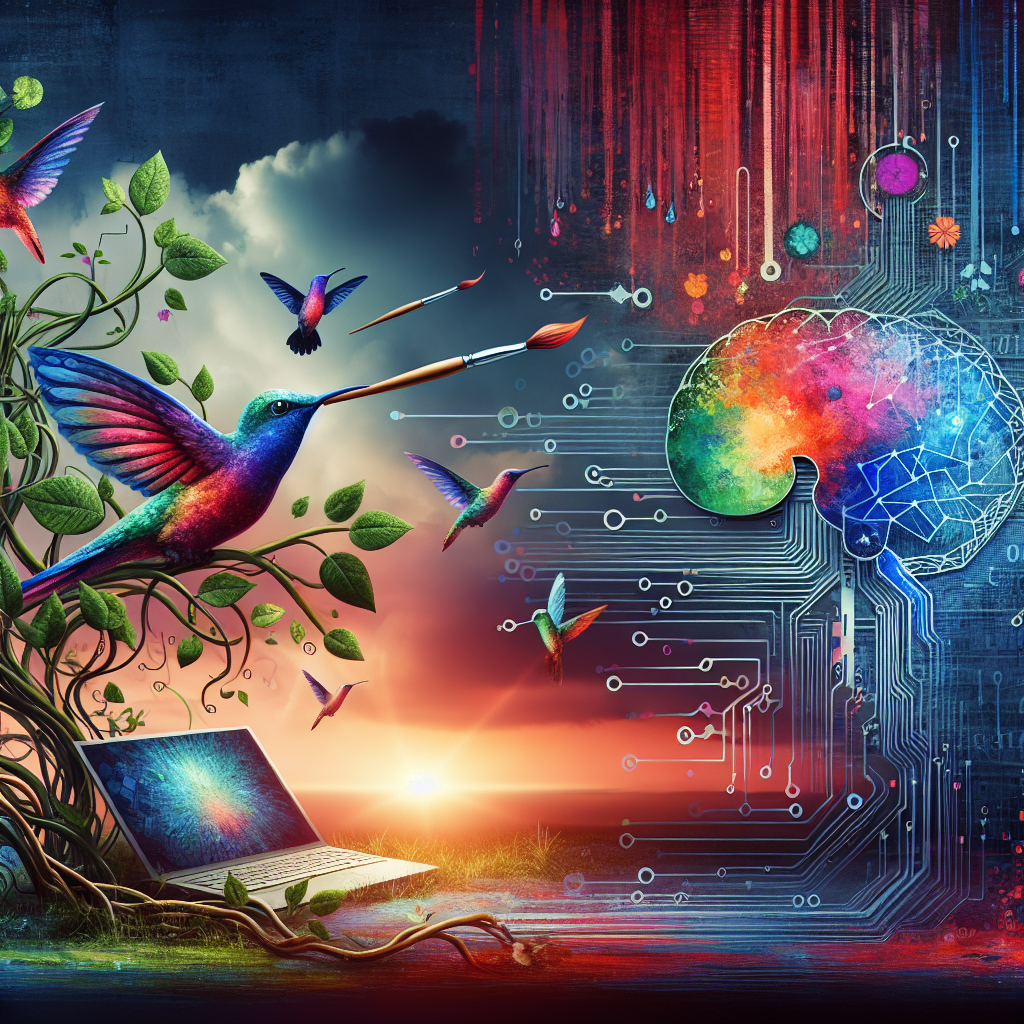
Artificial intelligence (AI) has become a prominent force in the digital world, transforming industries and revolutionizing the way we interact with technology. While AI is often associated with tasks such as data analysis, automation, and machine learning, it is also making its mark in the realm of creativity. The use of AI in art and design has opened up a whole new world of possibilities, blurring the lines between human and machine creativity.
The Art of AI: Exploring Creativity in the Digital World
AI has the ability to analyze vast amounts of data and identify patterns, which can be applied to various creative processes. From generating music and visual art to writing poetry and designing products, AI is pushing the boundaries of what is possible in the creative sphere. By mimicking human creativity and learning from vast amounts of data, AI is able to produce unique and innovative works of art that challenge traditional notions of creativity.
One of the most well-known examples of AI in art is the use of generative adversarial networks (GANs) to create images. GANs consist of two neural networks, one that generates images and one that discriminates between real and generated images. Through a process of feedback and refinement, GANs are able to produce highly realistic and detailed images that are indistinguishable from those created by humans. This technology has been used in a variety of applications, from generating artwork to creating digital avatars.
Another area where AI is making waves is in music composition. AI algorithms are now able to analyze vast musical databases and generate original compositions that mimic the style of famous composers. From classical music to pop songs, AI is able to create music that is both technically proficient and emotionally evocative. This has led to collaborations between human musicians and AI systems, resulting in unique and innovative music that pushes the boundaries of what is possible.
AI is also being used in the field of design, where it is revolutionizing the way products are created. By analyzing consumer preferences and market trends, AI can generate innovative product designs that meet the needs of users. From fashion to furniture, AI is helping designers create products that are both functional and aesthetically pleasing. This has the potential to revolutionize the design process, making it faster, more efficient, and more responsive to consumer demands.
In addition to creating art and design, AI is also being used to enhance the creative process for human artists. By providing tools and resources that aid in the creative process, AI is enabling artists to explore new ideas and techniques. For example, AI-powered software can analyze a painter’s brush strokes and suggest ways to improve their technique, or generate new ideas for compositions based on existing works. This collaboration between human artists and AI systems is leading to a new era of creativity that combines the best of both worlds.
FAQs
Q: Can AI truly be creative?
A: While AI is not capable of experiencing emotions or having original ideas in the same way that humans do, it is able to mimic human creativity by analyzing data and generating new ideas. AI can produce original works of art, music, and design that challenge traditional notions of creativity.
Q: How is AI used in art and design?
A: AI is used in art and design in a variety of ways, including generating images, composing music, designing products, and enhancing the creative process for human artists. By analyzing data and learning from vast amounts of information, AI is able to produce unique and innovative works of art that push the boundaries of creativity.
Q: What are the ethical implications of using AI in art and design?
A: The use of AI in art and design raises ethical questions about the role of technology in creative processes. Some critics argue that AI diminishes the role of human artists and designers, while others see it as a tool that enhances creativity and expands the possibilities of what is possible in the creative sphere. It is important to consider the ethical implications of using AI in art and design and to ensure that it is used responsibly and ethically.
Q: How can artists and designers collaborate with AI?
A: Artists and designers can collaborate with AI by using AI-powered tools and resources to enhance their creative process. By working with AI systems that analyze data, generate ideas, and provide feedback, artists and designers can explore new techniques, styles, and ideas that push the boundaries of creativity. This collaboration between human artists and AI systems is leading to a new era of creativity that combines the best of both worlds.
In conclusion, the art of AI is transforming the creative landscape in the digital world, pushing the boundaries of what is possible in art and design. By analyzing data, generating new ideas, and collaborating with human artists, AI is able to produce innovative works of art that challenge traditional notions of creativity. As AI continues to evolve and expand its capabilities, it is likely that we will see even more groundbreaking and innovative uses of AI in the creative sphere. The future of creativity in the digital world is bright, thanks to the transformative power of AI.