
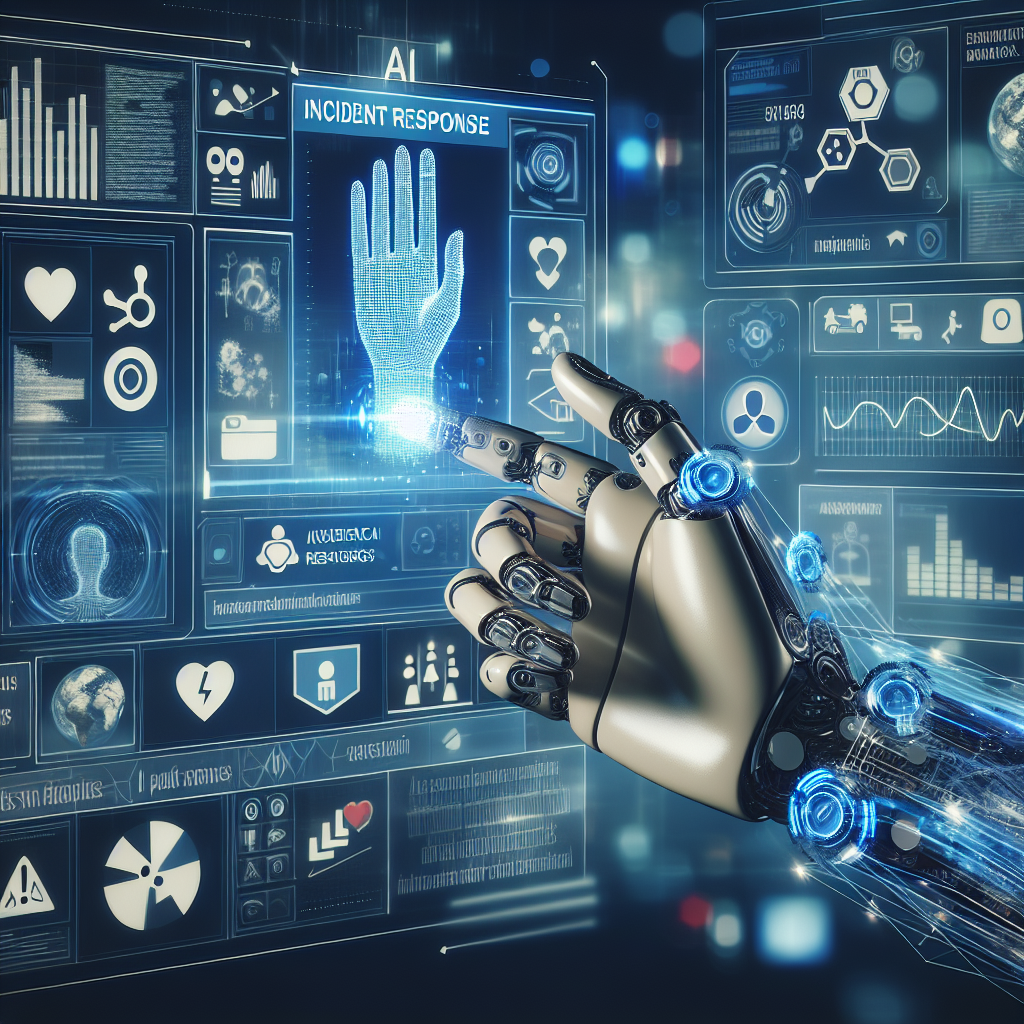
Incident response management is a critical component of any organization’s cybersecurity strategy. It involves the processes and procedures that are put in place to respond to and mitigate cybersecurity incidents effectively. Traditionally, incident response management has been a manual and time-consuming process, but with the advent of artificial intelligence (AI) technology, organizations can now automate and streamline their incident response efforts. In this article, we will explore the benefits of AI in incident response management and address some common questions about its implementation.
Benefits of AI in Incident Response Management
1. Real-time threat detection: One of the key benefits of using AI in incident response management is its ability to detect and respond to cybersecurity threats in real-time. AI-powered systems can analyze vast amounts of data and identify potential threats much faster than human analysts. This allows organizations to respond to incidents more quickly and effectively, reducing the impact of cyber attacks.
2. Automation of repetitive tasks: Incident response management involves a number of repetitive and time-consuming tasks, such as triaging alerts, gathering and analyzing data, and coordinating response efforts. AI can automate many of these tasks, freeing up human analysts to focus on more complex and strategic activities. This not only increases efficiency but also reduces the risk of human error.
3. Improved decision-making: AI can help organizations make more informed decisions during incident response by providing insights and recommendations based on data analysis. AI-powered systems can analyze historical incident data, identify patterns and trends, and predict potential outcomes. This can help organizations prioritize and allocate resources more effectively, leading to better outcomes in incident response.
4. Scalability: As the volume and complexity of cyber threats continue to increase, organizations need to be able to scale their incident response capabilities quickly and efficiently. AI can help organizations scale their incident response efforts by automating routine tasks and processes, allowing them to respond to a larger number of incidents simultaneously.
5. Enhanced threat intelligence: AI can help organizations improve their threat intelligence capabilities by analyzing vast amounts of data from various sources, such as network logs, endpoint data, and threat feeds. AI-powered systems can identify new and emerging threats, correlate disparate pieces of information, and provide actionable intelligence to help organizations stay ahead of cyber attackers.
6. Continuous improvement: AI-powered incident response systems can learn from past incidents and adapt their algorithms and processes over time. This continuous learning enables organizations to improve their incident response capabilities and become more resilient to future cyber attacks.
FAQs about AI in Incident Response Management
Q: How does AI complement human analysts in incident response management?
A: AI complements human analysts in incident response management by automating routine tasks, analyzing vast amounts of data, and providing insights and recommendations to help human analysts make more informed decisions. By working together, AI and human analysts can improve the efficiency and effectiveness of incident response efforts.
Q: Is AI in incident response management secure?
A: Like any technology, AI in incident response management is only as secure as the systems and processes that support it. Organizations should implement appropriate security measures, such as encryption, access controls, and regular security audits, to protect their AI-powered incident response systems from cyber threats.
Q: How can organizations implement AI in incident response management?
A: Organizations can implement AI in incident response management by first assessing their current incident response capabilities and identifying areas where AI can add value. They can then select and deploy AI-powered tools and systems that are tailored to their specific needs and requirements. It is also important to provide training and support to employees to ensure they understand how to use AI effectively in incident response.
Q: What are the potential risks of using AI in incident response management?
A: While AI offers many benefits in incident response management, there are also potential risks to consider. These risks include data privacy and security concerns, bias and discrimination in AI algorithms, and the potential for AI systems to make incorrect or flawed decisions. Organizations should carefully assess these risks and implement appropriate safeguards to mitigate them.
Q: How can organizations measure the effectiveness of AI in incident response management?
A: Organizations can measure the effectiveness of AI in incident response management by tracking key performance indicators (KPIs) such as mean time to detect (MTTD), mean time to respond (MTTR), and overall incident resolution time. By monitoring these metrics over time, organizations can assess the impact of AI on their incident response capabilities and make adjustments as needed.
In conclusion, AI has the potential to revolutionize incident response management by automating routine tasks, improving decision-making, enhancing threat intelligence, and enabling organizations to scale their incident response capabilities. While there are risks and challenges associated with implementing AI in incident response management, the benefits far outweigh the drawbacks. By leveraging AI technology effectively, organizations can strengthen their cybersecurity defenses and better protect their critical assets and data from cyber threats.