
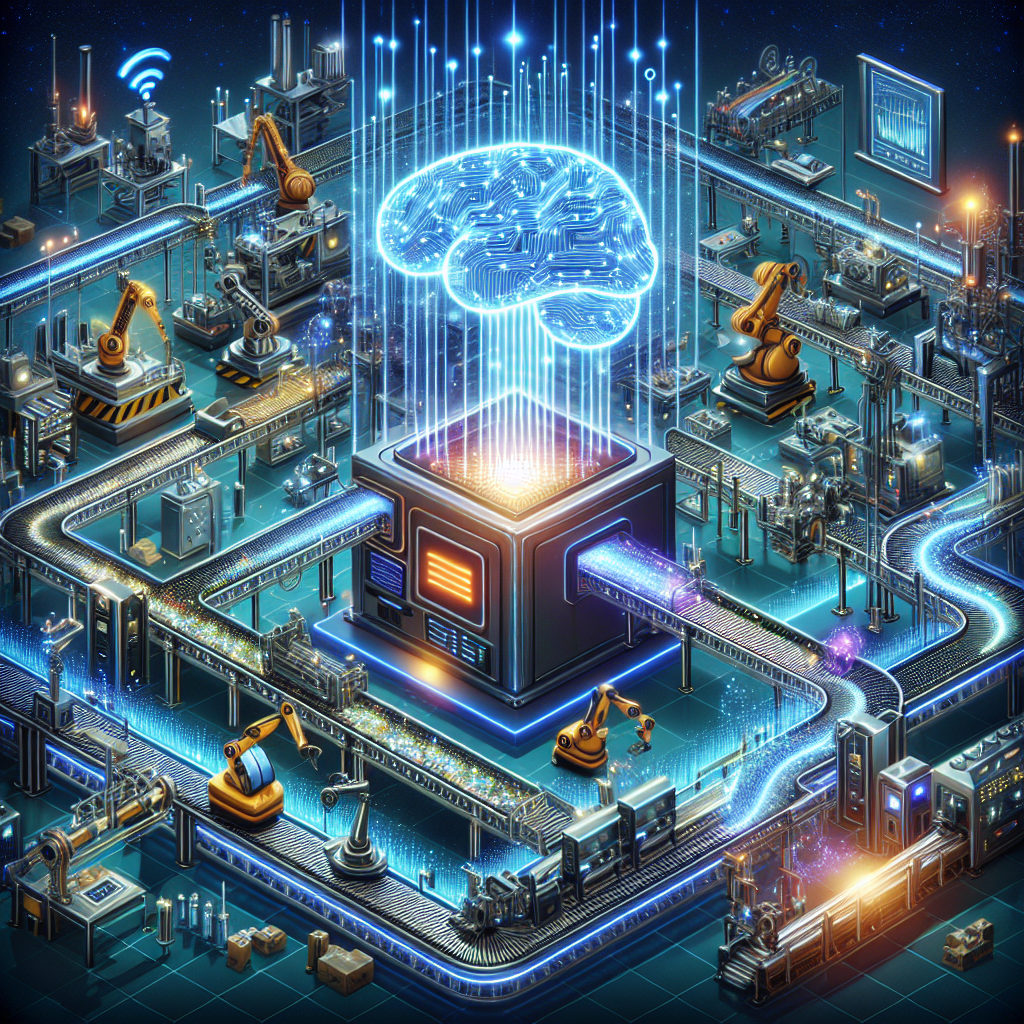
In today’s fast-paced and ever-changing manufacturing industry, demand forecasting is crucial for ensuring that companies can meet the needs of their customers while managing their resources efficiently. Traditional demand forecasting methods often fall short in accurately predicting future demand, leading to issues such as stockouts or excess inventory. This is where AI-powered demand forecasting comes in, offering a more accurate and efficient way to forecast demand and optimize production processes.
AI-powered demand forecasting utilizes advanced algorithms and machine learning techniques to analyze historical data, market trends, and other relevant factors to predict future demand with a higher degree of accuracy. By harnessing the power of AI, manufacturers can make more informed decisions about production planning, inventory management, and resource allocation, leading to improved efficiency and profitability. In this article, we will explore the benefits of AI-powered demand forecasting in manufacturing and how it can help companies stay ahead of the competition.
1. Improved Accuracy
One of the key benefits of AI-powered demand forecasting is its ability to provide more accurate predictions of future demand. Traditional forecasting methods often rely on historical data and simple statistical models, which may not capture the complexities and fluctuations of the market accurately. AI algorithms, on the other hand, can analyze vast amounts of data and identify patterns and trends that may not be apparent to human analysts. This enables manufacturers to make more precise predictions about future demand, reducing the risk of stockouts or excess inventory.
2. Enhanced Efficiency
AI-powered demand forecasting can also help manufacturers streamline their production processes and optimize resource allocation. By accurately predicting demand, companies can plan their production schedules more effectively, reducing lead times and improving overall efficiency. This can lead to cost savings and increased productivity, as companies can produce the right amount of products at the right time, without overproducing or underproducing.
3. Real-time Insights
Another benefit of AI-powered demand forecasting is its ability to provide real-time insights into market trends and customer behavior. By continuously analyzing data and adjusting forecasts in real-time, manufacturers can adapt to changing market conditions quickly and make informed decisions about production and inventory management. This can help companies stay ahead of the competition and respond to customer demand more effectively, leading to increased customer satisfaction and loyalty.
4. Scalability
AI-powered demand forecasting is highly scalable, allowing manufacturers to analyze large volumes of data and make accurate predictions for multiple products and markets. This scalability is especially important for companies with complex supply chains and global operations, as it enables them to forecast demand for a wide range of products and locations simultaneously. This can help manufacturers optimize their production and distribution processes, reduce inventory holding costs, and improve overall supply chain efficiency.
5. Reduced Costs
By accurately predicting demand and optimizing production processes, AI-powered demand forecasting can help manufacturers reduce costs and improve their bottom line. By avoiding stockouts and excess inventory, companies can minimize the risk of lost sales and reduce storage and carrying costs. Additionally, by optimizing production schedules and resource allocation, manufacturers can minimize waste and improve overall operational efficiency, leading to cost savings and increased profitability.
6. Competitive Advantage
Ultimately, AI-powered demand forecasting can provide manufacturers with a competitive advantage in the market. By leveraging advanced analytics and machine learning techniques, companies can make more informed decisions about production planning, inventory management, and resource allocation, enabling them to respond to market trends and customer demand more effectively. This can help manufacturers differentiate themselves from competitors, attract new customers, and drive growth and profitability in the long term.
FAQs:
Q: How is AI-powered demand forecasting different from traditional forecasting methods?
A: AI-powered demand forecasting uses advanced algorithms and machine learning techniques to analyze vast amounts of data and identify patterns and trends that may not be apparent to human analysts. This enables manufacturers to make more accurate predictions about future demand and optimize production processes more effectively.
Q: How can AI-powered demand forecasting help manufacturers improve their efficiency?
A: By accurately predicting demand, AI-powered demand forecasting can help manufacturers streamline their production processes, reduce lead times, and optimize resource allocation. This can lead to cost savings and increased productivity, as companies can produce the right amount of products at the right time, without overproducing or underproducing.
Q: What are the key benefits of AI-powered demand forecasting for manufacturers?
A: Some of the key benefits of AI-powered demand forecasting for manufacturers include improved accuracy, enhanced efficiency, real-time insights, scalability, reduced costs, and competitive advantage. By leveraging advanced analytics and machine learning techniques, companies can make more informed decisions about production planning, inventory management, and resource allocation, leading to improved efficiency and profitability.
In conclusion, AI-powered demand forecasting offers a range of benefits for manufacturers looking to stay ahead of the competition and optimize their production processes. By leveraging advanced analytics and machine learning techniques, companies can make more accurate predictions about future demand, streamline their production processes, and improve overall efficiency and profitability. With the right tools and strategies in place, manufacturers can harness the power of AI to drive growth and success in today’s fast-paced manufacturing industry.