
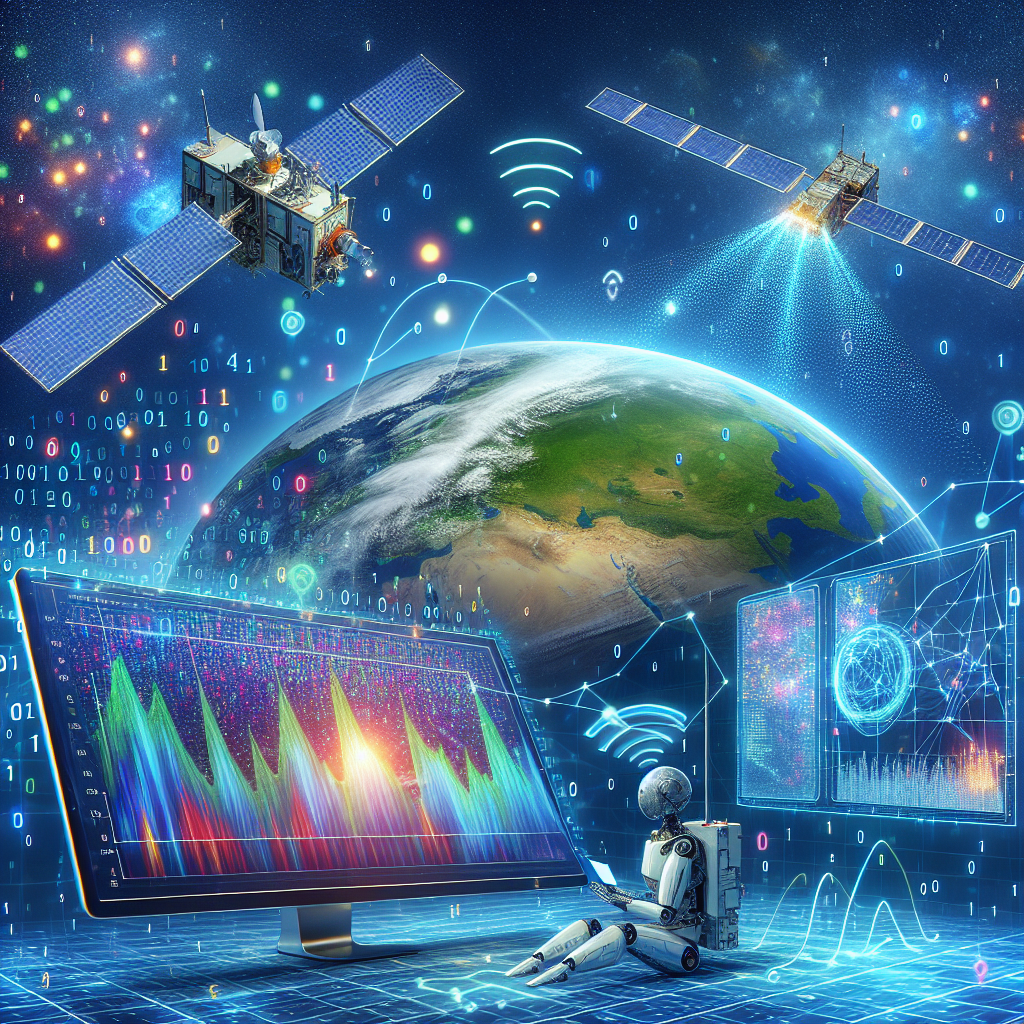
Remote sensing is a powerful tool in various fields, including agriculture, environmental monitoring, urban planning, and disaster management. It involves collecting data from a distance, usually using satellites, drones, or other sensors. One of the key challenges in remote sensing is processing and analyzing the vast amounts of data collected, which can be time-consuming and labor-intensive. This is where artificial intelligence (AI) software comes in.
AI software can automate many aspects of remote sensing data processing and analysis, making it faster, more accurate, and more efficient. In this article, we will explore the benefits of using AI software for remote sensing and how it is revolutionizing the way we collect and analyze data from a distance.
1. Improved accuracy and efficiency
One of the main benefits of using AI software for remote sensing is the improved accuracy and efficiency it provides. AI algorithms can process and analyze large amounts of data much faster than humans, leading to quicker and more accurate results. This is particularly useful in time-sensitive situations, such as disaster response or monitoring environmental changes.
AI software can also handle complex data sets with ease, identifying patterns and trends that may not be immediately obvious to human analysts. This can lead to more informed decision-making and better outcomes in various applications, such as crop monitoring, land use classification, and forest mapping.
2. Cost-effective solution
Using AI software for remote sensing can also be a cost-effective solution in the long run. While there may be initial costs associated with setting up and training the AI algorithms, the automation and efficiency gains can lead to significant savings over time. By reducing the need for manual data processing and analysis, organizations can allocate resources more effectively and focus on higher-level tasks.
Additionally, AI software can help optimize resource allocation in remote sensing applications, such as monitoring crop health or assessing infrastructure damage after a natural disaster. By identifying areas of interest more efficiently, organizations can prioritize their efforts and resources where they are needed most, leading to better outcomes and cost savings.
3. Scalability and flexibility
AI software for remote sensing is highly scalable and flexible, making it suitable for a wide range of applications and data sets. Whether you are monitoring a small agricultural field or analyzing satellite imagery of an entire city, AI algorithms can adapt to the scale and complexity of the task at hand.
Furthermore, AI software can be easily integrated with existing remote sensing systems and workflows, making it a seamless addition to your data processing and analysis toolkit. This flexibility allows organizations to leverage the power of AI in various applications, from disaster response to environmental monitoring, without the need for extensive training or customization.
4. Real-time monitoring and decision-making
One of the key advantages of using AI software for remote sensing is the ability to provide real-time monitoring and decision-making capabilities. By automating data processing and analysis, AI algorithms can deliver insights and alerts in near real-time, enabling organizations to respond quickly to changing conditions and events.
For example, in agriculture, AI software can monitor crop health and growth patterns, alerting farmers to potential issues such as pests or disease outbreaks. In disaster management, AI algorithms can analyze satellite imagery to assess damage and prioritize response efforts. By providing timely information and actionable insights, AI software can help organizations make better decisions and improve outcomes in a variety of applications.
FAQs
Q: How does AI software for remote sensing work?
A: AI software for remote sensing typically involves training machine learning algorithms on large amounts of data to recognize patterns and trends. These algorithms can then be applied to new data sets to automatically process and analyze remote sensing data, such as satellite imagery or drone footage. By leveraging AI technology, organizations can automate tasks that would otherwise be time-consuming and labor-intensive, leading to faster and more accurate results.
Q: What are some common applications of AI software for remote sensing?
A: AI software for remote sensing is used in a variety of applications, including agriculture, environmental monitoring, urban planning, disaster management, and infrastructure monitoring. In agriculture, AI algorithms can help farmers monitor crop health, optimize irrigation, and detect pests or diseases. In environmental monitoring, AI software can analyze satellite imagery to track changes in land cover, deforestation, or water quality. In disaster management, AI algorithms can assess damage and prioritize response efforts after a natural disaster. The possibilities are endless, and AI software is revolutionizing the way we collect and analyze remote sensing data.
Q: How can organizations benefit from using AI software for remote sensing?
A: Organizations can benefit from using AI software for remote sensing in several ways, including improved accuracy and efficiency, cost savings, scalability and flexibility, and real-time monitoring and decision-making capabilities. By automating data processing and analysis, AI software can provide faster and more accurate results, leading to better decision-making and outcomes. Additionally, AI software is a cost-effective solution that can help organizations allocate resources more effectively and prioritize their efforts where they are needed most. The scalability and flexibility of AI software make it suitable for a wide range of applications, from agriculture to disaster management, and the real-time monitoring capabilities can help organizations respond quickly to changing conditions and events. Overall, AI software for remote sensing is a powerful tool that is revolutionizing the way we collect and analyze data from a distance.