
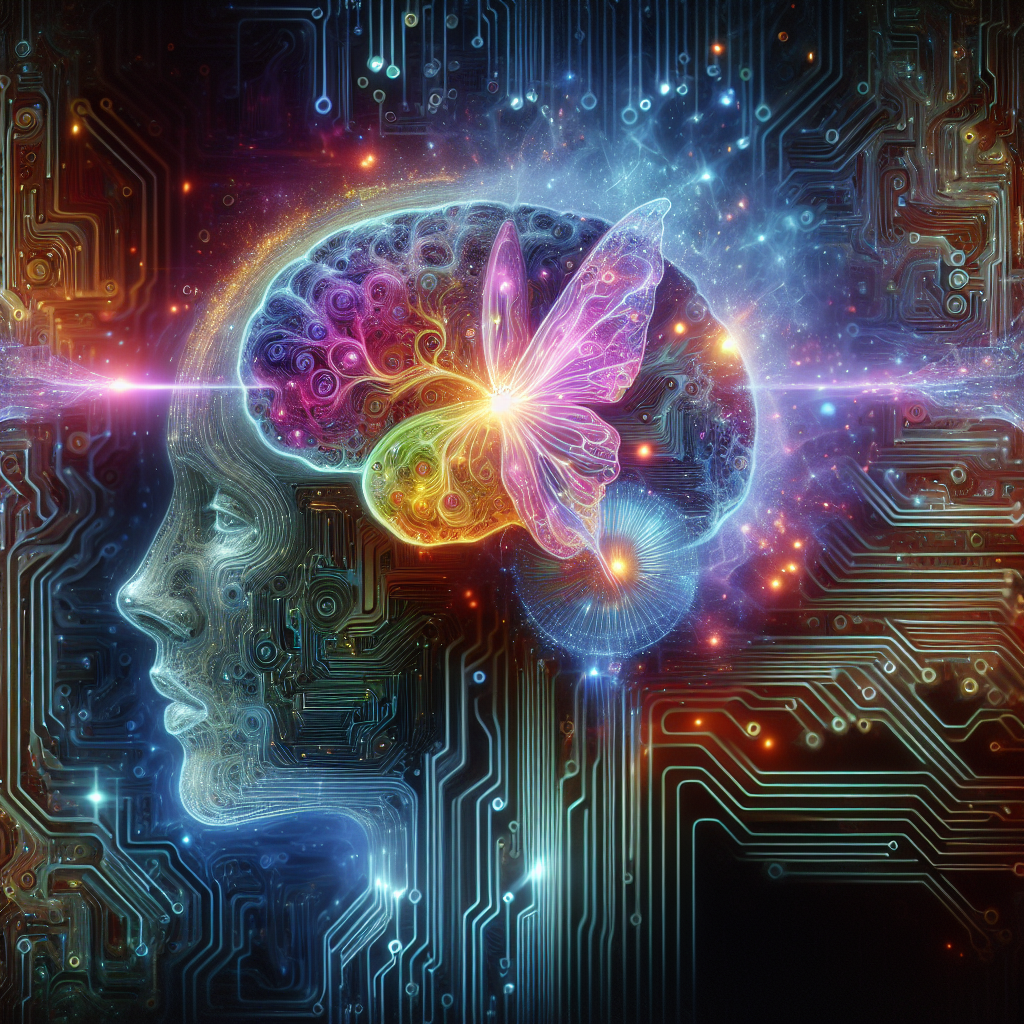
Artificial intelligence (AI) has been a hot topic in recent years, with many people debating its potential impact on society and the future of work. One area that is often overlooked is the creative potential of AI. While many people associate AI with tasks like data analysis and automation, the technology has also shown promise in generating art, music, and even writing.
AI has the ability to analyze vast amounts of data and identify patterns that humans may not be able to see. This means that AI can create unique and innovative works of art that push the boundaries of what is possible. Additionally, AI can work much faster than humans, allowing it to produce art at a rapid pace.
One of the most well-known examples of AI in the creative realm is the use of neural networks to generate art. Neural networks are a type of AI that can learn to recognize patterns in data and generate new content based on those patterns. Artists and researchers have used neural networks to create everything from paintings to music to poetry.
For example, Google’s DeepDream algorithm uses neural networks to generate surreal and dreamlike images. The algorithm was originally developed to recognize objects in images but has since been modified to create art. The images produced by DeepDream are often intricate and visually stunning, showcasing the potential of AI in the creative field.
Another example of AI in the creative realm is the use of generative adversarial networks (GANs) to create art. GANs are a type of AI that consists of two neural networks – a generator and a discriminator – that work together to create new content. The generator creates new content, while the discriminator evaluates the content to determine if it is realistic. The two networks then iterate and improve upon each other, eventually producing highly realistic and creative content.
GANs have been used to create everything from realistic portraits to abstract paintings. Artists and researchers have used GANs to explore new artistic styles and push the boundaries of what is possible in art. The technology has also been used in the fashion industry to generate new clothing designs and in the music industry to create new compositions.
In addition to generating art, AI has also shown promise in assisting artists in their creative process. For example, AI can analyze a piece of music and generate new melodies or harmonies based on the original composition. This can help artists overcome creative blocks and explore new directions in their work.
AI can also be used to enhance existing creative tools. For example, Adobe’s Sensei AI platform is used in software like Photoshop and Premiere Pro to improve image and video editing. Sensei can automatically identify objects in images, remove unwanted elements, and even suggest edits to improve the overall composition.
Despite its potential, AI in the creative realm is not without its challenges. One of the main concerns is the issue of ownership and copyright. If an AI generates a piece of art, who owns the rights to that art? Is it the creator of the AI, the person who trained the AI, or the AI itself? These questions are still being debated in legal circles and will likely become more important as AI continues to create art.
Another challenge is the issue of bias in AI-generated art. AI learns from the data it is trained on, which means that it can perpetuate biases present in that data. For example, if an AI is trained on a dataset of predominantly white faces, it may generate art that is biased towards white individuals. This can have negative implications for diversity and representation in art.
Despite these challenges, the creative potential of AI is vast and exciting. Artists and researchers are continually pushing the boundaries of what is possible with AI, creating new and innovative works that challenge our perceptions of art. As AI continues to develop and improve, we can expect to see even more groundbreaking creations in the future.
FAQs:
Q: Can AI truly be creative?
A: While AI may not possess the same level of consciousness and intentionality as humans, it can still generate creative works based on patterns and data. AI can create art that is unique and innovative, pushing the boundaries of what is possible.
Q: Will AI replace human artists?
A: AI is unlikely to replace human artists entirely, as it lacks the emotional depth and intuition that humans possess. However, AI can assist artists in their creative process and generate new ideas and inspiration.
Q: How can artists use AI in their work?
A: Artists can use AI to generate new art, enhance existing creative tools, and overcome creative blocks. AI can be a valuable tool for exploring new artistic styles and pushing the boundaries of what is possible in art.
Q: What are the ethical implications of AI-generated art?
A: The ethical implications of AI-generated art are still being debated. Issues of ownership, copyright, and bias are all important considerations when it comes to AI in the creative realm. It is important for artists and researchers to be aware of these issues and work towards creating ethical and inclusive AI-generated art.