
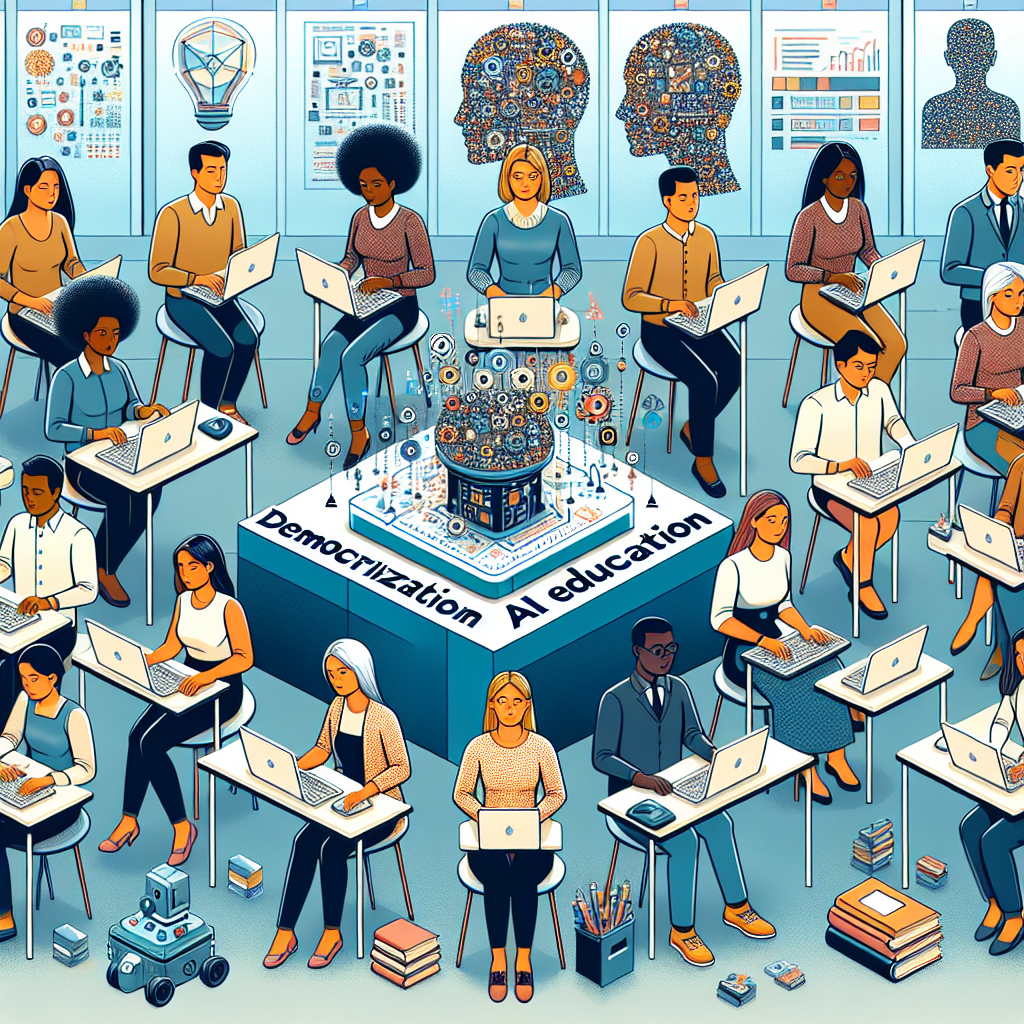
The Democratization of AI Education: Building a Skilled Workforce
Artificial Intelligence (AI) is transforming industries and reshaping the way we live and work. From self-driving cars to personalized recommendations on streaming platforms, AI is already a part of our daily lives. As the demand for AI technology continues to grow, there is an increasing need for skilled professionals who can develop, implement, and manage AI systems.
However, the field of AI has historically been dominated by experts with advanced degrees in computer science, mathematics, and related fields. The democratization of AI education is essential to ensure that a diverse and skilled workforce is able to participate in and benefit from the AI revolution.
What is AI Education?
AI education encompasses a wide range of topics and skills, including machine learning, deep learning, natural language processing, computer vision, robotics, and more. AI education can take many forms, from formal degree programs at universities to online courses, bootcamps, and workshops.
AI education is not just for computer scientists and engineers. Professionals in fields such as healthcare, finance, marketing, and education can benefit from learning about AI and how it can be applied to their work. AI education is also important for policymakers, journalists, and the general public, as AI technologies have far-reaching implications for society.
The democratization of AI education means making AI knowledge and skills accessible to a broader audience. This includes breaking down barriers to entry, such as cost, prerequisites, and institutional barriers. It also means promoting diversity and inclusion in the field of AI, so that individuals from different backgrounds and experiences can contribute to and benefit from AI innovations.
Building a Skilled Workforce
A skilled workforce is essential for the continued development and adoption of AI technologies. As AI becomes more integrated into various industries, there is a growing demand for professionals who can design, implement, and manage AI systems. This includes data scientists, machine learning engineers, AI researchers, and AI ethicists.
The democratization of AI education is key to building a skilled workforce that is diverse, inclusive, and representative of the population as a whole. By making AI education more accessible and inclusive, we can ensure that individuals from all backgrounds have the opportunity to participate in and shape the future of AI.
There are several ways to promote the democratization of AI education and build a skilled workforce:
1. Online Courses and Bootcamps: Online platforms such as Coursera, Udacity, and edX offer a wide range of AI courses and programs that are accessible to anyone with an internet connection. These platforms provide high-quality education at a fraction of the cost of traditional degree programs, making AI education more affordable and accessible.
2. Community Colleges and Vocational Schools: Community colleges and vocational schools are also playing a role in democratizing AI education. These institutions offer affordable and flexible programs that are designed to prepare students for careers in AI and related fields. By partnering with industry leaders and experts, community colleges and vocational schools can ensure that their programs are up-to-date and relevant to the needs of the workforce.
3. Diversity and Inclusion Initiatives: Promoting diversity and inclusion in AI education is essential to building a skilled workforce that reflects the diversity of the population. This includes recruiting and retaining students from underrepresented groups, providing mentorship and support, and creating a culture of inclusivity and belonging. Organizations such as AI4ALL and Black in AI are working to increase diversity and inclusion in the field of AI through mentorship programs, scholarships, and networking opportunities.
4. Corporate Training Programs: Many companies are investing in AI education for their employees to ensure that they have the skills and knowledge needed to succeed in a rapidly changing technological landscape. Corporate training programs can provide employees with hands-on experience and real-world applications of AI technology, helping them to stay competitive and advance their careers.
FAQs
Q: What are the prerequisites for learning AI?
A: While a background in computer science, mathematics, or related fields can be helpful, there are many AI courses and programs that are designed for beginners with no prior experience. The most important prerequisites for learning AI are curiosity, a willingness to learn, and a passion for problem-solving.
Q: How long does it take to learn AI?
A: The time it takes to learn AI depends on the individual’s background, experience, and learning goals. Some people may be able to pick up the basics of AI in a few weeks or months, while others may take longer to master more advanced concepts. The key is to be patient, persistent, and dedicated to your learning journey.
Q: What are the career opportunities in AI?
A: There are a wide range of career opportunities in AI, including data scientist, machine learning engineer, AI researcher, AI ethicist, and more. AI professionals work in industries such as healthcare, finance, marketing, and education, developing AI systems that can improve efficiency, accuracy, and decision-making.
Q: How can I get started with AI education?
A: There are many resources available for getting started with AI education, including online courses, bootcamps, workshops, and community colleges. Start by exploring different programs and platforms to find one that fits your learning style and goals. Don’t be afraid to ask questions, seek out mentors, and connect with others who share your interests in AI.
In conclusion, the democratization of AI education is essential to building a skilled workforce that is diverse, inclusive, and representative of the population as a whole. By making AI education more accessible and inclusive, we can ensure that individuals from all backgrounds have the opportunity to participate in and shape the future of AI. Whether you are a student, professional, or lifelong learner, there has never been a better time to get started with AI education and join the AI revolution.