
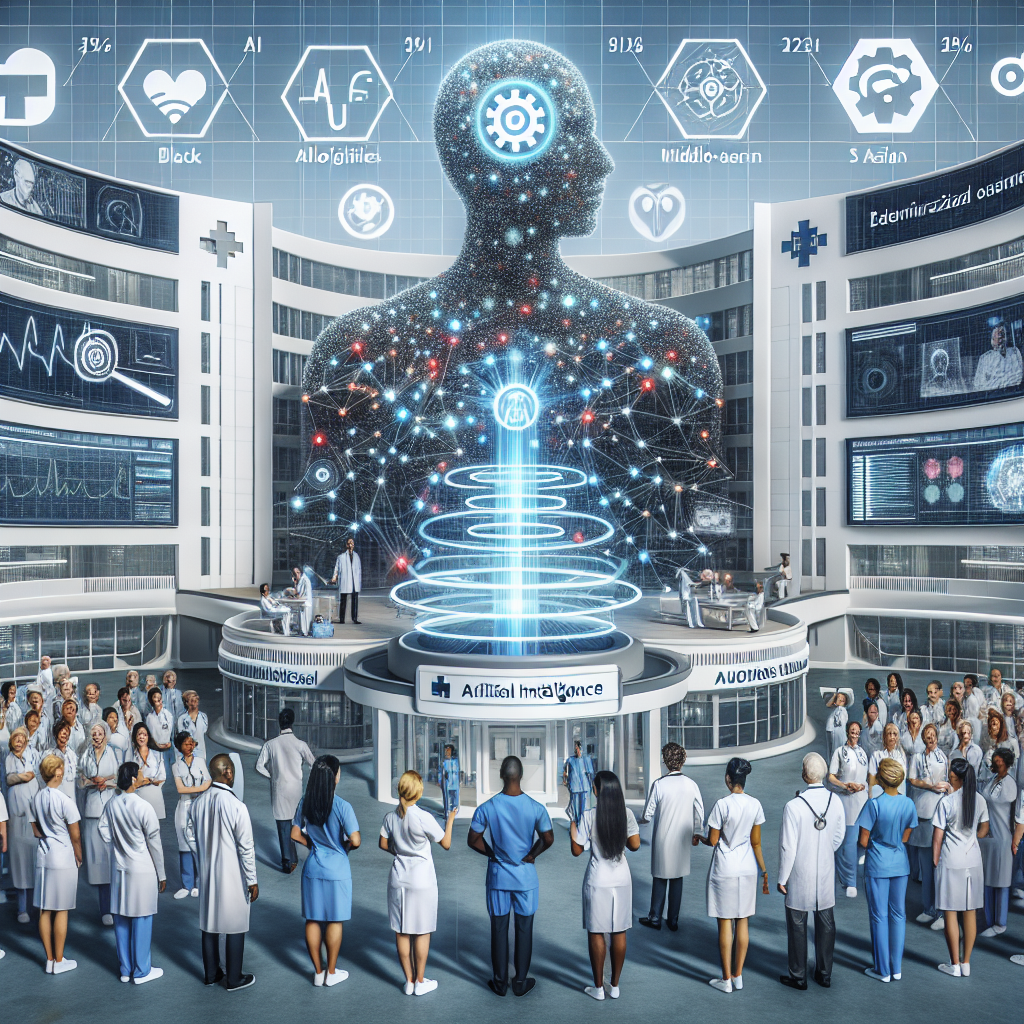
The healthcare industry is undergoing a significant transformation with the advent of artificial intelligence (AI). AI has the potential to revolutionize the way healthcare is delivered, making it more efficient, accurate, and accessible. One of the key trends in this revolution is the democratization of AI, which refers to the widespread adoption and use of AI technologies by healthcare providers of all sizes.
Democratization of AI in healthcare is all about making AI tools and technologies more accessible and affordable to a wider range of healthcare providers. This means that even small clinics and individual practitioners can now leverage the power of AI to improve patient care and outcomes. Here are some ways in which AI is being democratized in the healthcare industry:
1. AI-powered diagnostics: One of the most exciting applications of AI in healthcare is in diagnostics. AI algorithms can analyze medical images, such as X-rays, MRIs, and CT scans, to detect patterns and anomalies that may not be visible to the human eye. This can help healthcare providers make more accurate diagnoses and treatment decisions, leading to better patient outcomes.
2. Predictive analytics: AI can also be used to analyze large amounts of patient data to predict health outcomes and identify at-risk patients. This can help healthcare providers intervene early and prevent serious health issues from developing.
3. Virtual health assistants: AI-powered chatbots and virtual assistants are becoming increasingly common in healthcare settings. These virtual assistants can help patients schedule appointments, refill prescriptions, and answer basic medical questions, freeing up healthcare providers to focus on more complex tasks.
4. Personalized medicine: AI can analyze genetic data and other patient information to tailor treatments to individual patients. This can lead to more effective and personalized care, improving patient outcomes and reducing healthcare costs.
The democratization of AI in healthcare is not without its challenges. One of the biggest challenges is ensuring that AI algorithms are accurate and unbiased. For example, if an AI algorithm is trained on biased data, it may make incorrect or discriminatory decisions. Healthcare providers must therefore ensure that the AI technologies they use are ethically developed and rigorously tested before being deployed in clinical settings.
Another challenge is the need for healthcare providers to have the necessary skills and expertise to use AI effectively. Many healthcare providers may not have the technical knowledge or resources to implement AI technologies in their practice. This is where AI companies and vendors can play a crucial role by providing training and support to healthcare providers to help them integrate AI into their workflows.
Despite these challenges, the democratization of AI in healthcare holds great promise for improving patient care and outcomes. By making AI technologies more accessible and affordable, healthcare providers of all sizes can harness the power of AI to deliver more efficient, accurate, and personalized care to their patients.
FAQs:
1. What are some examples of AI applications in healthcare?
Some examples of AI applications in healthcare include AI-powered diagnostics, predictive analytics, virtual health assistants, and personalized medicine.
2. How can AI improve patient care?
AI can improve patient care by helping healthcare providers make more accurate diagnoses, predict health outcomes, and tailor treatments to individual patients. This can lead to better patient outcomes and reduced healthcare costs.
3. What are some of the challenges of democratizing AI in healthcare?
Some of the challenges of democratizing AI in healthcare include ensuring the accuracy and bias-free nature of AI algorithms, and ensuring that healthcare providers have the necessary skills and expertise to use AI effectively.
4. How can healthcare providers implement AI in their practice?
Healthcare providers can implement AI in their practice by partnering with AI companies and vendors that provide training and support for integrating AI technologies into clinical workflows. They can also collaborate with data scientists and AI experts to develop custom AI solutions tailored to their specific needs.
In conclusion, the democratization of AI in the healthcare industry is a game-changer that has the potential to transform the way healthcare is delivered. By making AI technologies more accessible and affordable, healthcare providers of all sizes can harness the power of AI to improve patient care and outcomes. While there are challenges to overcome, the benefits of democratizing AI in healthcare far outweigh the risks, paving the way for a brighter future for healthcare delivery.