
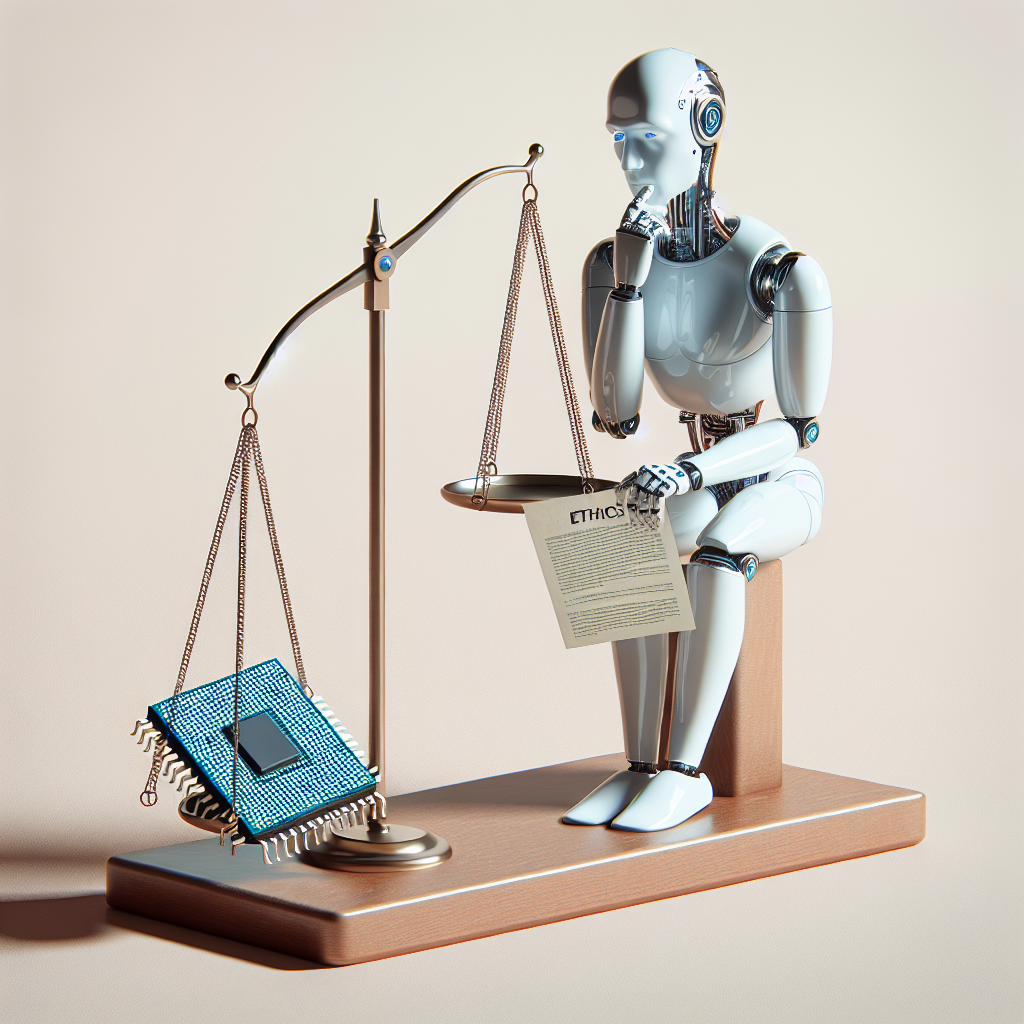
The Ethical Dilemmas of Artificial Intelligence
Artificial intelligence (AI) has become increasingly prevalent in our society, with applications ranging from virtual assistants like Siri and Alexa to self-driving cars and predictive algorithms in healthcare. While the benefits of AI are vast and promising, there are also significant ethical dilemmas that come with the advancement of this technology.
One of the biggest ethical dilemmas of AI is the issue of bias and discrimination. AI systems are trained on data sets that may contain biases, such as gender or racial biases, which can lead to discriminatory outcomes. For example, a study conducted by researchers at MIT found that facial recognition systems have higher error rates for darker-skinned individuals, which can have serious consequences in areas like law enforcement and hiring practices.
Another ethical dilemma of AI is the issue of accountability and transparency. AI systems are often complex and opaque, making it difficult to understand how they arrive at their decisions. This lack of transparency can make it challenging to hold AI systems accountable for their actions, especially in cases where they make mistakes or cause harm.
Privacy is also a major concern when it comes to AI. As AI systems become more sophisticated, they have the ability to collect and analyze vast amounts of personal data. This raises concerns about how this data is being used and whether individuals have control over their own information. For example, facial recognition technology used in public spaces can raise concerns about surveillance and invasion of privacy.
Additionally, there are ethical dilemmas surrounding the impact of AI on the workforce. As AI technology advances, there is a fear that it will lead to widespread job displacement and economic inequality. While AI has the potential to increase productivity and create new job opportunities, it also has the potential to automate tasks that are currently performed by humans, leading to job loss in certain industries.
The use of AI in weapons systems is another ethical dilemma that has sparked debate. Autonomous weapons, also known as killer robots, have the ability to make decisions about when to use lethal force without human intervention. This raises concerns about the morality and legality of using AI in warfare, as well as the potential for these weapons to be used in ways that violate human rights.
To address these ethical dilemmas, it is important for developers, policymakers, and stakeholders to consider the ethical implications of AI technology and work towards implementing safeguards to protect against potential harms. This may include developing guidelines and regulations for the use of AI, ensuring transparency and accountability in AI systems, and promoting diversity and inclusivity in the development and deployment of AI technology.
FAQs
Q: What are some examples of bias in AI systems?
A: Some examples of bias in AI systems include facial recognition systems that have higher error rates for darker-skinned individuals, predictive algorithms in healthcare that may discriminate against certain populations, and hiring algorithms that may favor certain demographics over others.
Q: How can we address bias in AI systems?
A: To address bias in AI systems, it is important to ensure that the data used to train these systems is diverse and representative of the population, to regularly audit and test AI systems for bias, and to implement mechanisms for accountability and transparency in AI decision-making processes.
Q: What are some potential benefits of AI technology?
A: Some potential benefits of AI technology include increased efficiency and productivity, improved healthcare outcomes through predictive analytics and personalized medicine, enhanced safety and security through applications like self-driving cars and facial recognition technology, and new job opportunities in emerging industries.
Q: How can we ensure that AI technology is used ethically?
A: To ensure that AI technology is used ethically, it is important for developers and policymakers to consider the ethical implications of AI technology from the early stages of development, to implement safeguards such as guidelines and regulations for the use of AI, and to promote transparency and accountability in AI systems.
In conclusion, while AI technology holds great promise for improving our lives in many ways, it also presents significant ethical challenges that must be addressed. By considering the ethical implications of AI technology and working towards implementing safeguards to protect against potential harms, we can ensure that AI is used in a way that benefits society as a whole.