
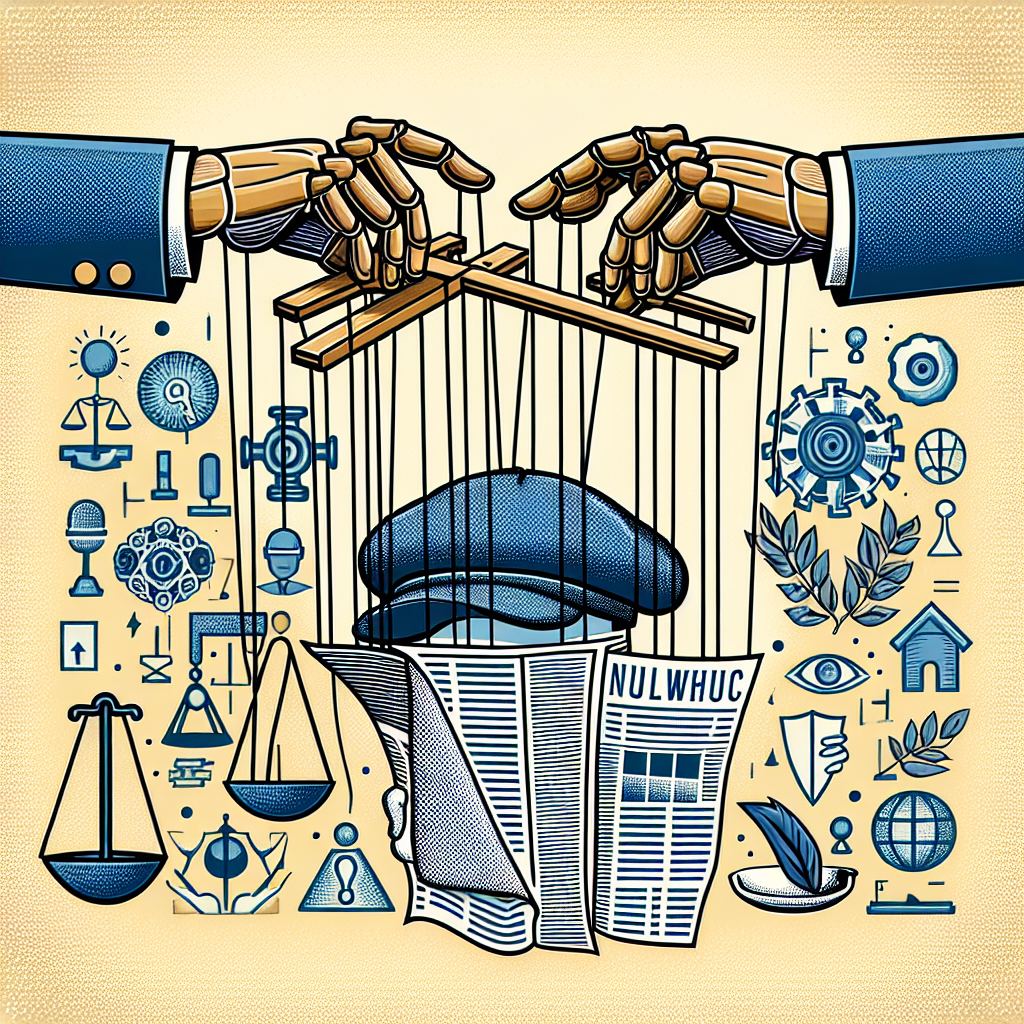
The Ethical Implications of AI-Generated News Content
Artificial Intelligence (AI) has become an increasingly prevalent tool in the creation of news content. With the ability to gather and analyze vast amounts of data quickly, AI can generate news stories at a rapid pace, helping news organizations keep up with the demand for up-to-date information. While AI-generated news content has its benefits, there are also ethical implications that need to be considered.
One of the main ethical concerns surrounding AI-generated news content is the potential for bias. AI algorithms are designed to analyze data and make decisions based on patterns and trends, but these algorithms are only as good as the data they are trained on. If the data used to train the AI is biased or incomplete, the resulting news content may also be biased or misleading.
For example, if an AI algorithm is trained on data that disproportionately represents one particular group or perspective, the news stories it generates may reflect that bias. This could lead to a lack of diversity in news coverage, with certain voices and perspectives being marginalized or silenced.
Another ethical concern with AI-generated news content is the issue of transparency. Unlike human reporters, AI algorithms do not have the ability to explain their reasoning or decision-making process. This lack of transparency can make it difficult for readers to trust the information presented in AI-generated news stories.
Additionally, there is the potential for AI-generated news content to spread misinformation or fake news. AI algorithms can be manipulated or hacked to produce false or misleading information, which can have serious consequences for public trust in the media and democracy.
Despite these ethical concerns, AI-generated news content also has its benefits. AI can help news organizations increase their output and reach a wider audience, especially in the age of 24/7 news cycles and social media. AI can also help automate repetitive tasks, freeing up journalists to focus on more in-depth reporting and analysis.
To address the ethical implications of AI-generated news content, news organizations must take steps to ensure transparency, accountability, and fairness in their use of AI. This includes being transparent about the use of AI in news production, providing context and explanations for AI-generated content, and regularly auditing and testing AI algorithms to detect and correct biases.
News organizations should also prioritize diversity and inclusivity in their data collection and training processes to ensure that AI-generated news content represents a wide range of perspectives and voices. Additionally, news organizations should work to build public trust in AI-generated news content by clearly labeling it as such and providing opportunities for readers to provide feedback and ask questions.
In conclusion, the ethical implications of AI-generated news content are complex and multifaceted. While AI can help news organizations increase their output and reach, it also presents risks in terms of bias, transparency, and misinformation. By taking proactive steps to address these ethical concerns, news organizations can harness the power of AI to improve their news coverage while upholding ethical standards and serving the public interest.
FAQs:
Q: How can AI algorithms be biased?
A: AI algorithms can be biased if they are trained on biased or incomplete data. For example, if a dataset used to train an AI algorithm is not representative of the population it is meant to analyze, the algorithm may produce biased results.
Q: How can news organizations ensure transparency in AI-generated news content?
A: News organizations can ensure transparency in AI-generated news content by clearly labeling it as such, providing context and explanations for AI-generated content, and being open about their use of AI in news production.
Q: What are some ways that news organizations can address bias in AI-generated news content?
A: News organizations can address bias in AI-generated news content by prioritizing diversity and inclusivity in their data collection and training processes, regularly auditing and testing AI algorithms for biases, and providing opportunities for readers to provide feedback and ask questions.
Q: How can readers distinguish between AI-generated news content and human-generated news content?
A: News organizations should clearly label AI-generated news content as such to help readers distinguish between AI-generated and human-generated news. Additionally, news organizations can provide context and explanations for AI-generated content to help readers understand how it was produced.