
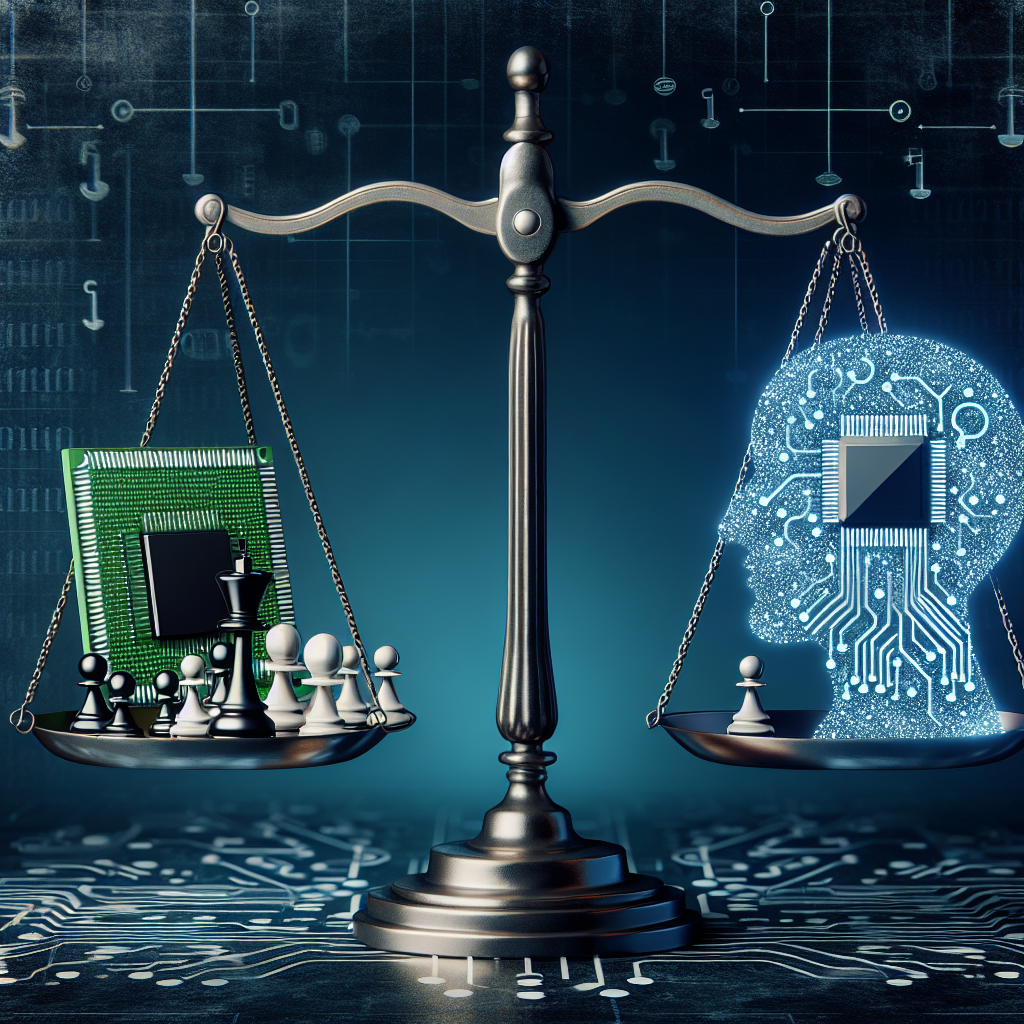
Artificial intelligence (AI) has made significant advancements in recent years, revolutionizing various industries, including criminal justice. AI technologies are being used in various aspects of the criminal justice system, from predictive policing to parole decisions. While AI has the potential to improve efficiency and accuracy in the criminal justice system, it also raises ethical concerns that must be addressed.
One of the main ethical implications of AI in criminal justice is the potential for bias and discrimination. AI algorithms are trained on historical data, which may contain biases against certain groups based on race, gender, or socioeconomic status. If these biases are not properly addressed, AI systems can perpetuate and even exacerbate existing inequalities in the criminal justice system.
For example, in predictive policing, AI algorithms analyze historical crime data to predict where crimes are likely to occur in the future. However, if the historical data used to train these algorithms contain biases, such as over-policing in minority neighborhoods, the predictions made by AI systems may unfairly target these communities. This can lead to increased surveillance and policing in already marginalized communities, further perpetuating inequalities in the criminal justice system.
Another ethical concern related to AI in criminal justice is transparency and accountability. AI systems are often complex and opaque, making it difficult to understand how they make decisions. This lack of transparency can make it challenging to hold AI systems accountable for their decisions, especially in cases where individuals are affected by these decisions, such as in sentencing and parole decisions.
Furthermore, the use of AI in criminal justice raises concerns about due process and the rights of individuals. AI systems are not infallible and can make mistakes, leading to wrongful convictions or harsher sentences for individuals. It is essential to ensure that individuals have the right to appeal decisions made by AI systems and that these systems are held to the same standards of evidence and fairness as human decision-makers.
In addition to bias, transparency, and accountability, the use of AI in criminal justice also raises concerns about privacy and surveillance. AI technologies, such as facial recognition and predictive analytics, can be used to track individuals and predict their behavior, raising concerns about mass surveillance and the erosion of privacy rights.
Despite these ethical concerns, AI also has the potential to improve the criminal justice system in various ways. For example, AI technologies can help identify patterns and trends in crime data that human analysts may overlook, leading to more effective crime prevention strategies. AI can also help streamline administrative processes in the criminal justice system, such as case management and scheduling, freeing up resources for more critical tasks.
To address the ethical implications of AI in criminal justice, it is essential to implement safeguards and regulations that ensure fairness, transparency, and accountability in the use of AI technologies. This can include regular audits of AI systems to identify and address biases, as well as clear guidelines on how AI systems should be used in decision-making processes.
Furthermore, it is crucial to involve stakeholders, including policymakers, legal experts, and community members, in the development and implementation of AI technologies in criminal justice. By including diverse perspectives and expertise, we can ensure that AI systems are designed and used in ways that uphold ethical principles and respect the rights of individuals.
In conclusion, the ethical implications of AI in criminal justice are complex and multifaceted. While AI has the potential to improve efficiency and accuracy in the criminal justice system, it also raises concerns about bias, transparency, accountability, privacy, and due process. To address these ethical concerns, it is essential to implement safeguards and regulations that ensure fairness, transparency, and accountability in the use of AI technologies in criminal justice.
FAQs:
Q: Can AI algorithms be biased?
A: Yes, AI algorithms can be biased if they are trained on biased data. It is essential to carefully analyze and address biases in AI systems to ensure fair and equitable outcomes.
Q: How can we ensure transparency in AI decision-making?
A: Transparency in AI decision-making can be achieved through regular audits of AI systems, clear guidelines on how AI systems should be used, and involving stakeholders in the development and implementation of AI technologies.
Q: What are some ways AI can improve the criminal justice system?
A: AI can help identify patterns and trends in crime data, streamline administrative processes, and improve crime prevention strategies. However, it is essential to address ethical concerns related to bias, transparency, accountability, and privacy in the use of AI in criminal justice.