
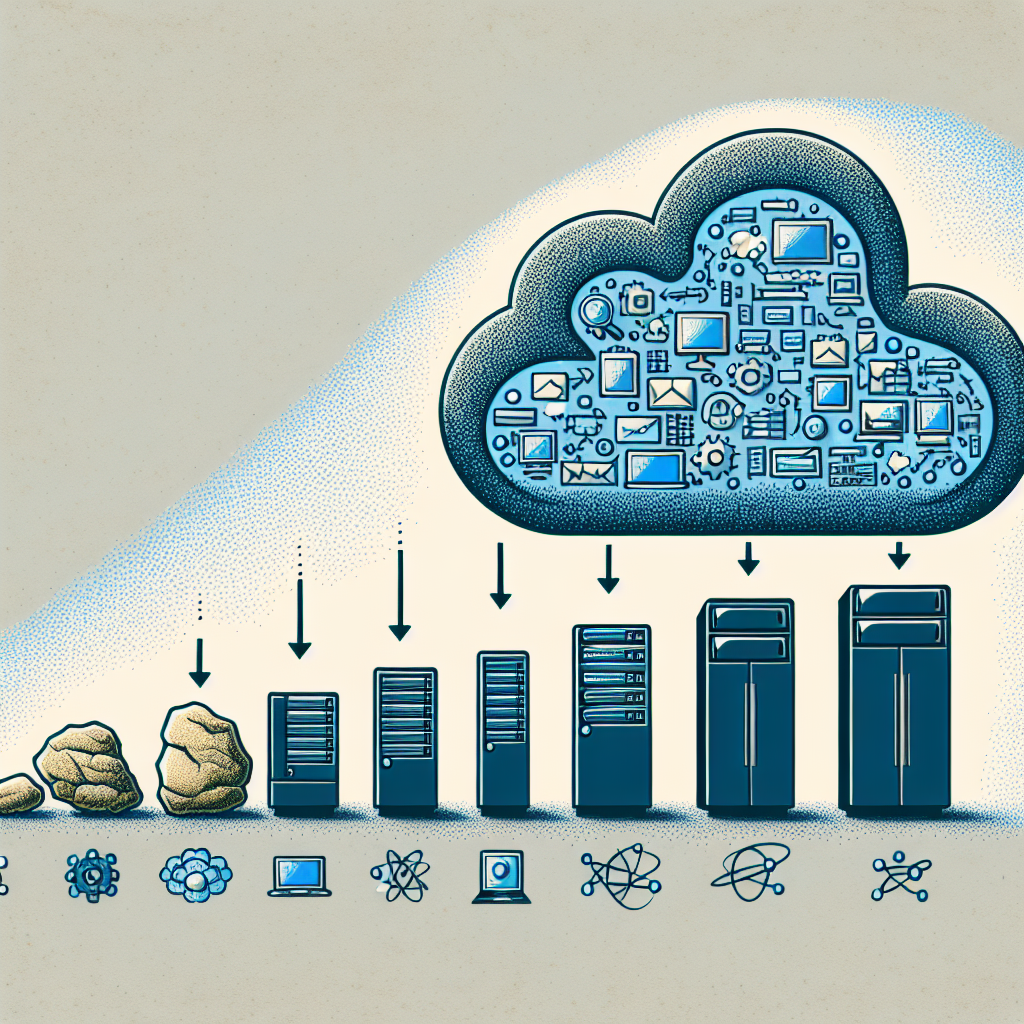
Artificial Intelligence (AI) has been a driving force behind the evolution of cloud service delivery models in recent years. The integration of AI technologies into cloud services has enabled businesses to optimize their operations, improve efficiency, and enhance customer experiences. In this article, we will explore the evolution of AI in cloud service delivery models, its impact on businesses, and the future trends in this space.
Evolution of AI in Cloud Service Delivery Models
AI has been gradually integrated into cloud service delivery models over the past decade, transforming the way businesses operate and deliver services to their customers. The evolution of AI in cloud services can be divided into three main stages:
1. Automation and efficiency: In the early stages, AI was primarily used for automating routine tasks and improving the efficiency of cloud services. This included automating data processing, optimizing resource allocation, and streamlining workflows. AI-powered automation tools helped businesses reduce costs, improve productivity, and deliver services faster to their customers.
2. Personalization and customization: As AI technologies advanced, businesses started leveraging AI to deliver personalized and customized services to their customers. AI algorithms were used to analyze customer data, preferences, and behavior to deliver tailored recommendations, content, and services. This level of personalization enabled businesses to enhance customer satisfaction, loyalty, and engagement.
3. Predictive analytics and optimization: In the current stage, AI is being used for predictive analytics and optimization in cloud services. AI algorithms can analyze large volumes of data, identify patterns, trends, and insights, and make data-driven predictions and recommendations. This enables businesses to optimize their operations, make informed decisions, and improve the overall performance of their cloud services.
Impact of AI in Cloud Service Delivery Models
The integration of AI into cloud service delivery models has had a significant impact on businesses across various industries. Some of the key benefits of AI in cloud services include:
1. Improved efficiency and productivity: AI-powered automation tools have helped businesses streamline their operations, reduce manual tasks, and improve overall efficiency and productivity. This has enabled businesses to deliver services faster and more effectively to their customers.
2. Enhanced customer experiences: AI-powered personalization tools have enabled businesses to deliver customized services and experiences to their customers. This has helped businesses improve customer satisfaction, loyalty, and retention rates.
3. Data-driven decision-making: AI-powered predictive analytics tools have enabled businesses to make informed decisions based on data-driven insights and predictions. This has helped businesses optimize their operations, identify new opportunities, and improve overall performance.
4. Cost savings: AI-powered automation tools have helped businesses reduce costs by eliminating manual tasks, optimizing resource allocation, and improving operational efficiency. This has enabled businesses to save time and money while delivering high-quality services to their customers.
Future Trends in AI and Cloud Service Delivery Models
The integration of AI into cloud service delivery models is expected to continue to evolve in the coming years, with several key trends shaping the future of AI in cloud services:
1. Edge computing: Edge computing, which involves processing data closer to the source of data generation, is expected to become more prevalent in AI-powered cloud services. This will enable businesses to process and analyze data in real-time, improve response times, and deliver more efficient and personalized services to their customers.
2. AI-powered security: AI technologies are increasingly being used to enhance security in cloud services, including threat detection, fraud prevention, and data encryption. AI-powered security tools can help businesses protect their data, infrastructure, and customers from cyber threats and attacks.
3. Multi-cloud and hybrid cloud environments: Businesses are increasingly adopting multi-cloud and hybrid cloud environments to leverage the strengths of multiple cloud providers and optimize their operations. AI technologies can help businesses manage and optimize their multi-cloud and hybrid cloud environments, improve interoperability, and enhance performance.
4. Ethical AI: As AI technologies become more pervasive in cloud services, there is a growing focus on ethical AI practices, including fairness, transparency, and accountability. Businesses are increasingly adopting ethical AI principles to ensure that AI-powered cloud services are developed and deployed responsibly.
FAQs
Q: How is AI being used in cloud services?
A: AI is being used in cloud services to automate routine tasks, deliver personalized services, provide predictive analytics, and optimize operations.
Q: What are the benefits of AI in cloud services?
A: The benefits of AI in cloud services include improved efficiency and productivity, enhanced customer experiences, data-driven decision-making, and cost savings.
Q: What are some future trends in AI and cloud service delivery models?
A: Some future trends in AI and cloud service delivery models include edge computing, AI-powered security, multi-cloud and hybrid cloud environments, and ethical AI practices.
In conclusion, the integration of AI into cloud service delivery models has transformed the way businesses operate and deliver services to their customers. AI-powered automation, personalization, and predictive analytics tools have enabled businesses to improve efficiency, enhance customer experiences, and make data-driven decisions. As AI technologies continue to evolve, businesses can expect to see further advancements in AI and cloud services, including edge computing, AI-powered security, multi-cloud environments, and ethical AI practices. By embracing these trends and leveraging the power of AI in cloud services, businesses can stay ahead of the competition, drive innovation, and deliver value to their customers.