
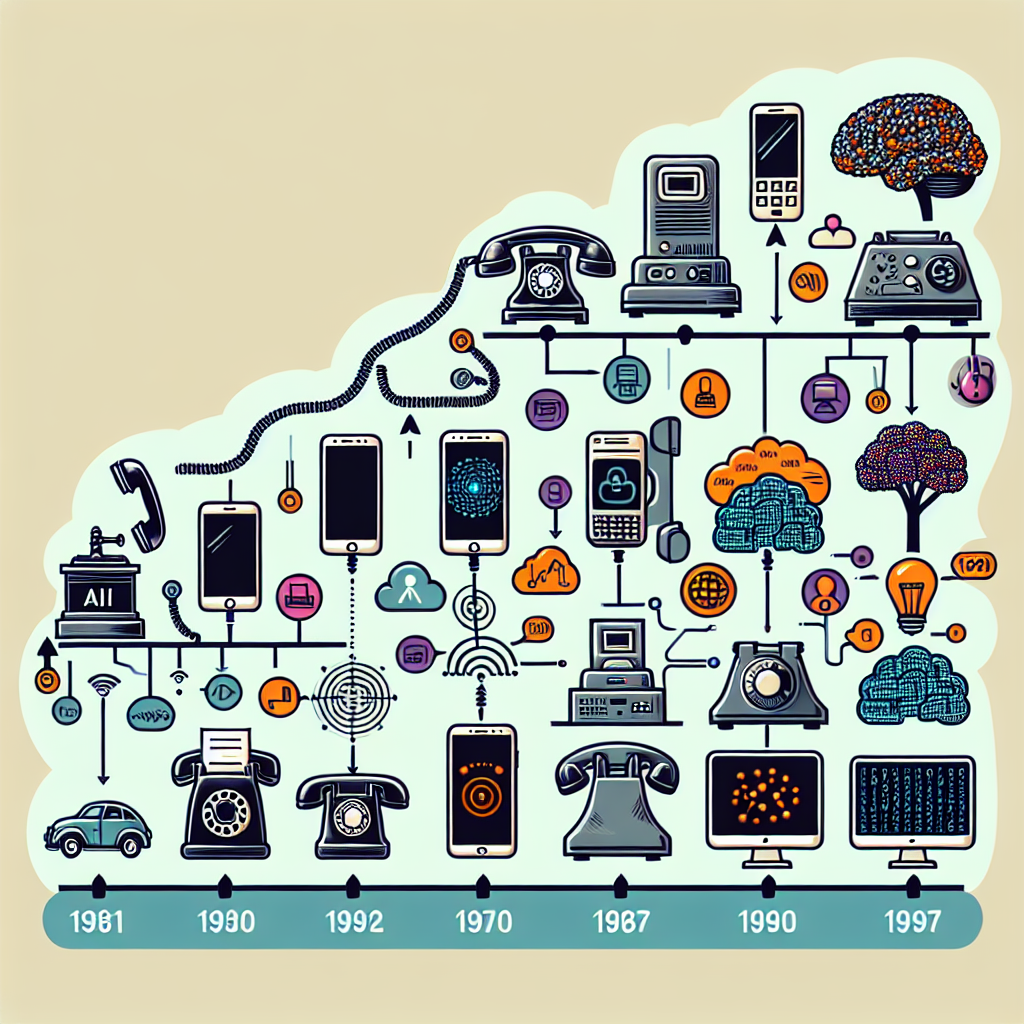
The Evolution of AI in Telecommunications: A Timeline
Artificial Intelligence (AI) has been transforming the telecommunications industry for years, revolutionizing the way companies communicate and operate. From improving customer service to optimizing network performance, AI has become an essential tool for telecom providers looking to stay competitive in the digital age. In this article, we’ll take a closer look at the evolution of AI in telecommunications, exploring the key milestones that have shaped the industry over the years.
1950s-1960s: The Birth of AI
The concept of AI first emerged in the 1950s, with pioneers such as Alan Turing and John McCarthy laying the groundwork for the development of intelligent machines. During this time, researchers began experimenting with early forms of AI, exploring how computers could be programmed to perform tasks that typically require human intelligence. While progress was slow, these early efforts set the stage for the future of AI in telecommunications.
1970s-1980s: Expert Systems and Natural Language Processing
In the 1970s and 1980s, AI technologies began to gain traction in the telecommunications industry, with the development of expert systems and natural language processing. Expert systems, also known as knowledge-based systems, were designed to mimic the problem-solving abilities of human experts, helping telecom companies automate decision-making processes and improve efficiency.
Natural language processing (NLP) also emerged as a key area of focus during this time, enabling computers to understand and interpret human language. This technology paved the way for advancements in customer service, as telecom providers began using AI-powered chatbots and virtual assistants to interact with customers in real-time.
1990s-2000s: Machine Learning and Data Analytics
The 1990s and 2000s marked a significant turning point for AI in telecommunications, with the rise of machine learning and data analytics. Machine learning algorithms became increasingly sophisticated, enabling telecom providers to analyze vast amounts of data and extract valuable insights to improve network performance and customer experiences.
During this time, AI-powered predictive analytics also became a game-changer for telecom companies, helping them anticipate customer needs and tailor services to meet their demands. As a result, telecom providers were able to deliver more personalized and targeted offerings, driving customer satisfaction and loyalty.
2010s-Present: The Era of Cognitive Computing and 5G
In recent years, the telecommunications industry has witnessed a surge in the adoption of cognitive computing and AI-powered technologies. Cognitive computing systems, such as IBM’s Watson, have revolutionized the way telecom providers process and analyze data, enabling them to make faster and more informed decisions.
The rollout of 5G technology has also accelerated the integration of AI in telecommunications, with telecom companies leveraging AI-powered solutions to optimize network performance and deliver high-speed connectivity to customers. From intelligent network management to predictive maintenance, AI has become a critical component of the 5G ecosystem, driving innovation and unlocking new opportunities for growth.
FAQs
1. How is AI impacting customer service in the telecommunications industry?
AI is revolutionizing customer service in the telecommunications industry by enabling companies to deliver more personalized and efficient support to customers. AI-powered chatbots and virtual assistants are being used to interact with customers in real-time, providing instant responses to queries and resolving issues quickly. This not only improves customer satisfaction but also reduces operational costs for telecom providers.
2. How is AI being used to optimize network performance in telecommunications?
AI is being used to optimize network performance in telecommunications by analyzing vast amounts of data in real-time and identifying potential bottlenecks or issues before they impact service quality. Machine learning algorithms are used to predict network congestion, optimize routing decisions, and dynamically adjust network configurations to ensure optimal performance. This proactive approach to network management helps telecom providers deliver a seamless and reliable experience to customers.
3. What are some of the challenges associated with implementing AI in telecommunications?
One of the main challenges associated with implementing AI in telecommunications is the complexity of integrating AI-powered solutions with existing infrastructure and systems. Telecom providers often face technical and operational hurdles when deploying AI technologies, such as data silos, compatibility issues, and security concerns. Additionally, there may be resistance from employees who are reluctant to embrace AI due to fears of job displacement or job insecurity.
4. What are some of the future trends in AI for telecommunications?
Some of the future trends in AI for telecommunications include the continued advancement of cognitive computing technologies, the widespread adoption of AI-powered virtual assistants and chatbots, and the development of AI-driven predictive analytics solutions. As telecom companies continue to invest in AI, we can expect to see further innovations in network optimization, customer experience management, and service delivery, ultimately shaping the future of the telecommunications industry.
In conclusion, the evolution of AI in telecommunications has come a long way since its inception, with AI-powered technologies playing a crucial role in transforming the industry. From optimizing network performance to enhancing customer service, AI has become a strategic enabler for telecom providers looking to stay ahead of the curve in a rapidly evolving digital landscape. As AI continues to evolve and mature, we can expect to see even more innovative applications and solutions that will drive growth and innovation in the telecommunications industry for years to come.