
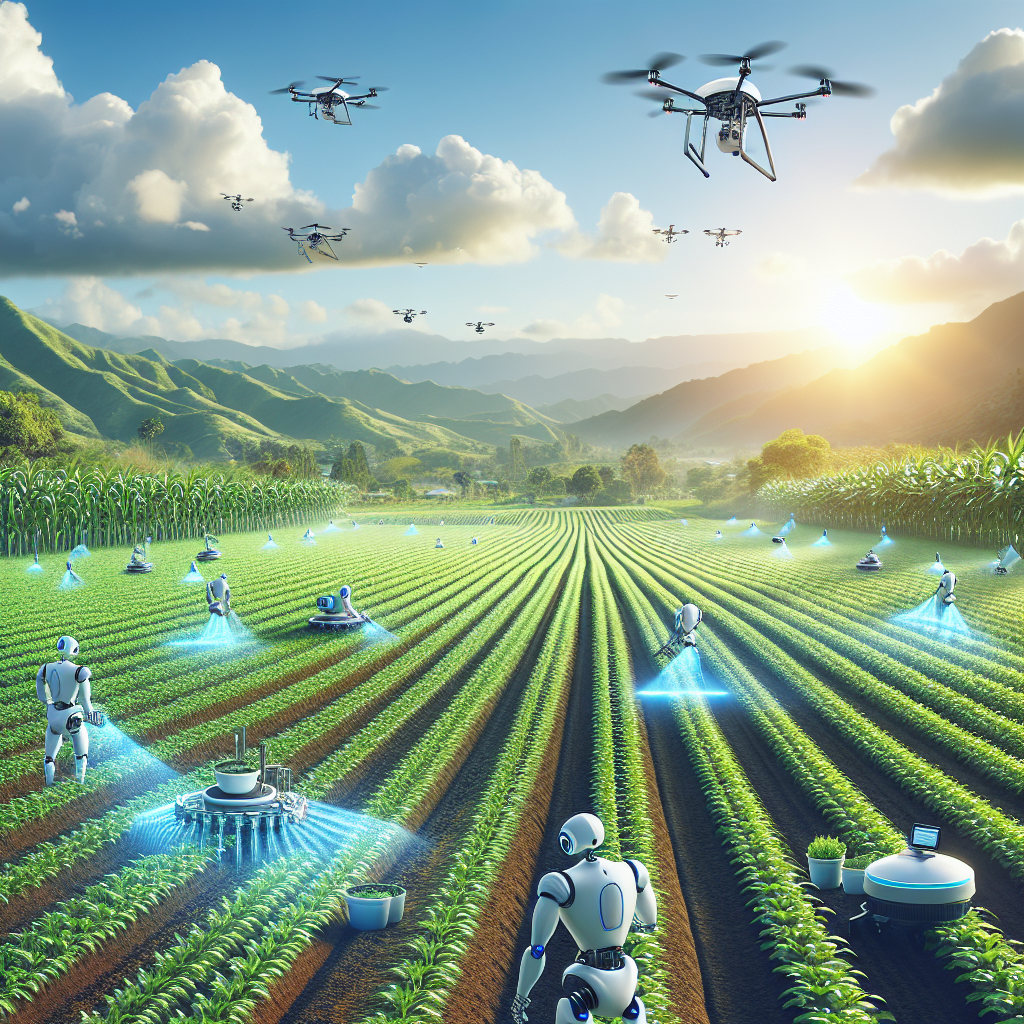
Agriculture has been a crucial part of human civilization for thousands of years, providing us with the food and resources we need to survive and thrive. However, as the world’s population continues to grow, the demand for food is increasing at an unprecedented rate. This has put significant pressure on farmers to produce more food in a sustainable and efficient way.
To meet these challenges, farmers are turning to technology, specifically artificial intelligence (AI) and robotics, to revolutionize the way we grow and harvest crops. These technologies have the potential to increase productivity, reduce waste, and improve the overall sustainability of agriculture. In this article, we will explore the future of agriculture and the role that AI and robotics will play in shaping it.
AI in Agriculture
Artificial intelligence is a branch of computer science that involves the development of machines and systems that can perform tasks that typically require human intelligence, such as learning, reasoning, problem-solving, and perception. In agriculture, AI has the potential to revolutionize the way we grow crops by providing farmers with valuable insights and data to make informed decisions.
One of the key applications of AI in agriculture is predictive analytics. By analyzing large amounts of data, AI algorithms can predict crop yields, identify pest and disease outbreaks, optimize irrigation and fertilization schedules, and even predict weather patterns. This information allows farmers to make data-driven decisions that can increase crop yields, reduce input costs, and minimize environmental impact.
Another application of AI in agriculture is precision farming. Precision farming involves using technology such as drones, sensors, and GPS to monitor and manage fields in real-time. AI algorithms can analyze this data to create detailed maps of fields, identify areas that need attention, and even control machinery to apply inputs with pinpoint accuracy. This allows farmers to maximize their resources, minimize waste, and increase overall efficiency.
Robotics in Agriculture
Robotics is another technology that is poised to revolutionize agriculture. Robots have the potential to automate tasks that are labor-intensive, repetitive, and dangerous, freeing up farmers to focus on more strategic and creative aspects of their operations. In agriculture, robots can be used for a wide range of tasks, including planting, weeding, harvesting, and even monitoring crop health.
One of the most exciting applications of robotics in agriculture is the development of autonomous tractors and machinery. These machines can operate without human intervention, using sensors, cameras, and GPS to navigate fields, avoid obstacles, and perform tasks with precision. Autonomous machinery can work around the clock, increasing productivity and reducing labor costs for farmers.
Another application of robotics in agriculture is the development of robotic harvesters. These machines can pick fruits and vegetables with speed and precision, reducing the need for manual labor and minimizing damage to crops. Robotic harvesters can also be programmed to identify ripe produce, sort it by size and quality, and pack it for transport, increasing efficiency and reducing waste.
Challenges and Opportunities
While AI and robotics have the potential to revolutionize agriculture, there are still challenges that need to be addressed. One of the main challenges is the cost of implementing these technologies. AI and robotics systems can be expensive to develop and deploy, making them out of reach for many small and medium-sized farmers. However, as technology advances and becomes more affordable, we can expect to see a wider adoption of these technologies in agriculture.
Another challenge is the potential impact of AI and robotics on jobs in agriculture. As machines take over more tasks that were traditionally performed by humans, there is a concern that this could lead to job losses in the sector. However, AI and robotics also have the potential to create new jobs in areas such as data analysis, programming, and maintenance, as well as in the development and deployment of these technologies.
Despite these challenges, the future of agriculture with AI and robotics is full of opportunities. By harnessing the power of these technologies, farmers can increase productivity, reduce waste, and improve sustainability. AI and robotics can help farmers make better decisions, optimize resources, and respond to changing environmental conditions, ultimately leading to a more efficient and resilient agriculture sector.
FAQs
Q: Will AI and robotics replace human farmers?
A: While AI and robotics have the potential to automate many tasks in agriculture, it is unlikely that they will completely replace human farmers. Farmers will still be needed to make strategic decisions, manage operations, and respond to unexpected events. However, AI and robotics can help farmers increase productivity, reduce labor costs, and improve overall efficiency.
Q: How will AI and robotics benefit the environment?
A: AI and robotics can benefit the environment in a number of ways. By optimizing inputs such as water, fertilizer, and pesticides, farmers can reduce waste and minimize the impact of agriculture on the environment. AI algorithms can also help farmers identify areas of their fields that need attention, allowing them to target inputs more precisely and avoid over-application. Additionally, robotic machinery can reduce the need for heavy machinery that can compact soil and damage crops.
Q: What are the challenges of implementing AI and robotics in agriculture?
A: One of the main challenges of implementing AI and robotics in agriculture is the cost. Developing and deploying these technologies can be expensive, making them out of reach for many small and medium-sized farmers. Additionally, there may be regulatory and logistical challenges to overcome, such as ensuring that autonomous machinery complies with safety standards and can operate effectively in different environments. However, as technology advances and becomes more affordable, we can expect to see a wider adoption of these technologies in agriculture.
In conclusion, the future of agriculture with AI and robotics is full of promise. These technologies have the potential to revolutionize the way we grow and harvest crops, increasing productivity, reducing waste, and improving sustainability. While there are challenges to overcome, the opportunities are vast, and we can expect to see a more efficient and resilient agriculture sector in the years to come.