
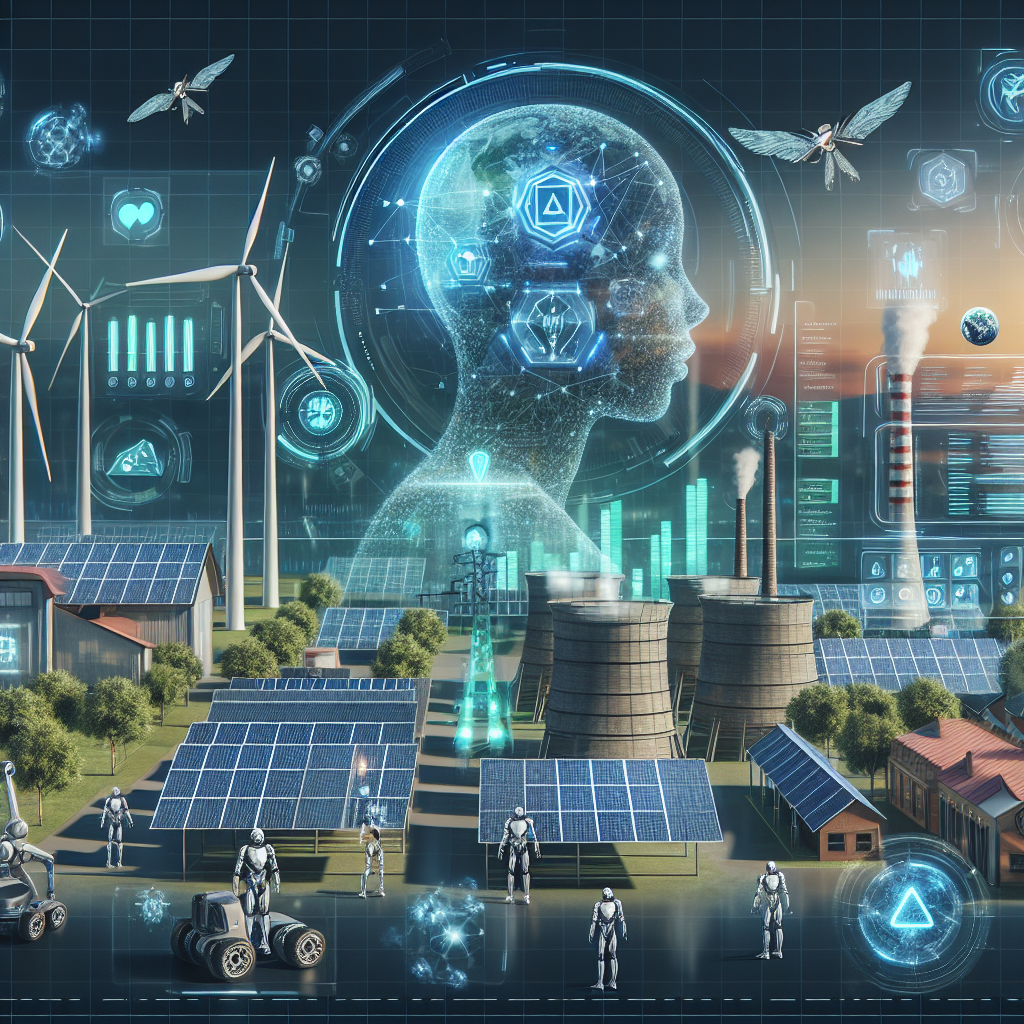
The Future of AI-Enabled Renewable Energy Markets
Introduction
The global energy landscape is undergoing a transformation as renewable energy sources such as solar, wind, and hydroelectric power become increasingly important in meeting the world’s energy needs. This shift towards renewable energy is driven by concerns over climate change, energy security, and the rising costs of fossil fuels. As renewable energy technologies continue to improve and become more cost-effective, they are becoming a viable alternative to traditional fossil fuels.
One of the key drivers of this transformation is the integration of artificial intelligence (AI) into renewable energy markets. AI technologies have the potential to revolutionize the way energy is produced, distributed, and consumed by optimizing energy systems, improving grid management, and enabling greater integration of renewable energy sources. In this article, we will explore the future of AI-enabled renewable energy markets and the potential benefits and challenges they present.
AI in Renewable Energy Markets
AI technologies such as machine learning, neural networks, and predictive analytics are being increasingly used in renewable energy markets to optimize energy production, improve grid stability, and enhance energy efficiency. These technologies can analyze vast amounts of data in real-time to make more accurate predictions and decisions, leading to more efficient and reliable energy systems.
One of the key applications of AI in renewable energy markets is in the optimization of energy production. AI algorithms can analyze data from renewable energy sources such as solar panels and wind turbines to predict energy output and optimize their performance. By using AI to predict energy production, operators can better plan and schedule energy generation, reducing costs and maximizing energy output.
AI technologies are also being used to improve grid management and stability in renewable energy markets. AI algorithms can analyze data from sensors and smart meters to monitor grid performance, detect anomalies, and optimize energy flow. By using AI to manage the grid more effectively, operators can reduce the risk of blackouts, improve grid reliability, and enable greater integration of renewable energy sources.
Another key application of AI in renewable energy markets is in energy efficiency. AI algorithms can analyze data from energy consumption patterns to identify opportunities for energy savings and optimize energy usage. By using AI to improve energy efficiency, consumers can reduce their energy bills, lower their carbon footprint, and contribute to a more sustainable energy system.
Benefits of AI-Enabled Renewable Energy Markets
There are several benefits to integrating AI into renewable energy markets, including:
1. Increased energy efficiency: AI technologies can optimize energy production, distribution, and consumption, leading to greater energy efficiency and reduced energy costs.
2. Improved grid management: AI algorithms can monitor grid performance in real-time, detect anomalies, and optimize energy flow, leading to more reliable and stable energy systems.
3. Greater integration of renewable energy sources: AI technologies can help to integrate renewable energy sources such as solar and wind power into the grid more effectively, leading to a more sustainable energy system.
4. Enhanced energy forecasting: AI algorithms can make more accurate predictions of energy production and consumption, enabling operators to better plan and schedule energy generation.
Challenges of AI-Enabled Renewable Energy Markets
While AI technologies offer many benefits to renewable energy markets, there are also several challenges that need to be addressed, including:
1. Data quality and availability: AI algorithms rely on high-quality and timely data to make accurate predictions and decisions. Ensuring the availability and quality of data from renewable energy sources can be a challenge.
2. Regulatory and policy barriers: Regulatory and policy barriers can hinder the adoption of AI technologies in renewable energy markets. Governments and regulators need to create a supportive policy environment to enable the integration of AI into energy systems.
3. Cybersecurity risks: AI technologies can be vulnerable to cyberattacks, which could disrupt energy systems and compromise data security. Ensuring the cybersecurity of AI-enabled energy systems is essential to protect against potential threats.
4. Skills and expertise: Integrating AI into renewable energy markets requires specialized skills and expertise. Ensuring that the workforce has the necessary training and knowledge to work with AI technologies is essential for successful implementation.
FAQs
Q: How can AI technologies optimize energy production in renewable energy markets?
A: AI algorithms can analyze data from renewable energy sources such as solar panels and wind turbines to predict energy output and optimize their performance. By using AI to predict energy production, operators can better plan and schedule energy generation, reducing costs and maximizing energy output.
Q: What are the benefits of integrating AI into renewable energy markets?
A: The benefits of integrating AI into renewable energy markets include increased energy efficiency, improved grid management, greater integration of renewable energy sources, and enhanced energy forecasting.
Q: What are the challenges of AI-enabled renewable energy markets?
A: Challenges of AI-enabled renewable energy markets include data quality and availability, regulatory and policy barriers, cybersecurity risks, and skills and expertise requirements.
Conclusion
The integration of AI technologies into renewable energy markets has the potential to transform the energy landscape, making it more efficient, reliable, and sustainable. By optimizing energy production, improving grid management, and enhancing energy efficiency, AI-enabled renewable energy markets can help to address the challenges of climate change, energy security, and rising energy costs. While there are challenges to overcome, such as data quality, regulatory barriers, cybersecurity risks, and skills requirements, the benefits of AI in renewable energy markets are clear. As AI technologies continue to advance, we can expect to see even greater integration of AI into renewable energy markets, leading to a more sustainable energy future for all.