
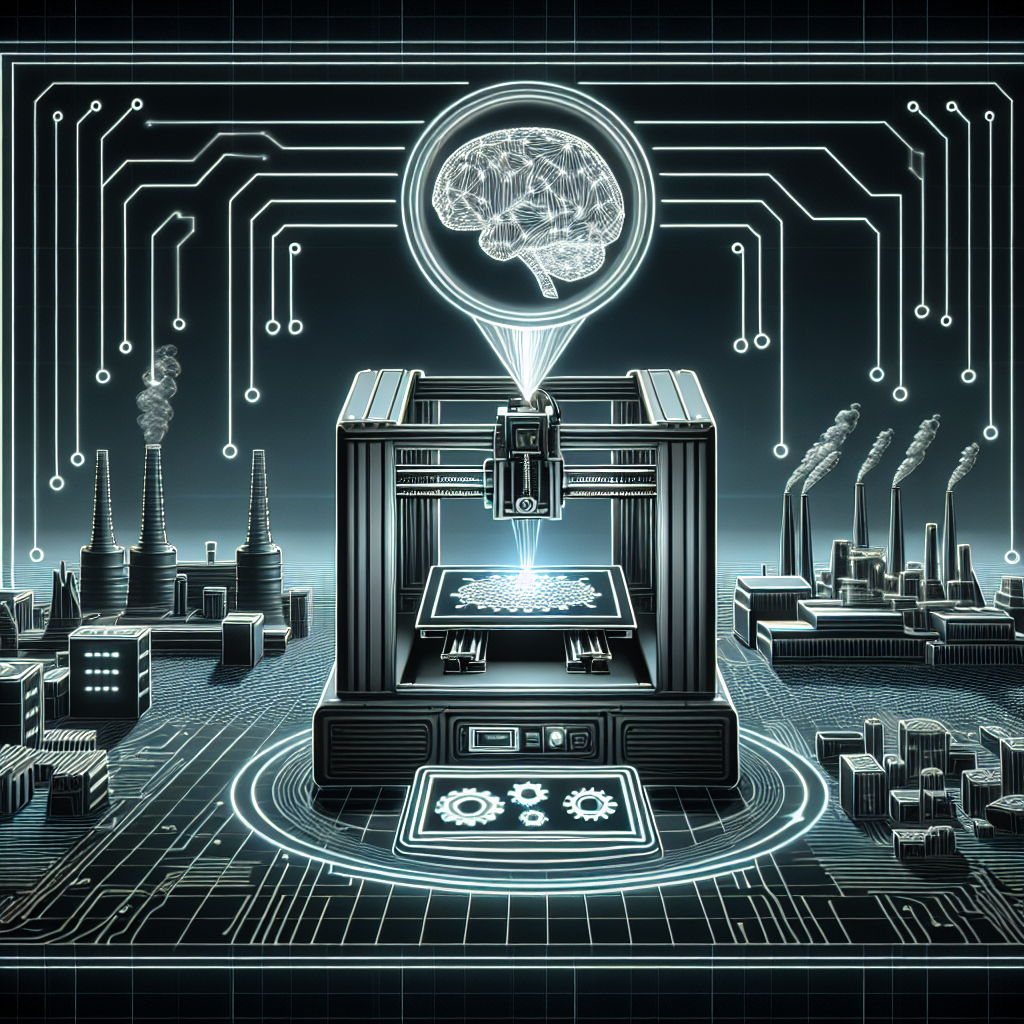
The Future of AI in 3D Printing Manufacturing
The integration of artificial intelligence (AI) in 3D printing manufacturing processes is revolutionizing the way products are designed, prototyped, and produced. AI is enabling manufacturers to optimize production, improve quality control, and increase efficiency in ways that were previously unimaginable. As the technology continues to advance, the future of AI in 3D printing manufacturing is poised to transform the industry in profound ways.
AI-powered design and optimization
One of the key areas where AI is making a significant impact in 3D printing manufacturing is in the design and optimization of products. Traditional design processes are often time-consuming and labor-intensive, requiring designers to manually create and modify CAD models based on trial and error. However, AI algorithms can analyze vast amounts of data and generate optimized designs that are both functional and aesthetically pleasing.
AI can also help manufacturers optimize the printing process itself by predicting potential defects and suggesting changes to the design or printing parameters to improve the final product’s quality. By using AI-powered design and optimization tools, manufacturers can reduce lead times, minimize material waste, and produce higher-quality products at lower costs.
Improved quality control
Quality control is a critical aspect of 3D printing manufacturing, as even minor defects can compromise the functionality and safety of the final product. Traditional quality control methods rely on manual inspection processes that are time-consuming and prone to human error. AI-powered inspection systems, on the other hand, can analyze 3D-printed parts in real-time and detect defects with a high level of accuracy.
AI algorithms can be trained to identify common defects such as surface roughness, warping, and voids, as well as more complex defects that may be difficult for human inspectors to detect. By using AI-powered quality control systems, manufacturers can ensure that each part meets the required specifications and standards, leading to higher customer satisfaction and fewer product recalls.
Predictive maintenance and optimization
Another area where AI is transforming 3D printing manufacturing is in predictive maintenance and optimization. Traditional maintenance practices are often reactive, with technicians responding to equipment failures after they occur. This can lead to costly downtime and delays in production.
AI-powered predictive maintenance systems can monitor the performance of 3D printers in real-time and identify potential issues before they lead to a breakdown. By analyzing data from sensors and other sources, AI algorithms can predict when a machine is likely to fail and recommend maintenance actions to prevent downtime.
In addition to predictive maintenance, AI can also help optimize the printing process by adjusting parameters such as temperature, speed, and layer height in real-time to maximize efficiency and quality. By using AI-powered optimization tools, manufacturers can achieve higher throughput, reduce material waste, and produce more consistent results.
Challenges and opportunities
While the future of AI in 3D printing manufacturing is promising, there are still challenges that need to be addressed. One of the main challenges is the lack of standardized processes and guidelines for integrating AI into 3D printing manufacturing workflows. Manufacturers need to develop best practices for training AI algorithms, validating their performance, and ensuring data security and privacy.
Another challenge is the shortage of skilled professionals with expertise in both AI and 3D printing. Manufacturers need to invest in training programs and collaboration with academic institutions to develop a workforce that can leverage AI technologies effectively.
Despite these challenges, the opportunities for AI in 3D printing manufacturing are vast. By leveraging AI-powered design and optimization tools, manufacturers can create innovative products that were previously impossible to achieve. AI-powered quality control systems can ensure that each part meets the required specifications, leading to higher customer satisfaction and lower costs.
The integration of AI in 3D printing manufacturing is also driving the adoption of new materials and printing techniques. AI algorithms can optimize the use of advanced materials such as composites and metals, as well as new printing technologies such as multi-material and multi-color printing. This opens up new possibilities for creating complex and customized products that were previously out of reach.
FAQs
Q: What are some examples of AI-powered design and optimization tools used in 3D printing manufacturing?
A: Some examples of AI-powered design and optimization tools include generative design software, topology optimization algorithms, and simulation tools that use AI to predict the performance of a product before it is manufactured.
Q: How can AI improve quality control in 3D printing manufacturing?
A: AI-powered quality control systems can analyze 3D-printed parts in real-time and detect defects with a high level of accuracy. By using AI algorithms, manufacturers can ensure that each part meets the required specifications and standards, leading to higher customer satisfaction and fewer product recalls.
Q: What are the benefits of using AI for predictive maintenance in 3D printing manufacturing?
A: AI-powered predictive maintenance systems can monitor the performance of 3D printers in real-time and identify potential issues before they lead to a breakdown. By using AI algorithms to predict when a machine is likely to fail, manufacturers can prevent costly downtime and delays in production.
Q: What are some challenges to integrating AI into 3D printing manufacturing workflows?
A: Some challenges include the lack of standardized processes and guidelines for integrating AI, the shortage of skilled professionals with expertise in both AI and 3D printing, and the need for data security and privacy measures to protect sensitive information.
Q: How can manufacturers leverage AI to drive innovation in 3D printing manufacturing?
A: By leveraging AI-powered design and optimization tools, manufacturers can create innovative products that were previously impossible to achieve. AI-powered quality control systems can ensure that each part meets the required specifications, leading to higher customer satisfaction and lower costs.