
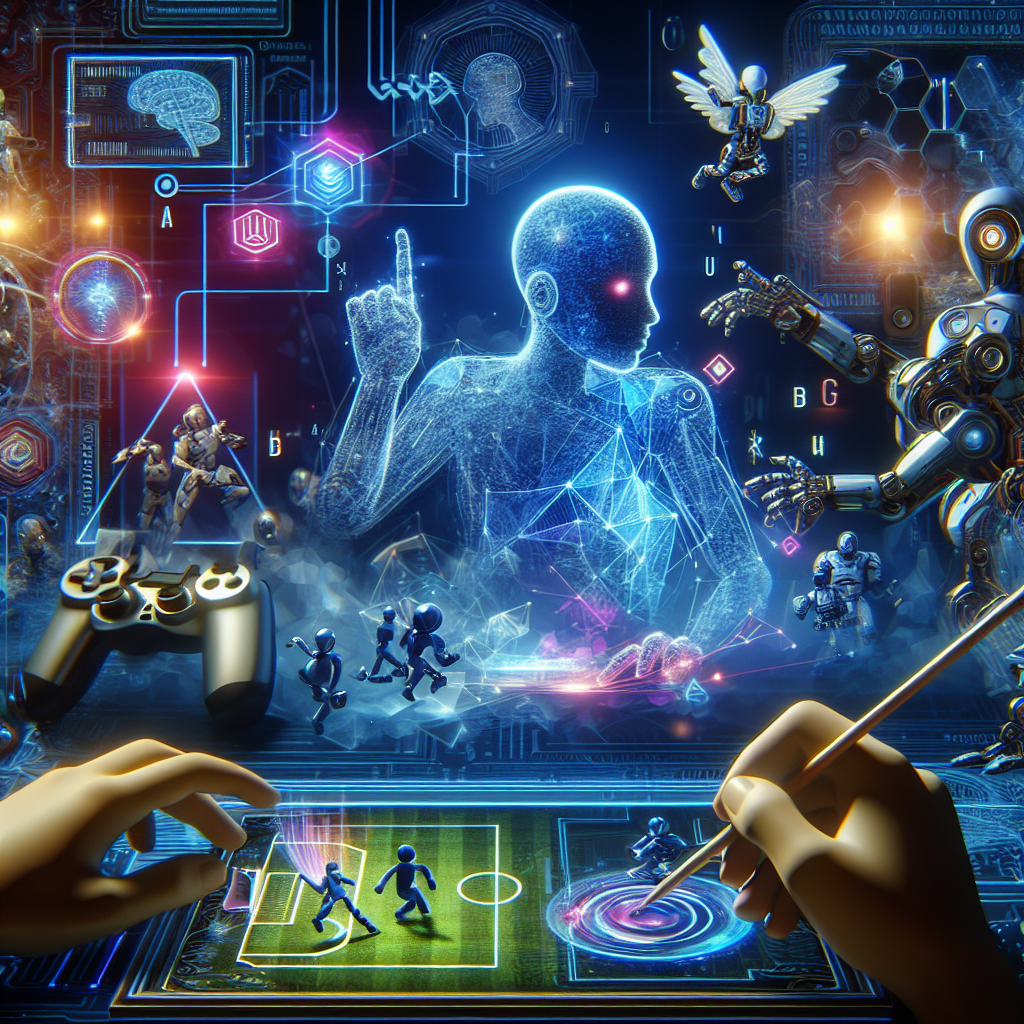
The Future of AI in Gaming
Artificial Intelligence (AI) has been making significant strides in various industries, and gaming is no exception. With advancements in technology and computing power, AI has the potential to revolutionize the gaming industry in the coming years. From creating more realistic NPCs (non-player characters) to enhancing gameplay experiences, AI is set to play a crucial role in shaping the future of gaming.
AI in gaming is not a new concept, as game developers have been utilizing AI for years to improve game mechanics, behavior of NPCs, and overall gaming experience. However, with the rapid advancements in AI technology, the possibilities for its application in gaming have expanded exponentially. Here are some of the key ways in which AI is expected to impact the future of gaming:
1. Enhanced NPC Behavior: One of the most significant applications of AI in gaming is the development of more realistic and intelligent NPCs. AI algorithms can be used to create NPCs that can adapt to player actions, learn from their mistakes, and provide a more immersive gaming experience. This can lead to more challenging and dynamic gameplay, as NPCs will be able to react to player decisions in real-time.
2. Procedural Content Generation: AI can also be used to generate procedurally generated content in games, such as levels, maps, and quests. This can help game developers create vast and diverse game worlds without the need for manual intervention. AI algorithms can analyze player behavior and preferences to generate content that is tailored to individual players, providing a more personalized gaming experience.
3. Realistic Graphics and Animations: AI can also be used to improve the visual fidelity of games by generating realistic graphics and animations. Machine learning algorithms can be used to create lifelike characters, environments, and special effects, making games more visually appealing and immersive.
4. Adaptive Difficulty Levels: AI can be used to dynamically adjust the difficulty level of games based on player skill and performance. This can help ensure that players are constantly challenged without becoming frustrated or bored. AI algorithms can analyze player behavior in real-time to adjust enemy strength, puzzle complexity, and other game elements to provide a more balanced and enjoyable gaming experience.
5. Personalized Gaming Experiences: AI can also be used to personalize gaming experiences for individual players. By analyzing player data, preferences, and behaviors, AI algorithms can recommend games, levels, and content that are tailored to each player’s interests and skill level. This can help increase player engagement and retention by providing a more customized gaming experience.
6. Virtual Assistants and In-Game Guides: AI-powered virtual assistants can provide players with tips, hints, and guidance during gameplay. These virtual assistants can analyze player behavior, provide real-time feedback, and help players navigate complex game mechanics. This can be especially useful for novice players or those struggling with difficult levels or challenges.
7. Cheating Detection and Prevention: AI can also be used to detect and prevent cheating in online multiplayer games. AI algorithms can analyze player behavior, patterns, and performance to identify cheaters and take appropriate action to maintain fair gameplay. This can help ensure a level playing field for all players and enhance the overall gaming experience.
FAQs
Q: Will AI replace human game developers in the future?
A: While AI has the potential to automate certain aspects of game development, such as procedural content generation and NPC behavior, it is unlikely to replace human game developers entirely. Human creativity, intuition, and decision-making skills are still essential in game development, and AI is more likely to complement human developers rather than replace them.
Q: How will AI impact the gaming industry financially?
A: AI has the potential to reduce development costs, improve game quality, and increase player engagement, which can ultimately lead to higher revenues for game developers. AI-powered games may also attract a larger audience and drive sales through personalized gaming experiences and enhanced gameplay features.
Q: Will AI make games too challenging or easy for players?
A: AI algorithms can be fine-tuned to provide a balanced and enjoyable gaming experience for players. By analyzing player behavior and adjusting game difficulty levels in real-time, AI can ensure that players are constantly challenged without becoming frustrated or bored. AI can also provide hints, tips, and guidance to help players navigate difficult levels or challenges.
Q: How will AI impact the social aspect of gaming?
A: AI can enhance the social aspect of gaming by creating more immersive and interactive multiplayer experiences. AI-powered NPCs can provide more dynamic and realistic interactions with players, while virtual assistants can help players communicate and coordinate with teammates during gameplay. AI can also detect and prevent cheating in online multiplayer games, ensuring a fair and enjoyable gaming environment for all players.
In conclusion, the future of AI in gaming looks promising, with the potential to revolutionize the industry in various ways. From creating more realistic NPCs to enhancing gameplay experiences, AI has the power to transform the way we play and experience games. As technology continues to advance and AI algorithms become more sophisticated, we can expect to see even more innovative applications of AI in gaming in the years to come.