
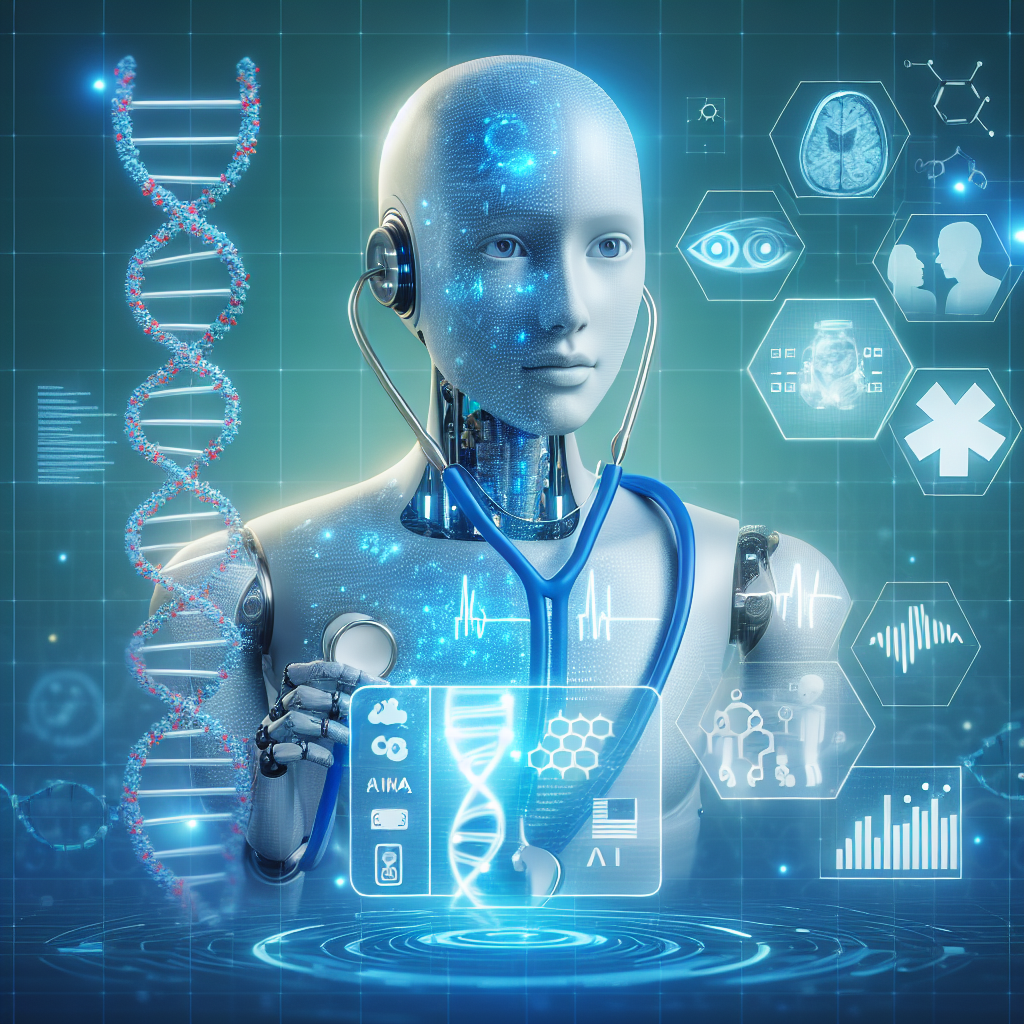
In recent years, artificial intelligence (AI) has become increasingly prevalent in the field of healthcare. From assisting in diagnostic processes to predicting patient outcomes, AI has the potential to revolutionize personalized healthcare in the years to come. In this article, we will explore the future of AI in personalized healthcare and discuss the potential benefits and challenges associated with its integration into the healthcare system.
One of the key areas where AI is expected to have a significant impact on personalized healthcare is in the realm of predictive analytics. By analyzing large amounts of data, AI algorithms can help healthcare providers predict the likelihood of certain health outcomes for individual patients. This can be particularly useful in identifying individuals who are at high risk for developing certain diseases or conditions, allowing for early intervention and prevention strategies to be put in place.
For example, AI can help identify patterns in patient data that may indicate a higher risk of developing diabetes or heart disease. By analyzing factors such as genetics, lifestyle choices, and medical history, AI algorithms can provide personalized risk assessments that can inform treatment decisions and lifestyle changes for individual patients.
Another area where AI is expected to have a significant impact on personalized healthcare is in the field of precision medicine. Precision medicine aims to tailor medical treatment to the individual characteristics of each patient, taking into account factors such as genetics, lifestyle, and environment. AI can play a crucial role in this process by analyzing vast amounts of data to identify the most effective treatments for individual patients based on their unique characteristics.
For example, AI algorithms can analyze genetic data to identify specific mutations that may respond better to certain medications. This can help healthcare providers customize treatment plans for individual patients, leading to more effective outcomes and reduced side effects.
In addition to predictive analytics and precision medicine, AI is also expected to enhance the efficiency of healthcare delivery in personalized healthcare. By automating routine tasks such as appointment scheduling, billing, and medical record management, AI can free up healthcare providers to focus more on patient care. This can lead to improved patient outcomes and satisfaction, as well as reduced healthcare costs.
Despite the potential benefits of AI in personalized healthcare, there are also challenges that need to be addressed. One of the main concerns surrounding the use of AI in healthcare is the issue of data privacy and security. As AI algorithms rely on vast amounts of patient data to make predictions and recommendations, there is a risk of data breaches and unauthorized access to sensitive information. Healthcare providers and policymakers will need to implement robust data protection measures to ensure patient confidentiality and trust in the AI systems.
Another challenge is the potential for bias in AI algorithms. If AI systems are trained on biased or incomplete data, they may produce inaccurate or discriminatory results. It is crucial for healthcare providers to ensure that AI algorithms are trained on diverse and representative datasets to avoid bias and ensure fair and equitable outcomes for all patients.
In conclusion, the future of AI in personalized healthcare holds great promise for improving patient outcomes and transforming the way healthcare is delivered. By leveraging the power of AI in predictive analytics, precision medicine, and healthcare delivery, healthcare providers can provide more personalized and effective care to individual patients. However, it is important to address challenges such as data privacy, security, and bias to ensure that AI is used ethically and responsibly in healthcare.
FAQs:
Q: How can AI improve personalized healthcare?
A: AI can improve personalized healthcare by analyzing large amounts of data to predict health outcomes, tailor treatment plans to individual patients, and automate routine tasks to enhance healthcare delivery.
Q: What are some challenges associated with the use of AI in healthcare?
A: Some challenges associated with the use of AI in healthcare include data privacy and security concerns, the potential for bias in AI algorithms, and the need for robust data protection measures to ensure patient confidentiality.
Q: How can healthcare providers address bias in AI algorithms?
A: Healthcare providers can address bias in AI algorithms by ensuring that the algorithms are trained on diverse and representative datasets, monitoring for bias in the algorithms, and implementing measures to mitigate bias in the decision-making process.