
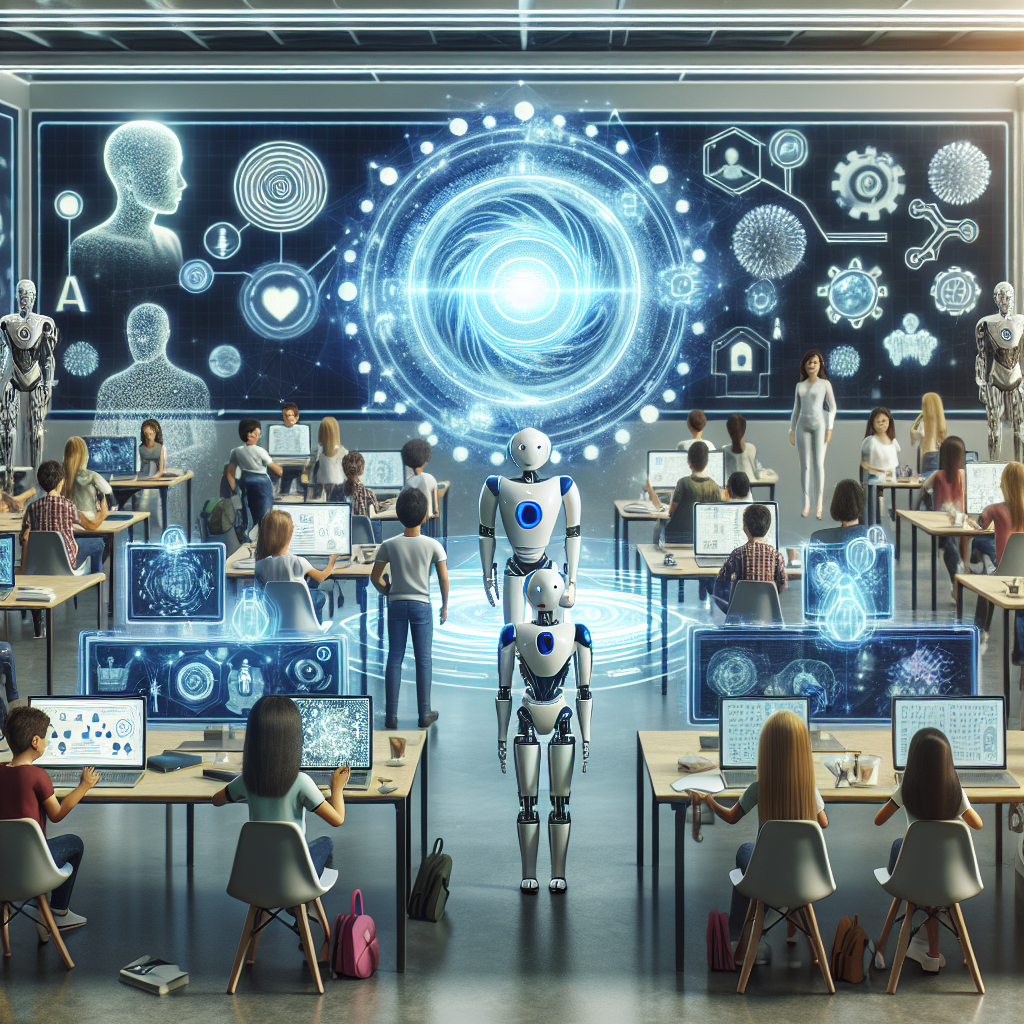
Generative AI, also known as artificial intelligence, has made significant strides in recent years, with applications ranging from language generation to image synthesis. In the field of education, generative AI has the potential to revolutionize how students learn and educators teach. By leveraging the power of AI, educational institutions can personalize learning experiences, create interactive simulations, and provide real-time feedback to students. In this article, we will explore the future of generative AI in education and how it can transform the way we learn.
One of the most promising applications of generative AI in education is personalized learning. Traditional education systems often take a one-size-fits-all approach, where all students are taught the same material at the same pace. This can be limiting for students who learn at different speeds or have different learning styles. Generative AI can create personalized learning experiences by analyzing each student’s strengths and weaknesses and tailoring the curriculum to their needs. For example, an AI-powered tutor could generate custom exercises for each student based on their performance, ensuring that they are always challenged at the right level.
Another area where generative AI can make a big impact is in the creation of interactive simulations. Simulations are a powerful tool for teaching complex concepts, allowing students to experiment and learn through trial and error. Generative AI can be used to create realistic simulations that adapt to the student’s actions, providing a hands-on learning experience. For example, a physics simulation could adjust the parameters of a virtual experiment based on the student’s input, helping them understand the underlying principles in a more engaging way.
Generative AI can also be used to provide real-time feedback to students, helping them track their progress and identify areas for improvement. By analyzing the student’s responses to exercises or quizzes, AI algorithms can pinpoint areas where they are struggling and offer targeted feedback to help them improve. This can be especially useful in subjects like mathematics, where students often make common errors that can be easily corrected with the right guidance.
In addition to personalized learning, interactive simulations, and real-time feedback, generative AI can also be used to create AI-powered teaching assistants that can answer students’ questions, provide additional resources, and assist with grading. These virtual assistants can help alleviate the burden on teachers, allowing them to focus on more personalized instruction and mentorship. By leveraging generative AI, educational institutions can create more efficient and effective learning environments that cater to the needs of every student.
Despite the potential benefits of generative AI in education, there are also some challenges that need to be addressed. One of the main concerns is the ethical implications of using AI in education, such as data privacy and bias in algorithms. Educators and policymakers need to ensure that AI systems are transparent, accountable, and fair to all students. Additionally, there is a need to train teachers and educators on how to effectively integrate AI tools into their teaching practices and ensure that they are used responsibly.
In conclusion, the future of generative AI in education is bright, with the potential to transform how we learn and teach. By leveraging the power of AI, educational institutions can create personalized learning experiences, interactive simulations, and real-time feedback that cater to the needs of every student. While there are challenges that need to be addressed, the benefits of using generative AI in education far outweigh the risks. As we continue to explore the possibilities of AI in education, we can look forward to a more engaging, efficient, and effective learning experience for students around the world.
FAQs:
1. What are some examples of generative AI in education?
– Some examples of generative AI in education include personalized learning experiences, interactive simulations, real-time feedback, and AI-powered teaching assistants.
2. How can generative AI personalize learning experiences for students?
– Generative AI can analyze each student’s strengths and weaknesses and tailor the curriculum to their needs, creating custom exercises and challenges based on their performance.
3. What are some challenges of using generative AI in education?
– Some challenges of using generative AI in education include ethical concerns around data privacy and bias in algorithms, as well as the need to train teachers on how to effectively integrate AI tools into their teaching practices.
4. How can generative AI benefit educators?
– Generative AI can benefit educators by providing virtual teaching assistants that can answer students’ questions, provide additional resources, and assist with grading, allowing teachers to focus on more personalized instruction and mentorship.