
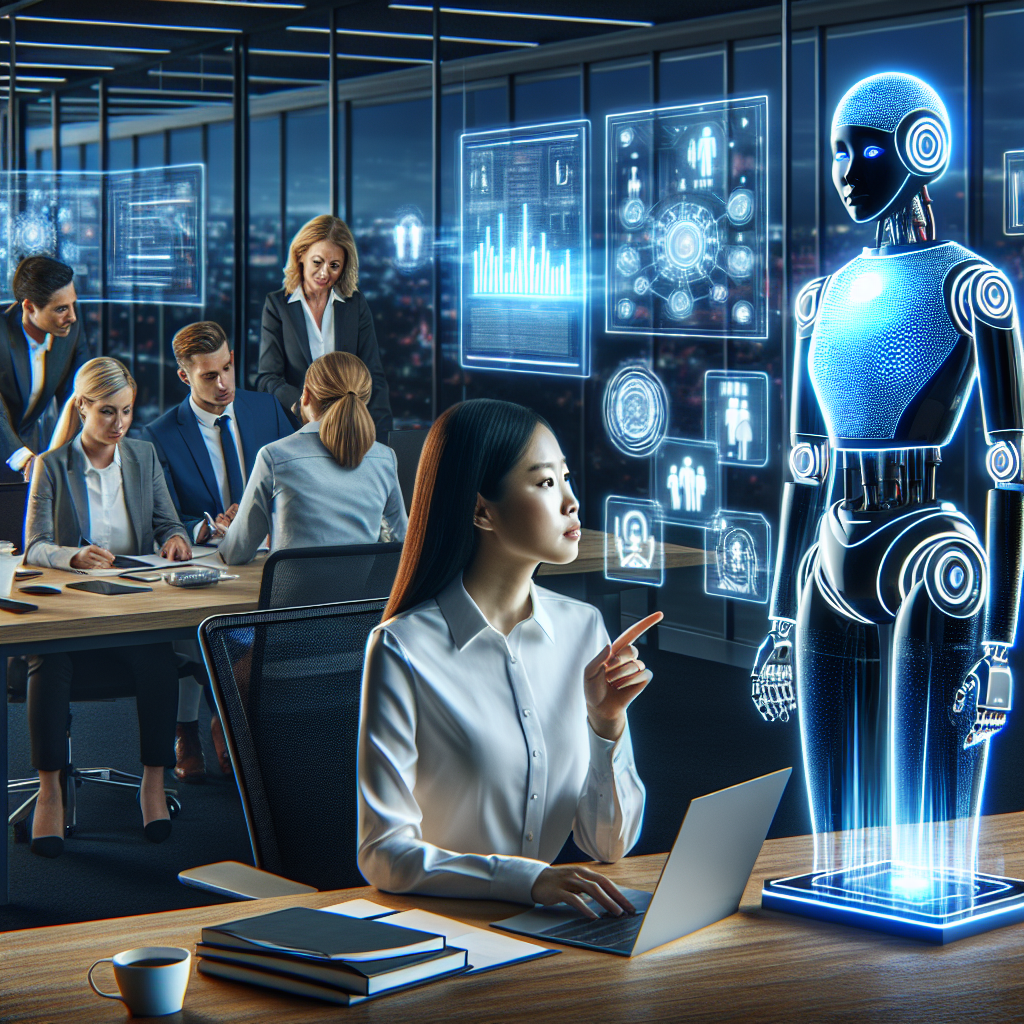
The Future of Work: AI Consulting and Human Resources
In today’s rapidly evolving business landscape, the role of artificial intelligence (AI) in consulting and human resources is becoming increasingly important. As companies strive to stay competitive and drive innovation, they are turning to AI solutions to streamline processes, improve decision-making, and enhance employee engagement. In this article, we will explore the impact of AI on consulting and human resources, and discuss the future of work in a world where technology plays a central role.
AI in Consulting
Consulting firms are leveraging AI technologies to enhance their services and deliver more value to clients. AI-powered tools can analyze vast amounts of data in real-time, identify patterns and trends, and generate insights that help organizations make more informed decisions. For example, AI can be used to analyze customer feedback, market trends, and competitor data to provide valuable insights that drive strategic decision-making.
One area where AI is making a significant impact in consulting is in the field of predictive analytics. By using machine learning algorithms, consultants can predict future trends and outcomes with a high degree of accuracy. This allows companies to anticipate market changes, identify potential risks, and develop strategies to capitalize on opportunities.
Another area where AI is transforming consulting is in the field of automation. AI-powered tools can automate repetitive tasks, such as data entry, report generation, and analysis, freeing up consultants to focus on more strategic and value-added activities. This not only increases efficiency and productivity but also allows consultants to deliver more personalized and tailored services to clients.
AI in Human Resources
AI is also revolutionizing the field of human resources by improving recruitment, onboarding, training, and performance management processes. AI-powered tools can analyze resumes, screen candidates, and identify top talent more efficiently than traditional methods. This not only saves time and resources but also helps companies hire the best candidates for the job.
In addition to recruitment, AI is also being used to enhance employee engagement and retention. By analyzing employee data, AI can identify trends and patterns that indicate when employees are at risk of leaving the company. This allows HR professionals to take proactive measures to address issues and improve employee satisfaction, ultimately reducing turnover rates and increasing employee loyalty.
AI is also transforming the way companies manage performance and development. AI-powered tools can provide real-time feedback, identify areas for improvement, and recommend personalized learning and development opportunities for employees. This not only helps employees grow and develop their skills but also ensures that they are aligned with the company’s goals and objectives.
The Future of Work
As AI continues to advance and become more integrated into business processes, the future of work is likely to be shaped by the collaboration between humans and machines. While AI can automate routine tasks and provide valuable insights, it cannot replace the human touch when it comes to creativity, empathy, and critical thinking. The most successful organizations will be those that find the right balance between AI and human skills, leveraging the strengths of both to drive innovation and growth.
In the future, we can expect to see more AI-powered tools and technologies in consulting and human resources, helping companies make faster, smarter, and more data-driven decisions. AI will continue to evolve and become more sophisticated, enabling organizations to unlock new opportunities, solve complex problems, and drive competitive advantage.
FAQs
Q: How will AI impact job roles in consulting and human resources?
A: AI will likely automate routine tasks and provide valuable insights, freeing up employees to focus on more strategic and value-added activities. While some job roles may be replaced by AI, new roles that require human skills such as creativity, empathy, and critical thinking are likely to emerge.
Q: How can companies prepare for the future of work in a world where AI plays a central role?
A: Companies can prepare for the future of work by investing in AI training and upskilling programs for employees, fostering a culture of innovation and experimentation, and embracing collaboration between humans and machines. By leveraging the strengths of both AI and human skills, companies can drive innovation and stay competitive in a rapidly evolving business landscape.
Q: What are the ethical considerations of using AI in consulting and human resources?
A: Ethical considerations of using AI in consulting and human resources include issues related to privacy, bias, and transparency. Companies must ensure that AI-powered tools are used responsibly and ethically, and that decisions made by AI are fair and unbiased. It is important for companies to establish clear guidelines and governance structures to ensure that AI is used in a way that aligns with their values and principles.