
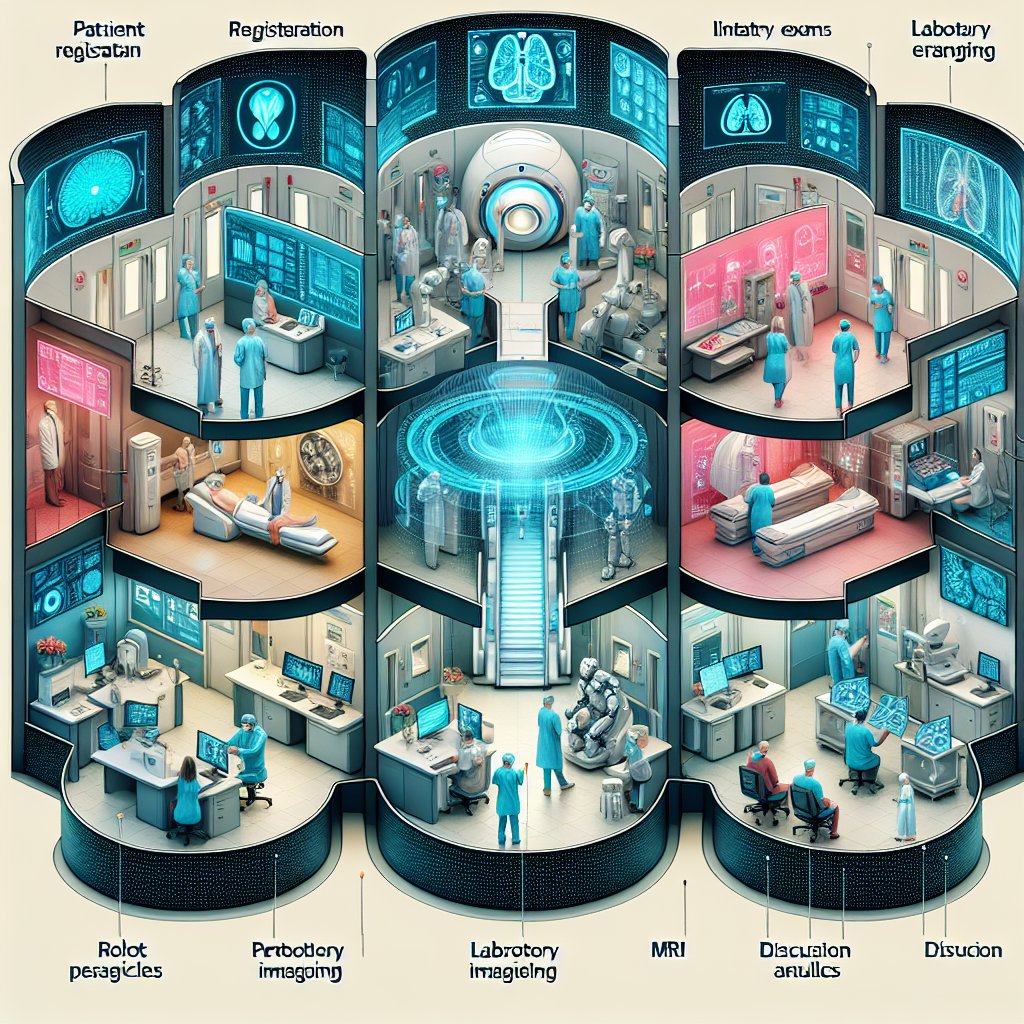
The Impact of AI-driven Solutions on Healthcare Diagnostics
In recent years, artificial intelligence (AI) has been revolutionizing the healthcare industry, particularly in the field of diagnostics. AI-driven solutions are increasingly being used to analyze medical imaging, genetic data, and other healthcare data to assist healthcare practitioners in making more accurate and timely diagnoses. This has the potential to improve patient outcomes, reduce healthcare costs, and enhance the overall quality of care.
AI-driven solutions in healthcare diagnostics utilize machine learning algorithms to analyze large amounts of data and identify patterns and trends that may not be apparent to human clinicians. These algorithms can quickly analyze complex medical images, such as X-rays, MRIs, and CT scans, to detect abnormalities or signs of disease. They can also analyze genetic data to identify genetic markers associated with certain diseases or conditions.
One of the key advantages of AI-driven solutions in healthcare diagnostics is their ability to process and analyze vast amounts of data much faster than human clinicians. This can lead to faster and more accurate diagnoses, which can be critical in situations where time is of the essence, such as in emergency rooms or during surgery. AI-driven solutions can also help healthcare practitioners to prioritize cases based on the severity of the condition, ensuring that patients with the most urgent needs receive timely care.
Another advantage of AI-driven solutions in healthcare diagnostics is their ability to provide more personalized and targeted treatments. By analyzing a patient’s medical history, genetic data, and other relevant information, AI algorithms can help healthcare practitioners to tailor treatment plans to the individual patient’s needs. This can lead to more effective treatments and better outcomes for patients.
AI-driven solutions in healthcare diagnostics are also helping to improve the accuracy and reliability of diagnoses. By analyzing medical images and other data, AI algorithms can help to identify subtle signs of disease that may be missed by human clinicians. This can help to reduce the number of false positives and false negatives, leading to more accurate diagnoses and better patient outcomes.
In addition to improving the accuracy and speed of diagnoses, AI-driven solutions in healthcare diagnostics are also helping to reduce healthcare costs. By streamlining the diagnostic process and reducing the need for unnecessary tests and procedures, AI algorithms can help to lower healthcare costs and improve the efficiency of healthcare delivery. This can benefit both patients and healthcare providers by reducing the financial burden of healthcare and improving the overall quality of care.
Despite the many benefits of AI-driven solutions in healthcare diagnostics, there are also some challenges and concerns that need to be addressed. One of the main concerns is the potential for bias in AI algorithms, which may lead to inaccurate or unfair diagnoses. To address this concern, healthcare providers and AI developers need to ensure that AI algorithms are trained on diverse and representative data sets to reduce the risk of bias.
Another challenge is the need for healthcare practitioners to be trained in how to effectively use AI-driven solutions in diagnostics. While AI algorithms can help to improve the accuracy and efficiency of diagnoses, they are not a substitute for human clinicians. Healthcare practitioners need to be able to interpret the results of AI algorithms and integrate them into their clinical decision-making process.
In conclusion, AI-driven solutions are having a significant impact on healthcare diagnostics by improving the accuracy, speed, and personalized nature of diagnoses. By analyzing large amounts of data and identifying patterns and trends, AI algorithms can help healthcare practitioners to make more informed decisions and provide better care to patients. While there are challenges and concerns that need to be addressed, the potential benefits of AI-driven solutions in healthcare diagnostics are undeniable.
FAQs
Q: How are AI-driven solutions in healthcare diagnostics different from traditional diagnostic methods?
A: AI-driven solutions in healthcare diagnostics utilize machine learning algorithms to analyze large amounts of data and identify patterns and trends that may not be apparent to human clinicians. This can lead to faster and more accurate diagnoses, personalized treatment plans, and improved patient outcomes.
Q: What are some of the benefits of AI-driven solutions in healthcare diagnostics?
A: Some of the benefits of AI-driven solutions in healthcare diagnostics include improved accuracy and speed of diagnoses, personalized treatment plans, reduced healthcare costs, and better patient outcomes.
Q: What are some of the challenges and concerns associated with AI-driven solutions in healthcare diagnostics?
A: Some of the challenges and concerns associated with AI-driven solutions in healthcare diagnostics include the potential for bias in AI algorithms, the need for healthcare practitioners to be trained in how to effectively use AI algorithms, and the risk of over-reliance on AI technology.
Q: How can healthcare providers address the concerns and challenges associated with AI-driven solutions in healthcare diagnostics?
A: Healthcare providers can address the concerns and challenges associated with AI-driven solutions in healthcare diagnostics by ensuring that AI algorithms are trained on diverse and representative data sets, providing training for healthcare practitioners on how to effectively use AI algorithms, and integrating AI technology into the clinical decision-making process.