
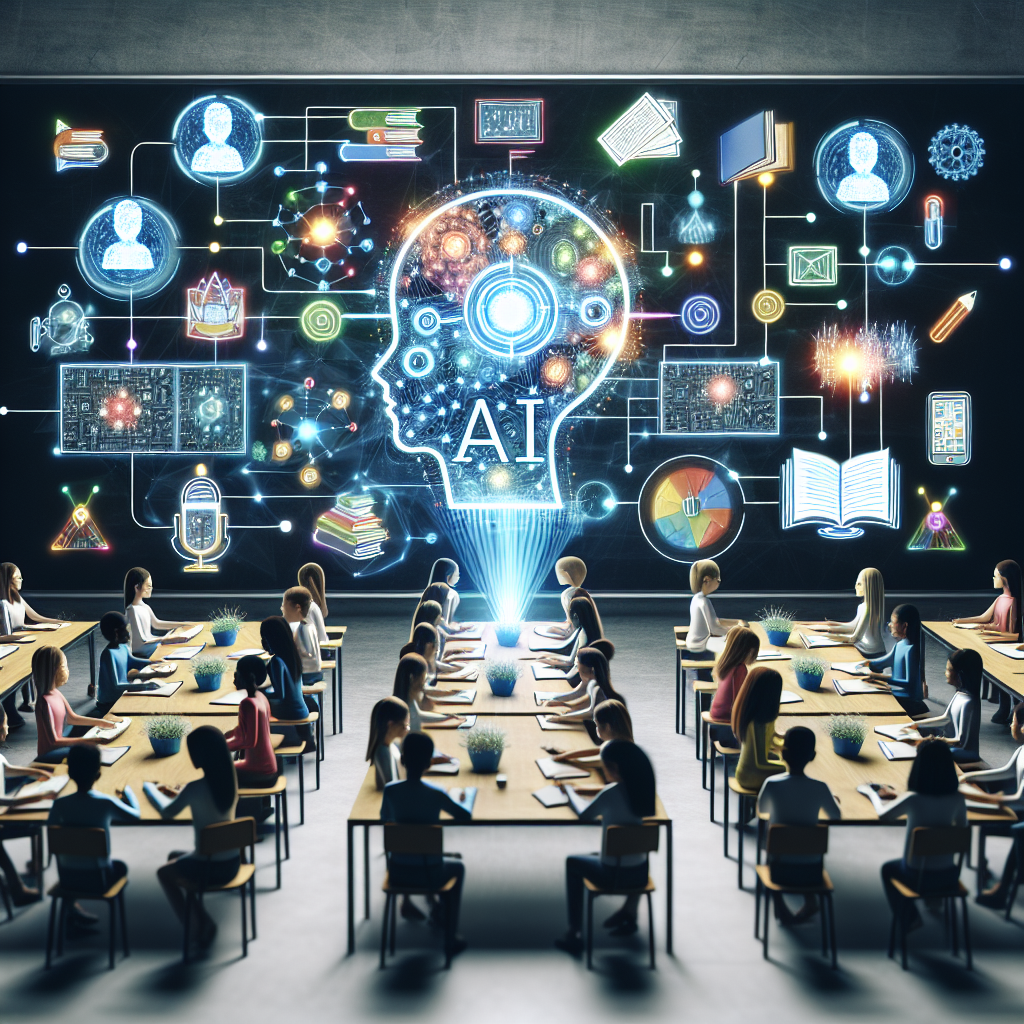
Artificial Intelligence (AI) has been transforming various aspects of our lives, from healthcare to finance to transportation. One area where AI is starting to make a significant impact is in education, particularly in the realm of classroom management. AI has the potential to revolutionize the way teachers interact with students, manage their classrooms, and personalize learning experiences. In this article, we will explore the impact of AI on classroom management and how it is changing the landscape of education.
AI in Classroom Management
AI technology offers numerous benefits when it comes to classroom management. One of the most significant advantages is its ability to analyze large amounts of data quickly and efficiently. This means that teachers can use AI to gather information about student behavior, attendance, performance, and engagement in real-time. With this data, teachers can make more informed decisions about how to best support their students and improve their learning outcomes.
AI can also help teachers automate routine tasks, such as grading assignments, tracking attendance, and organizing lesson plans. By taking care of these time-consuming tasks, teachers can free up more time to focus on creating engaging and personalized learning experiences for their students. Additionally, AI can provide teachers with insights and recommendations on how to better tailor their lessons to meet the needs of individual students, making learning more effective and efficient.
Furthermore, AI can assist teachers in managing classroom behavior and discipline. By analyzing patterns in student behavior, AI can alert teachers to potential issues before they escalate, allowing them to intervene and address them proactively. This can help create a more positive and productive learning environment for all students.
AI can also facilitate communication between teachers, students, and parents. By using chatbots and virtual assistants, teachers can provide instant feedback to students, answer questions, and communicate with parents about their child’s progress. This can improve parent-teacher communication and collaboration, leading to better support for the student’s learning journey.
Overall, AI has the potential to revolutionize classroom management by providing teachers with valuable insights, automating routine tasks, and improving communication and collaboration among all stakeholders in the education system.
FAQs
Q: Will AI replace teachers in the classroom?
A: No, AI is not meant to replace teachers but to support them in their roles. While AI can automate certain tasks and provide valuable insights, teachers play a crucial role in creating engaging and personalized learning experiences for their students.
Q: How can AI help teachers manage student behavior?
A: AI can help teachers manage student behavior by analyzing patterns in student behavior and alerting teachers to potential issues. By providing early intervention, teachers can address behavior problems before they escalate, creating a more positive and productive learning environment.
Q: How can AI help teachers personalize learning experiences for students?
A: AI can help teachers personalize learning experiences by analyzing student data and providing insights and recommendations on how to tailor lessons to meet the needs of individual students. By using AI, teachers can create more effective and efficient learning experiences for their students.
Q: Is AI secure and safe to use in the classroom?
A: While AI technology comes with its own set of challenges, such as data privacy and security concerns, steps can be taken to ensure that AI is used safely and securely in the classroom. This includes implementing robust security measures, complying with data protection regulations, and providing training for teachers on how to use AI responsibly.
In conclusion, AI is transforming classroom management by providing teachers with valuable insights, automating routine tasks, and improving communication and collaboration among all stakeholders in the education system. While AI technology comes with its own set of challenges, the potential benefits it offers in terms of personalized learning experiences, behavior management, and communication in the classroom make it a valuable tool for educators. As AI continues to evolve and become more integrated into the education system, it will be interesting to see how it shapes the future of teaching and learning.