
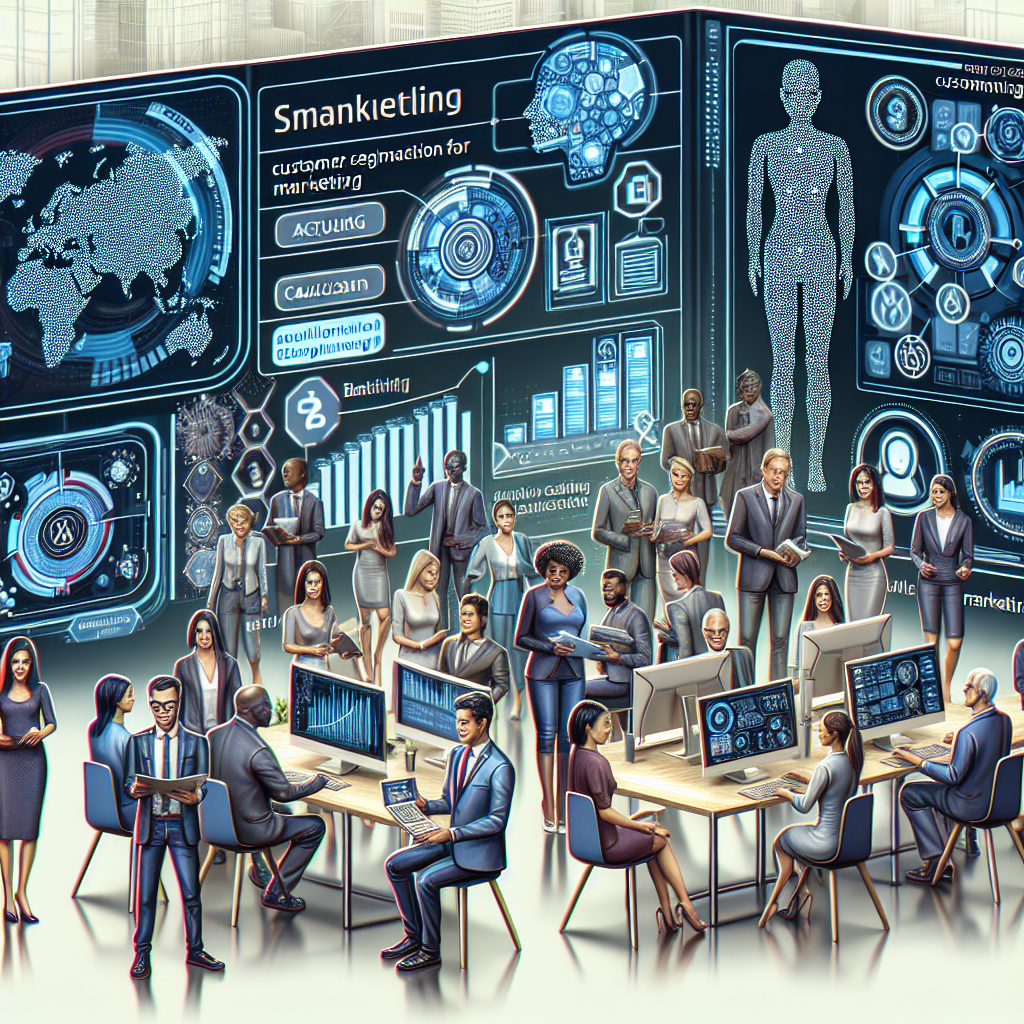
The Impact of AI on Customer Segmentation in Banking Marketing
Customer segmentation is a crucial aspect of marketing in the banking industry. By dividing customers into distinct groups based on their behavior, preferences, and needs, banks can better target their marketing efforts and tailor their products and services to meet the specific needs of each segment. Traditionally, customer segmentation has been done manually, using demographic data and other basic information. However, with the advent of artificial intelligence (AI), banks are now able to take customer segmentation to a whole new level.
AI technology allows banks to analyze vast amounts of data in real-time, enabling them to identify patterns and trends that would be impossible to detect using traditional methods. This allows banks to create more accurate and detailed customer segments, leading to more targeted marketing campaigns and ultimately, higher customer satisfaction and retention rates.
One of the key ways AI is impacting customer segmentation in banking marketing is through its ability to analyze customer behavior. By tracking customers’ interactions with the bank’s website, mobile app, and other digital channels, AI can provide valuable insights into how customers are using these channels, what products and services they are interested in, and what factors influence their decision-making process.
For example, AI can analyze a customer’s browsing history on the bank’s website and identify patterns in their behavior, such as which pages they visit most frequently, how long they spend on each page, and what actions they take (e.g. applying for a loan, transferring money, etc.). This information can then be used to create customer segments based on their online behavior, allowing banks to target these segments with personalized marketing messages and offers.
Another way AI is impacting customer segmentation in banking marketing is through its ability to analyze customer feedback. By analyzing customer reviews, social media posts, and other forms of feedback, AI can identify common themes and sentiments among customers, allowing banks to create segments based on customer attitudes and preferences.
For example, if a bank receives a large number of negative reviews about its customer service, AI can identify this as a key pain point for customers and create a segment of dissatisfied customers who may be at risk of leaving the bank. The bank can then target this segment with personalized offers and initiatives to improve their experience and retain their business.
AI can also help banks identify new customer segments that may not have been apparent using traditional methods. By analyzing data from multiple sources, such as transaction history, social media activity, and external data sources, AI can identify customers who share common characteristics or behaviors that may not be immediately obvious.
For example, AI may identify a segment of customers who frequently use mobile banking apps, make frequent transactions, and have a high credit score. This segment may represent a group of tech-savvy, high-value customers who are more likely to respond to digital marketing campaigns and prefer self-service options. By targeting this segment with personalized offers and promotions, banks can increase engagement and loyalty among these customers.
Overall, the impact of AI on customer segmentation in banking marketing is significant. By leveraging AI technology to analyze vast amounts of data, banks can create more accurate and detailed customer segments, leading to more effective marketing campaigns and increased customer satisfaction and retention rates. As AI continues to evolve and improve, the possibilities for customer segmentation in banking marketing are endless.
FAQs
Q: How does AI technology impact customer segmentation in banking marketing?
A: AI technology allows banks to analyze vast amounts of customer data in real-time, enabling them to create more accurate and detailed customer segments. This leads to more targeted marketing campaigns and ultimately, higher customer satisfaction and retention rates.
Q: What are some examples of how AI can be used for customer segmentation in banking marketing?
A: AI can be used to analyze customer behavior, track customer feedback, and identify new customer segments that may not have been apparent using traditional methods. This allows banks to target customers with personalized offers and initiatives based on their preferences and needs.
Q: How can banks benefit from using AI for customer segmentation in marketing?
A: Banks can benefit from using AI for customer segmentation in marketing by creating more accurate and detailed customer segments, leading to more effective marketing campaigns, increased customer satisfaction and retention rates, and ultimately, higher profits.
Q: What are some challenges of using AI for customer segmentation in banking marketing?
A: Some challenges of using AI for customer segmentation in banking marketing include data privacy concerns, the need for specialized skills and expertise to implement and manage AI technology, and the potential for bias in AI algorithms. Banks must address these challenges to ensure the successful implementation of AI for customer segmentation in marketing.