
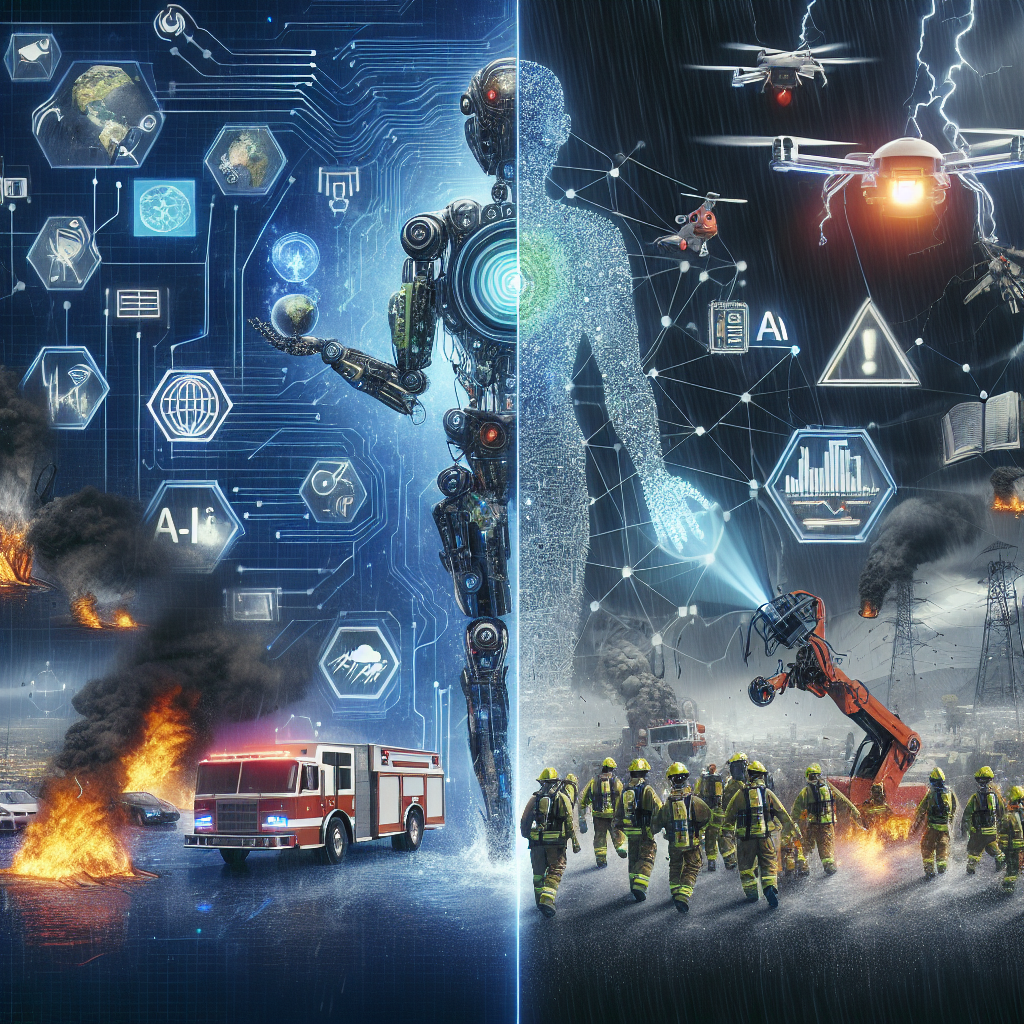
In recent years, the use of artificial intelligence (AI) in disaster response planning has become increasingly prevalent. AI technologies have the potential to revolutionize how emergency responders prepare for and respond to natural disasters, such as hurricanes, earthquakes, and wildfires. By leveraging AI tools, emergency management agencies can improve the speed and accuracy of decision-making, enhance communication and coordination among response teams, and ultimately save lives and reduce the impact of disasters on communities.
One of the key ways AI is being used in disaster response planning is through predictive analytics. By analyzing historical data on previous disasters, AI algorithms can identify patterns and trends that can help predict the likelihood and severity of future disasters. This information can be used to develop more effective disaster response plans, allocate resources more efficiently, and better prepare communities for potential disasters.
AI can also be used to improve the speed and accuracy of damage assessment following a disaster. By using drones equipped with AI-powered image recognition software, emergency responders can quickly survey affected areas and assess the extent of damage to buildings, infrastructure, and other critical assets. This information can help prioritize response efforts and ensure that resources are directed to where they are most needed.
Another way AI is transforming disaster response planning is through the use of natural language processing (NLP) technology. NLP algorithms can analyze vast amounts of unstructured data, such as social media posts, news articles, and emergency dispatch calls, to extract relevant information and identify emerging trends and patterns. This can help emergency responders better understand the evolving situation on the ground, coordinate response efforts more effectively, and communicate critical information to the public in a timely manner.
In addition to predictive analytics, damage assessment, and natural language processing, AI is also being used in other innovative ways in disaster response planning. For example, researchers are exploring the use of AI-powered robots to assist in search and rescue operations in disaster-affected areas. These robots can navigate through rubble and debris, locate survivors, and transmit real-time data back to emergency responders, helping to speed up rescue efforts and save lives.
Furthermore, AI-powered simulation models are being developed to help emergency management agencies simulate various disaster scenarios and test the effectiveness of different response strategies. By running these simulations, agencies can identify potential weaknesses in their plans, refine their response protocols, and better prepare for future disasters.
While the use of AI in disaster response planning offers many benefits, there are also challenges and ethical considerations that must be addressed. For example, there are concerns about data privacy and security, as well as the potential for biases in AI algorithms that could impact decision-making. Additionally, there is a need for greater transparency and accountability in how AI technologies are used in disaster response, to ensure that they are deployed in a fair and ethical manner.
Despite these challenges, the potential of AI to revolutionize disaster response planning is undeniable. By harnessing the power of AI technologies, emergency management agencies can improve the effectiveness of their response efforts, reduce the impact of disasters on communities, and ultimately save lives. As the technology continues to evolve, we can expect to see even more innovative applications of AI in disaster response planning in the years to come.
FAQs:
Q: How is AI used in disaster response planning?
A: AI is used in disaster response planning in a variety of ways, including predictive analytics, damage assessment, natural language processing, search and rescue operations, and simulation modeling.
Q: What are the benefits of using AI in disaster response planning?
A: The benefits of using AI in disaster response planning include improved decision-making, faster and more accurate damage assessment, better communication and coordination among response teams, and more efficient allocation of resources.
Q: What are the challenges of using AI in disaster response planning?
A: Challenges of using AI in disaster response planning include concerns about data privacy and security, potential biases in AI algorithms, and the need for greater transparency and accountability in how AI technologies are used.
Q: How can AI technologies help improve disaster response efforts?
A: AI technologies can help improve disaster response efforts by providing more accurate predictive analytics, faster damage assessment, better communication and coordination among response teams, and more efficient allocation of resources.
Q: What is the future of AI in disaster response planning?
A: The future of AI in disaster response planning is bright, with continued advancements in technology expected to lead to even more innovative applications of AI in emergency management.