
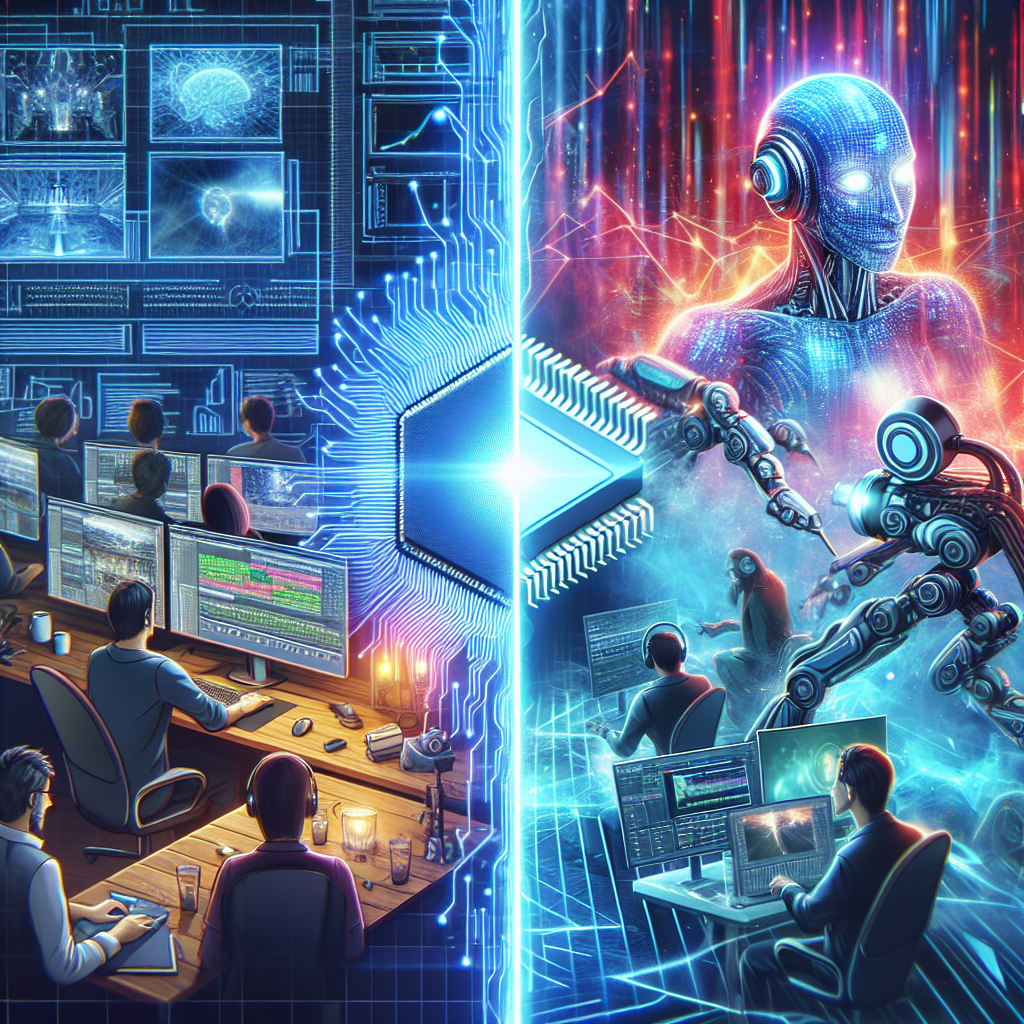
The Impact of AI on Game Cinematics
Artificial Intelligence (AI) has been revolutionizing various industries, including the gaming industry. One of the areas where AI has made a significant impact is in game cinematics. Game cinematics are the animated cutscenes or sequences that play out in between gameplay to advance the story or provide context to the game. Traditionally, game cinematics were created by animators and artists, but with the advancements in AI technology, game developers are now able to harness the power of AI to create more realistic and immersive cinematics.
AI-driven tools and algorithms are being used to streamline the process of creating game cinematics, making them more efficient, cost-effective, and realistic. AI can be used to generate realistic character animations, facial expressions, and lip-syncing, as well as create detailed environments and special effects. This allows game developers to focus more on storytelling and gameplay, while letting AI handle the more time-consuming and repetitive tasks.
One of the key ways AI is impacting game cinematics is through the use of machine learning algorithms. These algorithms can analyze vast amounts of data, such as motion capture data, to learn and mimic human movement and behavior. This allows for more natural and realistic character animations in game cinematics. Machine learning algorithms can also be used to improve facial animations, making characters more expressive and lifelike.
Another way AI is being used in game cinematics is through the use of generative adversarial networks (GANs). GANs are a type of AI algorithm that can generate new content, such as animations or environments, based on a set of input data. This can be particularly useful for creating dynamic and interactive cinematics that respond to player actions in real-time.
AI is also being used to improve the overall quality of game cinematics. For example, AI algorithms can be used to enhance textures, lighting, and special effects in cinematics, making them more visually stunning and immersive. AI can also be used to optimize the rendering process, making cinematics run more smoothly and efficiently on various gaming platforms.
Overall, the impact of AI on game cinematics is undeniable. AI is enabling game developers to create more engaging and cinematic experiences for players, while also saving time and resources in the development process. As AI technology continues to advance, we can expect to see even more impressive and realistic game cinematics in the future.
FAQs:
Q: How is AI being used to create realistic character animations in game cinematics?
A: AI-driven machine learning algorithms can analyze motion capture data to learn and mimic human movement and behavior, resulting in more natural and realistic character animations.
Q: How can AI improve facial animations in game cinematics?
A: AI algorithms can be used to analyze facial expressions and movements to create more expressive and lifelike characters in game cinematics.
Q: How does AI enhance the overall quality of game cinematics?
A: AI can be used to improve textures, lighting, and special effects in cinematics, as well as optimize the rendering process for smoother and more efficient gameplay.
Q: What are some of the benefits of using AI in game cinematics?
A: Using AI in game cinematics can save time and resources in the development process, create more immersive and engaging experiences for players, and enable developers to focus more on storytelling and gameplay.
Q: What are some of the challenges of using AI in game cinematics?
A: Some challenges of using AI in game cinematics include the need for specialized skills and knowledge to implement AI algorithms, as well as potential ethical concerns regarding the use of AI in creating realistic and lifelike characters.