
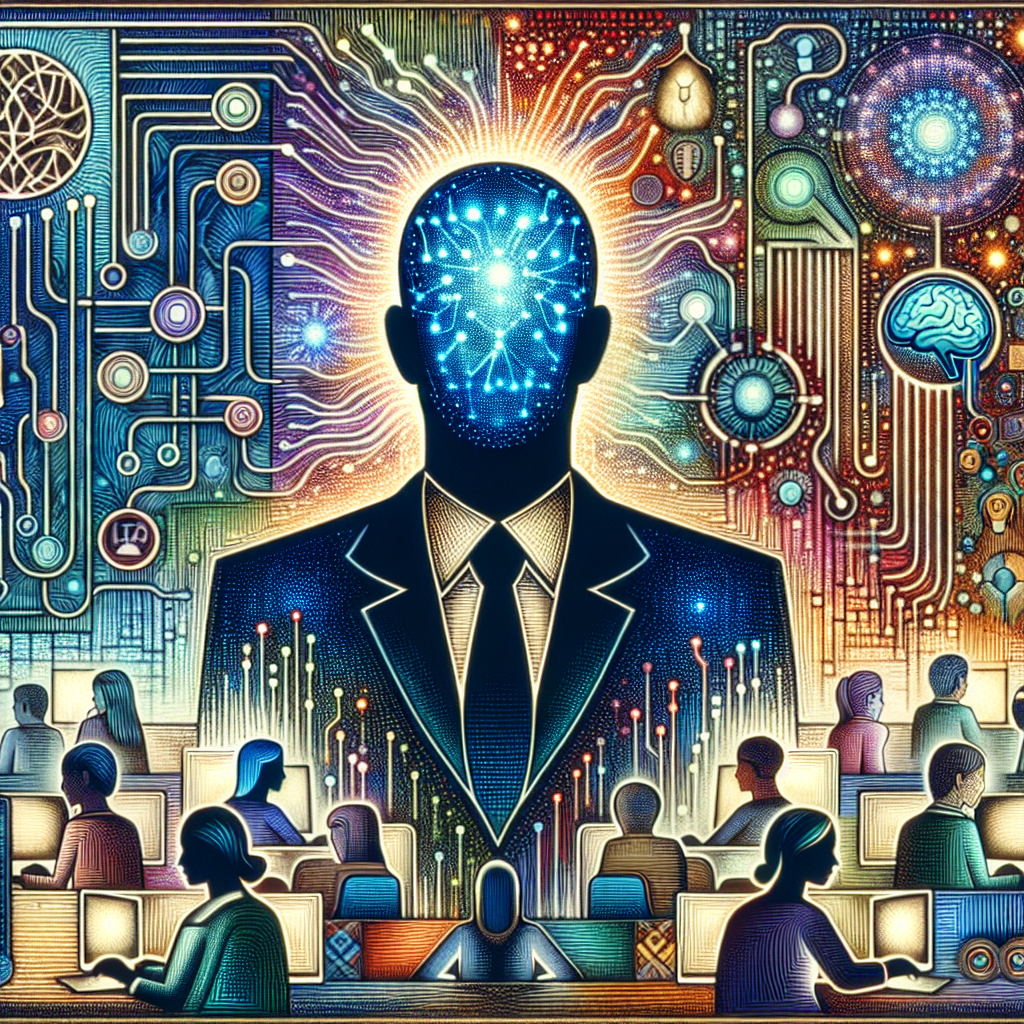
As artificial intelligence (AI) continues to advance at a rapid pace, its impact on government workforce is becoming increasingly significant. From streamlining processes to improving decision-making, AI is changing the way government agencies operate. In this article, we will explore the various ways in which AI is transforming the government workforce and address some common questions and concerns.
1. Automation of Routine Tasks
One of the primary ways in which AI is impacting the government workforce is through the automation of routine tasks. AI technologies such as machine learning and natural language processing are being used to automate repetitive tasks that were previously performed manually by government employees. This not only frees up time for employees to focus on more strategic and complex tasks, but also increases efficiency and reduces the risk of errors.
For example, AI-powered chatbots are being used by government agencies to handle customer inquiries and provide information to the public. These chatbots can answer common questions, assist with form submissions, and even provide personalized recommendations. By automating these routine tasks, government employees can devote more time to addressing more complex issues that require human intervention.
2. Data Analysis and Decision-Making
AI is also revolutionizing data analysis and decision-making within government agencies. By analyzing large volumes of data quickly and accurately, AI can help government agencies identify trends, detect patterns, and make informed decisions. For example, AI algorithms can analyze social media data to monitor public sentiment, predict potential crises, and inform policy decisions.
Moreover, AI can help government agencies improve the accuracy and efficiency of their decision-making processes. By using predictive analytics and machine learning algorithms, government agencies can identify areas of improvement, optimize resource allocation, and make data-driven decisions. This not only leads to better outcomes for citizens, but also helps government agencies operate more effectively and efficiently.
3. Enhancing Cybersecurity
Cybersecurity is a top priority for government agencies, as they handle sensitive and confidential data on a daily basis. AI is increasingly being used to enhance cybersecurity measures and protect government systems from cyber threats. AI-powered tools can detect anomalies in network traffic, identify potential security breaches, and respond to cyber attacks in real-time.
Moreover, AI can help government agencies improve their incident response capabilities by automating threat detection and response processes. By using AI algorithms to analyze security logs and identify patterns of malicious activity, government agencies can proactively defend against cyber threats and mitigate the impact of security breaches.
4. Addressing Workforce Challenges
While AI offers numerous benefits for government agencies, it also presents challenges for the government workforce. One of the key concerns is the potential displacement of jobs due to automation. As AI technology continues to automate routine tasks, some government employees may find their roles redundant or outdated. This raises questions about the future of work in the government sector and the need for reskilling and upskilling programs to prepare employees for the digital workforce.
Moreover, the adoption of AI in government agencies raises ethical and privacy concerns. AI algorithms may inadvertently perpetuate biases or discriminate against certain groups, leading to unfair outcomes. Government agencies must ensure that AI systems are transparent, accountable, and fair in their decision-making processes to uphold ethical standards and protect citizens’ rights.
FAQs
Q: Will AI replace government employees?
A: While AI may automate routine tasks, it is unlikely to completely replace government employees. Instead, AI will augment the capabilities of government employees by automating repetitive tasks and enhancing decision-making processes.
Q: How can government employees prepare for the impact of AI?
A: Government employees can prepare for the impact of AI by developing digital skills, staying informed about AI technologies, and participating in training programs that focus on AI literacy and data analysis.
Q: What steps can government agencies take to address the ethical concerns of AI?
A: Government agencies can address the ethical concerns of AI by ensuring transparency and accountability in AI systems, conducting regular audits of AI algorithms, and engaging with stakeholders to solicit feedback and input on AI policies and practices.
In conclusion, the impact of AI on the government workforce is profound and far-reaching. From automating routine tasks to enhancing decision-making processes, AI is transforming the way government agencies operate. While AI presents challenges for the government workforce, it also offers opportunities for innovation, efficiency, and improved service delivery. By embracing AI technologies responsibly and ethically, government agencies can harness the power of AI to drive positive change and better serve the public.