
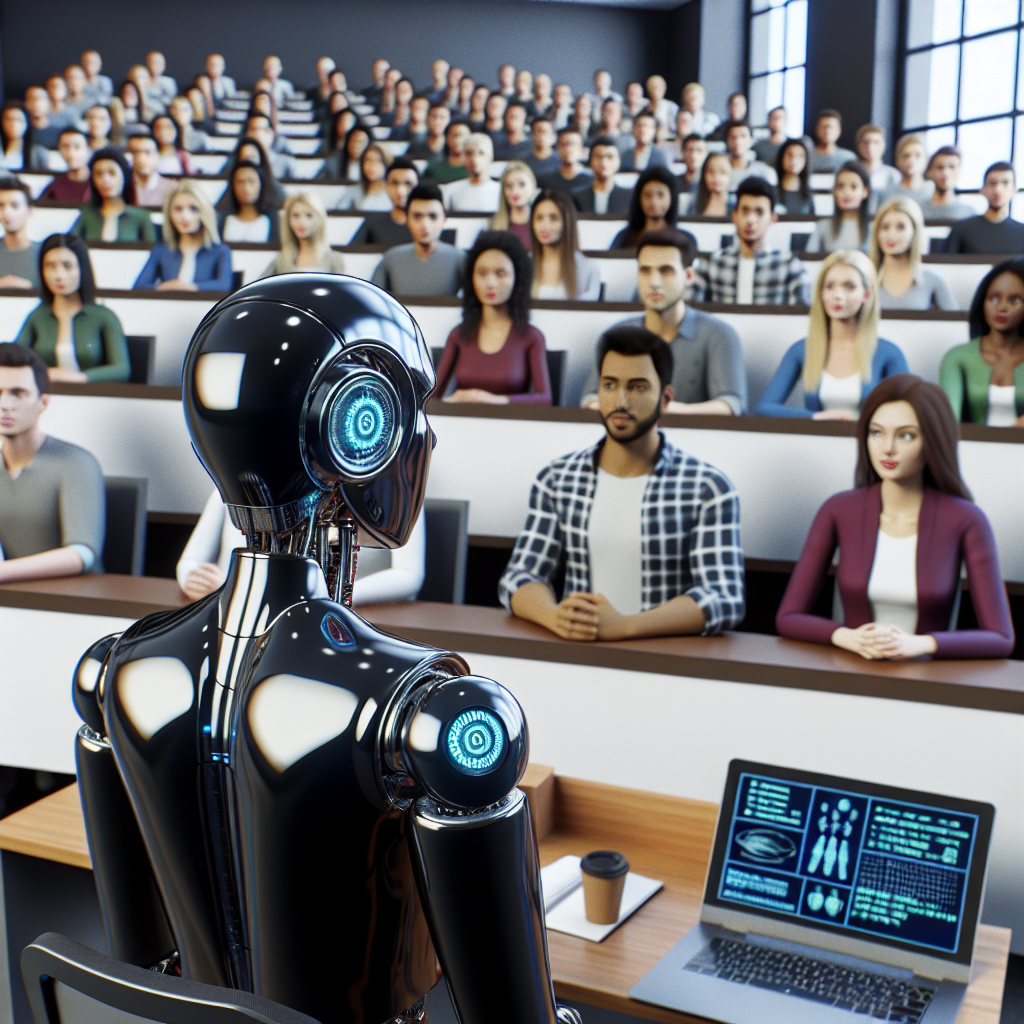
Artificial Intelligence (AI) has been making waves in various industries, and higher education is no exception. From personalized learning experiences to automation of administrative tasks, AI has the potential to revolutionize how students learn and how institutions operate. In this article, we will explore the impact of AI on higher education and discuss the opportunities and challenges that come with its integration.
AI in Teaching and Learning
One of the most significant impacts of AI on higher education is its potential to personalize learning experiences for students. AI algorithms can analyze student data and behavior to create personalized learning paths that cater to individual needs and learning styles. This can help students learn at their own pace and focus on areas where they need the most help.
AI can also assist in creating more engaging and interactive learning experiences. Virtual tutors powered by AI can provide real-time feedback and support to students, helping them grasp complex concepts more easily. AI-powered chatbots can also be used to answer students’ questions outside of class hours, providing instant support and guidance.
Furthermore, AI can help educators in creating more effective teaching materials. AI algorithms can analyze student performance data to identify areas where students are struggling and suggest ways to improve teaching materials. This can help educators create more targeted and effective learning resources that cater to the specific needs of their students.
AI in Administrative Tasks
AI can also streamline administrative tasks in higher education institutions, freeing up time for educators and administrators to focus on more strategic initiatives. AI-powered systems can automate repetitive tasks such as grading assignments, scheduling classes, and managing student records. This can help institutions save time and resources while improving efficiency and accuracy.
AI can also be used to enhance the recruitment and admissions process. AI algorithms can analyze student data to identify potential candidates who are a good fit for the institution. This can help institutions target their recruitment efforts more effectively and attract high-quality students who are likely to succeed.
Challenges and Considerations
While the potential benefits of AI in higher education are vast, there are also challenges and considerations that institutions need to address. One of the key challenges is ensuring that AI is used ethically and responsibly. Institutions must be transparent about how AI is being used and ensure that student data is protected and used in compliance with privacy regulations.
Another challenge is ensuring that AI systems are unbiased and free from discrimination. AI algorithms can inadvertently perpetuate biases if they are trained on biased data. Institutions must carefully monitor and evaluate AI systems to ensure that they are fair and inclusive for all students.
Furthermore, there is a concern about the impact of AI on the job market in higher education. While AI can automate certain tasks, it is unlikely to replace human educators entirely. Instead, AI can augment educators’ capabilities and free up time for them to focus on more strategic and creative tasks. Institutions should invest in upskilling their workforce to ensure that educators are equipped to work alongside AI technologies.
FAQs
Q: Will AI replace human educators in higher education?
A: While AI can automate certain tasks, it is unlikely to replace human educators entirely. AI can augment educators’ capabilities and free up time for them to focus on more strategic and creative tasks.
Q: How can institutions ensure that AI is used ethically and responsibly?
A: Institutions must be transparent about how AI is being used and ensure that student data is protected and used in compliance with privacy regulations. They must also carefully monitor and evaluate AI systems to ensure that they are fair and unbiased.
Q: What are some examples of AI applications in higher education?
A: AI can be used for personalized learning, virtual tutoring, chatbots for student support, automated grading, scheduling classes, and managing student records, recruitment, and admissions.
In conclusion, AI has the potential to revolutionize higher education by personalizing learning experiences, streamlining administrative tasks, and enhancing the recruitment and admissions process. While there are challenges and considerations that institutions need to address, the benefits of integrating AI in higher education are vast. By leveraging AI technologies responsibly and ethically, institutions can create more engaging and effective learning environments that cater to the needs of all students.