
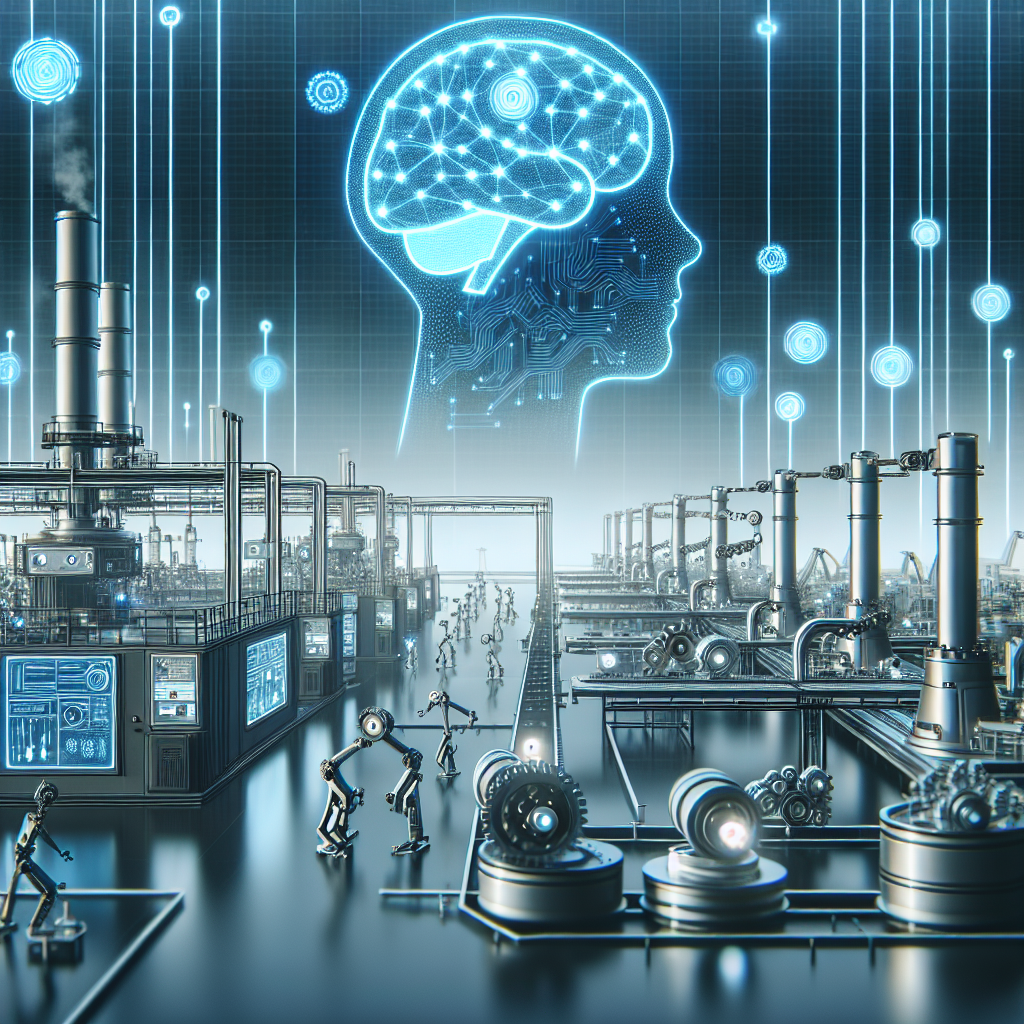
The Impact of AI on Industrial IoT in Manufacturing
Introduction
Artificial Intelligence (AI) and the Industrial Internet of Things (IIoT) are two technologies that are revolutionizing the manufacturing industry. When combined, they have the power to transform processes, increase efficiency, and drive innovation. In this article, we will explore the impact of AI on IIoT in manufacturing and how it is changing the way companies operate.
AI in Manufacturing
AI is a technology that allows machines to mimic human intelligence and perform tasks that normally require human intelligence, such as speech recognition, decision-making, and visual perception. In manufacturing, AI is being used to automate processes, improve quality control, and optimize production.
One of the key ways that AI is being used in manufacturing is through predictive maintenance. By analyzing data from sensors and machinery, AI can predict when equipment is likely to fail and schedule maintenance before it happens. This not only reduces downtime and maintenance costs but also increases the lifespan of equipment.
AI is also being used to optimize production processes. By analyzing data in real-time, AI can identify inefficiencies and make adjustments to improve productivity. For example, AI can analyze production schedules, inventory levels, and demand forecasts to optimize production schedules and minimize waste.
AI is also being used to improve quality control in manufacturing. By analyzing data from sensors and cameras, AI can detect defects in products early in the production process and make adjustments to prevent further defects. This not only improves product quality but also reduces waste and rework.
IIoT in Manufacturing
The Industrial Internet of Things (IIoT) refers to the network of connected devices, sensors, and machines in manufacturing that collect and exchange data. IIoT is revolutionizing the way companies operate by providing real-time data and insights that can be used to optimize processes, reduce downtime, and improve productivity.
IIoT is being used in manufacturing to monitor equipment performance, track inventory levels, and optimize supply chains. By connecting machines and sensors to a central network, companies can collect real-time data on equipment performance and usage, allowing them to identify inefficiencies and make adjustments to improve productivity.
IIoT is also being used to track inventory levels and optimize supply chains. By connecting inventory systems to a central network, companies can monitor inventory levels in real-time and make adjustments to ensure that they have the right amount of inventory on hand. This not only reduces storage costs but also improves customer satisfaction by ensuring that products are always available.
The Impact of AI on IIoT in Manufacturing
When AI is combined with IIoT in manufacturing, the impact is even more profound. By using AI to analyze data from sensors and machines, companies can gain deeper insights into their operations and make more informed decisions. AI can identify patterns in data that humans may not be able to see, allowing companies to optimize processes, reduce downtime, and improve productivity.
One of the key benefits of combining AI and IIoT in manufacturing is predictive maintenance. By using AI to analyze data from sensors and machines, companies can predict when equipment is likely to fail and schedule maintenance before it happens. This not only reduces downtime and maintenance costs but also increases the lifespan of equipment.
AI can also be used to optimize production processes in manufacturing. By analyzing data from sensors and machines, AI can identify inefficiencies in production processes and make adjustments to improve productivity. For example, AI can analyze production schedules, inventory levels, and demand forecasts to optimize production schedules and minimize waste.
AI can also be used to improve quality control in manufacturing. By analyzing data from sensors and cameras, AI can detect defects in products early in the production process and make adjustments to prevent further defects. This not only improves product quality but also reduces waste and rework.
FAQs
Q: How does AI improve predictive maintenance in manufacturing?
A: AI analyzes data from sensors and machines to predict when equipment is likely to fail and schedule maintenance before it happens, reducing downtime and maintenance costs.
Q: How does AI optimize production processes in manufacturing?
A: AI analyzes data from sensors and machines to identify inefficiencies in production processes and make adjustments to improve productivity, such as optimizing production schedules and minimizing waste.
Q: How does AI improve quality control in manufacturing?
A: AI analyzes data from sensors and cameras to detect defects in products early in the production process and make adjustments to prevent further defects, improving product quality and reducing waste and rework.
Conclusion
The combination of AI and IIoT in manufacturing is revolutionizing the way companies operate by providing real-time data and insights that can be used to optimize processes, reduce downtime, and improve productivity. By using AI to analyze data from sensors and machines, companies can gain deeper insights into their operations and make more informed decisions. Predictive maintenance, optimized production processes, and improved quality control are just a few of the ways that AI is impacting IIoT in manufacturing. As companies continue to adopt these technologies, the manufacturing industry will continue to evolve and innovate, driving growth and competitiveness in the global economy.