
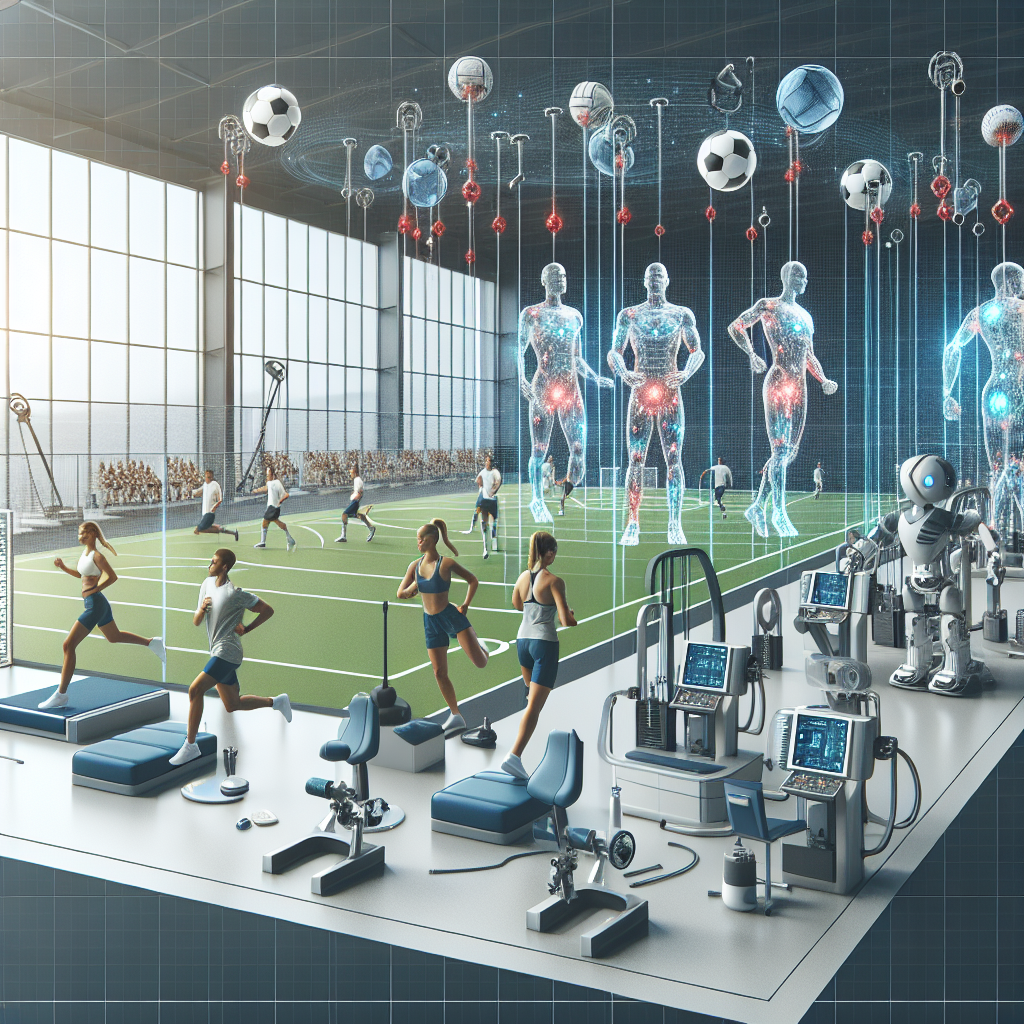
Artificial intelligence (AI) has made significant advancements in various industries, including sports. AI has revolutionized the way athletes train, perform, and recover, leading to more efficient and effective training methods. In this article, we will explore the impact of AI on sports training facilities and how it has changed the landscape of sports performance.
One of the key ways AI has impacted sports training facilities is through the use of data analytics. AI algorithms can analyze vast amounts of data collected from athletes, such as performance metrics, biometric data, and video footage. This data can then be used to identify patterns, trends, and areas for improvement in an athlete’s performance.
By analyzing this data, coaches and trainers can tailor training programs to meet the specific needs of each athlete. For example, AI can analyze a tennis player’s serve and provide feedback on their technique, speed, and accuracy. This information can then be used to create personalized drills and exercises to help the player improve their performance.
AI can also be used to monitor an athlete’s progress over time. By collecting and analyzing data on a regular basis, coaches can track an athlete’s performance and make adjustments to their training program as needed. This real-time feedback can help athletes stay on track and make continuous improvements in their performance.
Another way AI has impacted sports training facilities is through the use of virtual reality (VR) and augmented reality (AR) technology. VR and AR can simulate real-life training scenarios, allowing athletes to practice in a virtual environment. This technology can be especially beneficial for sports that require quick decision-making and reaction times, such as basketball or soccer.
For example, a basketball player can use VR technology to simulate game situations and practice their shooting under pressure. Similarly, a soccer player can use AR technology to practice their dribbling and passing skills in a virtual environment. By incorporating VR and AR technology into training programs, athletes can improve their skills in a safe and controlled setting.
AI has also revolutionized the way athletes recover from injuries and prevent future injuries. AI algorithms can analyze an athlete’s movement patterns and biomechanics to identify potential risk factors for injury. By identifying these risk factors early on, coaches and trainers can develop personalized injury prevention programs to help athletes stay healthy and perform at their best.
Furthermore, AI can be used to monitor an athlete’s recovery process after an injury. By analyzing data on an athlete’s recovery progress, coaches can track their rehabilitation and make adjustments to their training program as needed. This personalized approach to injury recovery can help athletes return to competition faster and reduce the risk of reinjury.
In addition to improving performance and preventing injuries, AI has also enhanced the fan experience in sports training facilities. AI technology can be used to create immersive experiences for fans, such as virtual tours of training facilities, live streaming of training sessions, and interactive games and challenges.
Overall, the impact of AI on sports training facilities has been transformative. AI has revolutionized the way athletes train, perform, and recover, leading to more efficient and effective training methods. By leveraging AI technology, coaches, trainers, and athletes can unlock their full potential and achieve peak performance.
FAQs:
Q: How does AI improve the training process for athletes?
A: AI algorithms can analyze vast amounts of data collected from athletes to identify patterns, trends, and areas for improvement in their performance. This data can then be used to tailor training programs to meet the specific needs of each athlete, leading to more efficient and effective training methods.
Q: Can AI help prevent injuries in athletes?
A: Yes, AI can analyze an athlete’s movement patterns and biomechanics to identify potential risk factors for injury. By identifying these risk factors early on, coaches and trainers can develop personalized injury prevention programs to help athletes stay healthy and perform at their best.
Q: How does AI enhance the fan experience in sports training facilities?
A: AI technology can be used to create immersive experiences for fans, such as virtual tours of training facilities, live streaming of training sessions, and interactive games and challenges. This enhances the fan experience and creates a more engaging and interactive environment for fans.
Q: What are some examples of AI technology used in sports training facilities?
A: Some examples of AI technology used in sports training facilities include data analytics, virtual reality (VR) and augmented reality (AR) technology, and injury prevention programs. These technologies help athletes improve their performance, prevent injuries, and enhance the fan experience in sports training facilities.