
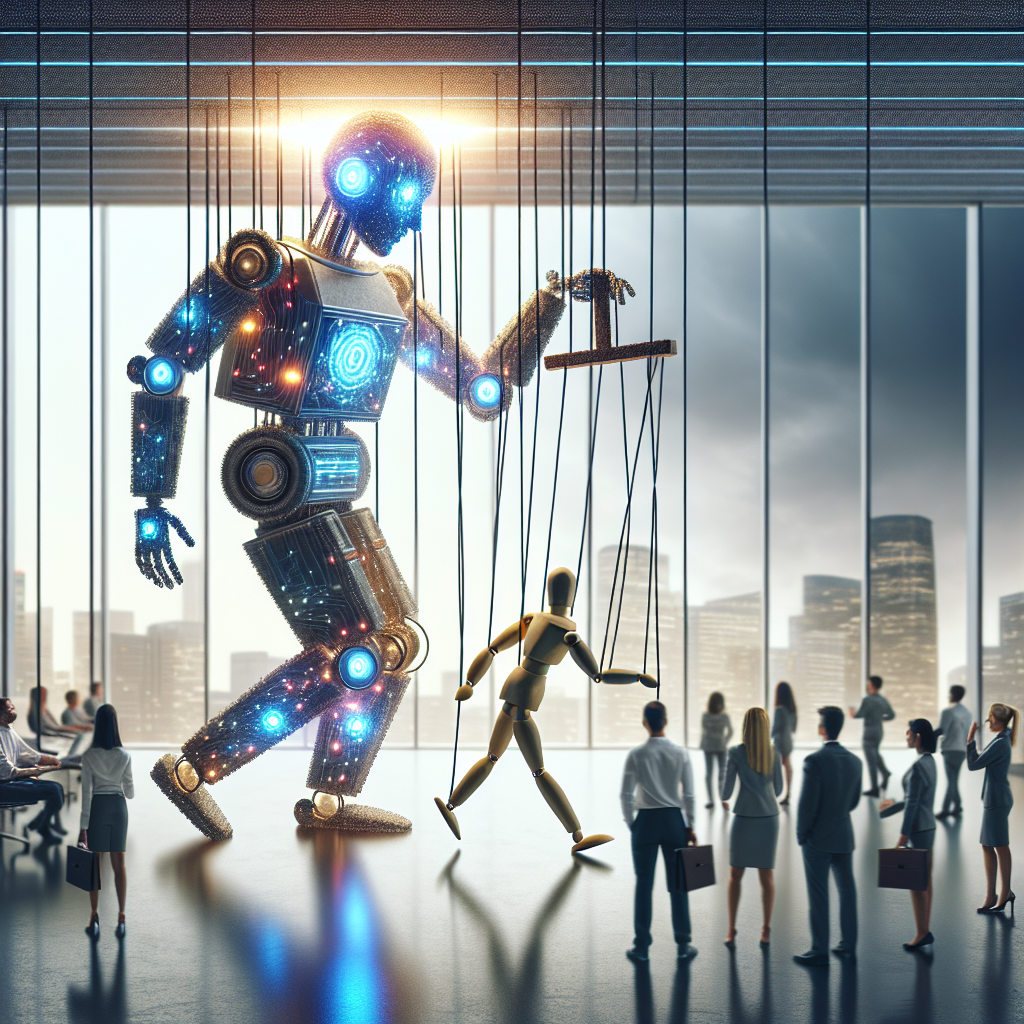
The Impact of AI Outsourcing on the Job Market
Artificial Intelligence (AI) has become an integral part of many industries, revolutionizing the way businesses operate and increasing efficiency and productivity. AI outsourcing, the practice of hiring external companies to develop and implement AI technologies, has also become increasingly popular in recent years. While AI outsourcing offers many benefits, such as cost savings and access to specialized expertise, it also has significant implications for the job market.
As AI technologies continue to advance, many jobs that were once performed by humans are now being automated. This has led to concerns about the impact of AI outsourcing on the job market, with some experts predicting that millions of jobs could be lost as a result. However, others argue that AI outsourcing will create new job opportunities and drive economic growth. In this article, we will explore the impact of AI outsourcing on the job market and discuss the potential benefits and challenges it presents.
Benefits of AI Outsourcing
One of the primary benefits of AI outsourcing is cost savings. By hiring external companies to develop and implement AI technologies, businesses can reduce their operating costs and increase their efficiency. AI outsourcing also allows companies to access specialized expertise that they may not have in-house, enabling them to develop and deploy cutting-edge AI solutions more quickly and effectively.
Another advantage of AI outsourcing is scalability. Many businesses do not have the resources or expertise to develop and implement AI technologies on their own. By outsourcing these tasks to external companies, businesses can quickly scale their AI initiatives as needed, without having to invest in hiring and training additional staff.
AI outsourcing also enables businesses to stay competitive in an increasingly digital and data-driven world. As AI technologies become more sophisticated and widespread, businesses that do not embrace AI risk falling behind their competitors. By outsourcing AI development and implementation, businesses can ensure that they are at the forefront of technological innovation and can adapt to changing market conditions more effectively.
Challenges of AI Outsourcing
Despite the many benefits of AI outsourcing, there are also challenges and concerns associated with the practice. One of the biggest challenges is job displacement. As AI technologies become more advanced, many routine and repetitive tasks that were once performed by humans are now being automated. This has led to concerns that millions of jobs could be lost as a result of AI outsourcing.
Another challenge of AI outsourcing is the potential for job polarization. While some jobs may be lost as a result of automation, new job opportunities may also be created. However, these new jobs may require different skills and expertise than the jobs that are being displaced, leading to a mismatch between the skills of the workforce and the demands of the job market.
There are also concerns about the impact of AI outsourcing on income inequality. As AI technologies become more widespread, the demand for skilled workers who can develop and implement AI solutions is likely to increase, leading to a widening gap between high-skilled and low-skilled workers. This could exacerbate income inequality and create social and economic challenges for society as a whole.
FAQs
Q: Will AI outsourcing lead to job loss?
A: While AI outsourcing may lead to job loss in some industries, it is also likely to create new job opportunities in others. The impact of AI outsourcing on the job market will depend on a variety of factors, including the pace of technological advancement, the skills of the workforce, and the ability of businesses to adapt to changing market conditions.
Q: What types of jobs are most at risk of being automated?
A: Jobs that involve routine and repetitive tasks, such as data entry, customer service, and manufacturing, are most at risk of being automated. However, jobs that require creativity, critical thinking, and human interaction are less likely to be automated in the near future.
Q: How can workers prepare for the impact of AI outsourcing on the job market?
A: Workers can prepare for the impact of AI outsourcing by developing skills that are in high demand in the digital economy, such as data analysis, programming, and artificial intelligence. Workers can also focus on developing soft skills, such as communication and problem-solving, that are difficult to automate.
Q: What role can governments play in addressing the challenges of AI outsourcing?
A: Governments can play a key role in addressing the challenges of AI outsourcing by investing in education and training programs that help workers develop the skills they need to succeed in the digital economy. Governments can also implement policies that promote innovation and entrepreneurship, and support workers who are displaced by automation.
In conclusion, the impact of AI outsourcing on the job market is complex and multifaceted. While AI outsourcing offers many benefits, such as cost savings and access to specialized expertise, it also presents significant challenges, such as job displacement and income inequality. To address these challenges, businesses, workers, and governments must work together to develop strategies that enable workers to adapt to the changing demands of the job market and ensure that the benefits of AI outsourcing are shared equitably across society.