
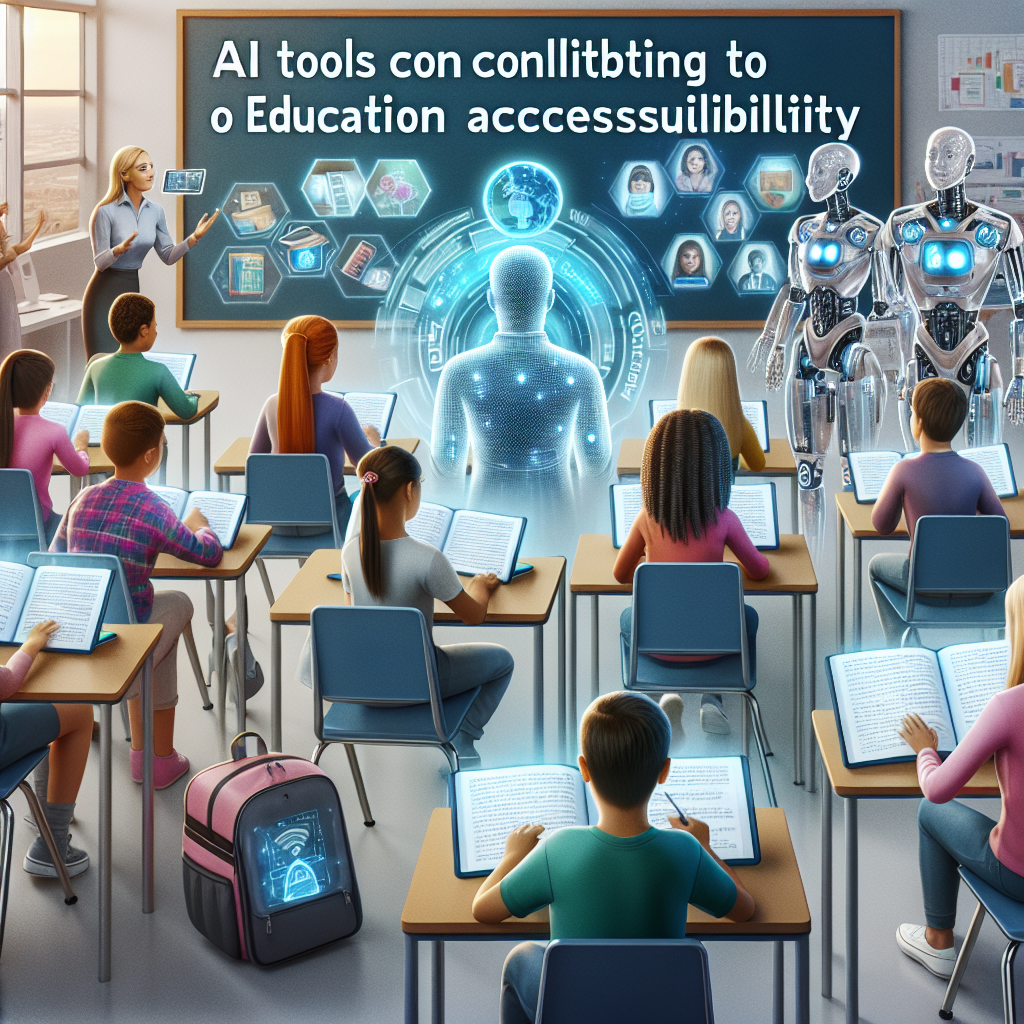
In recent years, the field of education has seen a significant shift towards the integration of artificial intelligence (AI) tools to enhance learning experiences and increase accessibility for students. AI technologies have the potential to revolutionize the way students learn and teachers instruct, making education more personalized, efficient, and inclusive for all learners. In this article, we will explore the impact of AI tools on education accessibility and discuss how these technologies are transforming the way we teach and learn.
AI tools have the potential to address a wide range of accessibility challenges in education. For students with disabilities, AI technologies can provide customized learning experiences that cater to their individual needs and preferences. For example, AI-powered adaptive learning platforms can adjust the pace and content of lessons based on a student’s learning style, ensuring that each student receives the support they need to succeed. Additionally, AI tools can provide real-time feedback and support to students, helping them to identify and address areas where they may be struggling.
Moreover, AI technologies can also help to bridge the gap in access to education for students in remote or underserved areas. By leveraging AI-powered virtual classrooms and online learning platforms, students can access quality education resources and instruction regardless of their geographic location. This is particularly important in the wake of the COVID-19 pandemic, which has forced many schools to shift to remote learning and highlighted the importance of digital tools in ensuring continuity of education.
One of the key ways in which AI tools are enhancing education accessibility is through the use of natural language processing (NLP) technology. NLP allows AI systems to understand and interpret human language, enabling them to communicate with students in a more natural and intuitive way. For students with language barriers or learning disabilities, NLP technology can help to simplify complex concepts and provide additional support in understanding course materials.
Another important application of AI in education accessibility is the use of predictive analytics to identify students who may be at risk of falling behind or dropping out. By analyzing student data and behavior patterns, AI systems can help teachers and administrators to intervene early and provide targeted support to students who may be struggling. This proactive approach can help to prevent students from slipping through the cracks and ensure that all learners have the opportunity to succeed.
In addition to enhancing accessibility for students, AI tools can also benefit teachers by streamlining administrative tasks and providing valuable insights into student performance. For example, AI-powered grading systems can automate the process of grading assignments and assessments, freeing up teachers to focus on more meaningful tasks such as lesson planning and student engagement. AI tools can also analyze student data to identify trends and patterns in learning outcomes, helping teachers to adjust their instruction to better meet the needs of their students.
Despite the numerous benefits of AI tools in education accessibility, there are also challenges and concerns that must be addressed. One of the main concerns is the potential for bias in AI systems, which can perpetuate inequalities and exacerbate existing disparities in education. It is important for developers and educators to be mindful of bias in AI algorithms and to take steps to ensure that these technologies are fair and inclusive for all students.
Another challenge is the digital divide, which refers to the gap between those who have access to technology and those who do not. In order to fully realize the potential of AI tools in education accessibility, it is essential to address issues of digital equity and ensure that all students have access to the necessary technology and resources to benefit from these tools. This may require investments in infrastructure, training for educators, and support for students and families to navigate the digital learning environment.
Overall, the impact of AI tools on education accessibility is significant and promising. These technologies have the potential to revolutionize the way we teach and learn, making education more personalized, efficient, and inclusive for all students. By leveraging AI tools to address accessibility challenges, we can ensure that every student has the opportunity to reach their full potential and succeed in school and beyond.
FAQs
Q: How are AI tools being used to enhance accessibility in education?
A: AI tools are being used to provide customized learning experiences for students with disabilities, bridge the gap in access to education for students in remote or underserved areas, and identify students who may be at risk of falling behind or dropping out.
Q: What are some challenges and concerns with using AI tools in education accessibility?
A: Some challenges include the potential for bias in AI systems, the digital divide, and the need to ensure that all students have access to the necessary technology and resources to benefit from these tools.
Q: How can educators and developers address issues of bias in AI algorithms?
A: Educators and developers can address issues of bias in AI algorithms by being mindful of bias in the design and implementation of these technologies, and taking steps to ensure that AI systems are fair and inclusive for all students.