
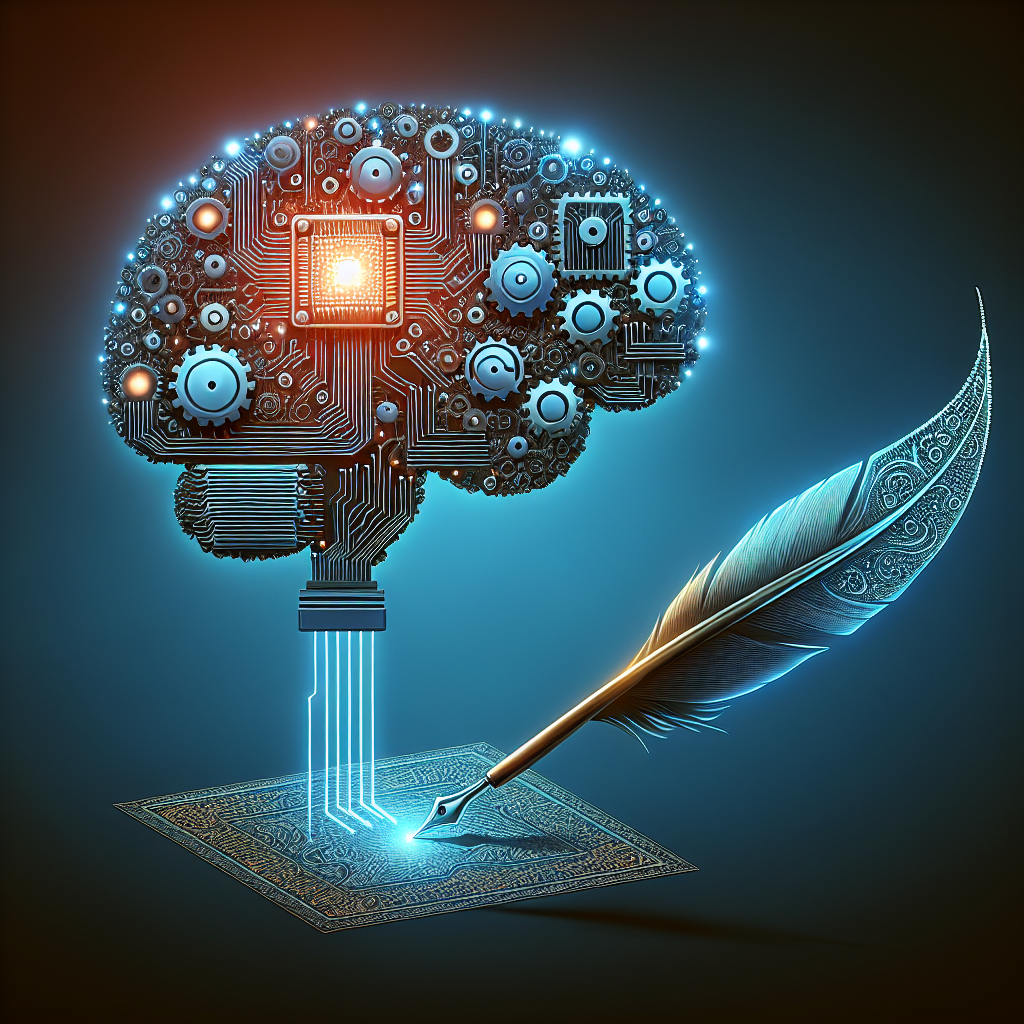
The Impact of AI Tools on Natural Language Generation
Natural language generation (NLG) is a subfield of artificial intelligence (AI) that focuses on creating human-like text from structured data. NLG technology has made significant advancements in recent years, thanks to the development of more sophisticated AI tools. These tools have had a profound impact on various industries, from marketing and customer service to healthcare and finance. In this article, we will explore the impact of AI tools on natural language generation and how they are revolutionizing the way we communicate and interact with machines.
Advancements in AI Tools
AI tools have evolved rapidly in the past decade, thanks to breakthroughs in deep learning and natural language processing (NLP). These tools can now generate coherent and contextually relevant text, making them ideal for applications like chatbots, virtual assistants, and automated content creation.
One of the key advancements in AI tools is the development of pre-trained language models like OpenAI’s GPT-3 and Google’s BERT. These models are trained on vast amounts of text data and can generate human-like text with minimal input. This has significantly improved the quality of natural language generation and made it more accessible to developers and businesses.
Another important advancement is the development of AI platforms like Hugging Face and OpenAI that provide easy-to-use APIs for natural language generation. These platforms allow developers to integrate AI tools into their applications without needing to build and train models from scratch. This has democratized access to NLG technology and accelerated its adoption across industries.
Impact on Industries
The impact of AI tools on natural language generation is evident in various industries, where they are being used to automate tasks, improve customer engagement, and enhance decision-making processes.
In marketing, AI tools are being used to create personalized content for targeted audiences. For example, e-commerce companies can use NLG technology to generate product descriptions, marketing emails, and social media posts tailored to individual customers’ preferences. This helps companies drive engagement and increase sales by delivering relevant and compelling content to their audiences.
In customer service, chatbots powered by AI tools are transforming the way companies interact with their customers. These chatbots can answer common queries, provide product recommendations, and even handle complex transactions. By automating routine tasks, companies can improve customer satisfaction and reduce response times, leading to a more efficient and cost-effective customer service experience.
In healthcare, AI tools are being used to generate patient reports, medical summaries, and research papers. This helps healthcare professionals save time on documentation and focus more on patient care. AI-powered virtual assistants can also provide patients with personalized health advice and recommendations, improving the overall quality of care.
In finance, AI tools are being used to generate financial reports, analyze market trends, and predict stock prices. This helps financial institutions make informed decisions and optimize their investment strategies. AI-powered chatbots can also provide customers with real-time financial advice and support, enhancing the customer experience and building trust with clients.
Frequently Asked Questions
Q: How accurate are AI-generated texts?
A: The accuracy of AI-generated texts depends on the quality of the data and the training of the AI model. Pre-trained language models like GPT-3 and BERT are highly accurate and can generate human-like text in a wide range of contexts. However, it is essential to fine-tune these models for specific tasks to improve accuracy further.
Q: Can AI tools replace human writers?
A: While AI tools have made significant advancements in natural language generation, they are not likely to replace human writers entirely. Human writers bring creativity, emotion, and context to their writing that AI tools struggle to replicate. AI tools are best used to assist human writers by automating routine tasks and generating initial drafts that can be refined and polished by human editors.
Q: How can businesses benefit from using AI tools for natural language generation?
A: Businesses can benefit from using AI tools for natural language generation in various ways, including automating content creation, improving customer engagement, and enhancing decision-making processes. By leveraging NLG technology, businesses can streamline their operations, increase efficiency, and deliver more personalized experiences to their customers.
Q: Are there any ethical concerns with the use of AI tools for natural language generation?
A: There are ethical concerns with the use of AI tools for natural language generation, including issues related to bias, privacy, and accountability. AI models can inadvertently perpetuate biases present in the training data, leading to discriminatory outcomes. It is essential for businesses to be transparent about how they use AI tools and ensure they are being used ethically and responsibly.
In conclusion, AI tools have had a significant impact on natural language generation, revolutionizing the way we communicate and interact with machines. From marketing and customer service to healthcare and finance, AI-powered NLG technology is transforming industries and driving innovation. As AI tools continue to evolve, we can expect to see even more exciting applications and advancements in natural language generation in the future.