
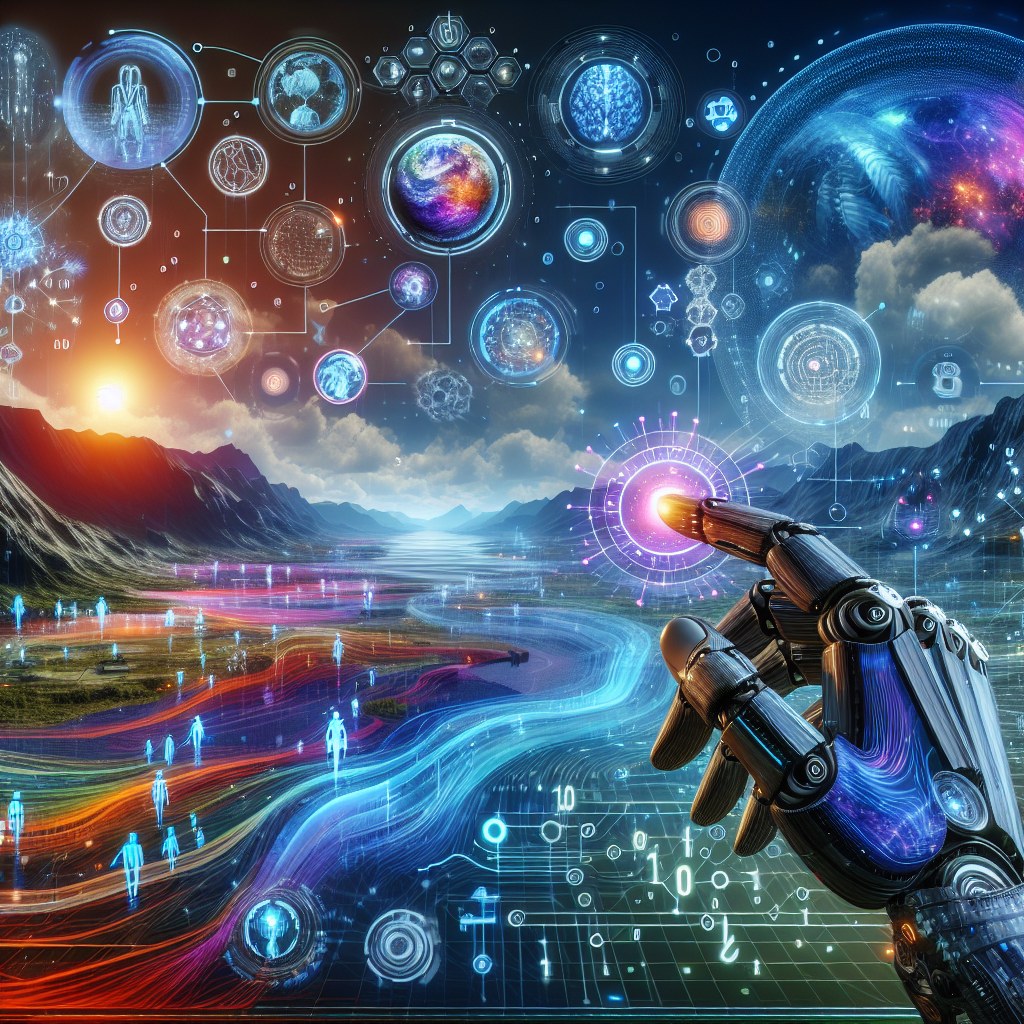
Artificial Intelligence (AI) and Virtual Reality (VR) are two of the most cutting-edge technologies in the world today. When combined, they have the potential to revolutionize the way we interact with virtual environments and the way we experience the world around us. In this article, we will explore the impact of AI tools on virtual reality and how they are shaping the future of immersive technology.
AI tools are powerful algorithms that can analyze data, learn from patterns, and make decisions without human intervention. In the context of virtual reality, AI can be used to enhance the user experience, improve the realism of virtual environments, and create more interactive and engaging experiences. Here are some ways in which AI tools are influencing virtual reality:
1. Personalized experiences: AI algorithms can analyze user behavior, preferences, and interactions in real-time to create personalized experiences in virtual reality. For example, AI can track eye movements, gestures, and facial expressions to understand how users are interacting with virtual environments and adjust the experience accordingly.
2. Realistic simulations: AI can be used to create realistic simulations in virtual reality by generating dynamic environments, characters, and interactions. For example, AI-powered algorithms can simulate realistic physics, weather conditions, and crowd behavior to create immersive and engaging experiences for users.
3. Intelligent avatars: AI can be used to create intelligent avatars in virtual reality that can interact with users in a natural and realistic way. For example, AI-powered avatars can understand and respond to voice commands, gestures, and facial expressions to create more engaging and interactive experiences.
4. Predictive analytics: AI algorithms can analyze user data and behavior to predict future interactions and preferences in virtual reality. For example, AI can analyze user interactions with virtual environments to predict which content users are most likely to engage with and recommend personalized experiences accordingly.
5. Enhanced visual and audio experiences: AI can be used to enhance the visual and audio experiences in virtual reality by generating realistic graphics, textures, and sound effects. For example, AI-powered algorithms can generate high-resolution textures, realistic lighting effects, and spatial audio to create more immersive and engaging experiences for users.
Overall, AI tools are revolutionizing the way we experience virtual reality by creating more personalized, realistic, and interactive experiences. As AI technology continues to advance, we can expect to see even more innovative applications of AI in virtual reality in the future.
FAQs:
1. How is AI used in virtual reality?
AI is used in virtual reality to enhance the user experience, improve the realism of virtual environments, and create more interactive and engaging experiences. AI algorithms can analyze user behavior, preferences, and interactions in real-time to create personalized experiences, generate realistic simulations, create intelligent avatars, and predict future interactions and preferences.
2. What are some examples of AI tools in virtual reality?
Some examples of AI tools in virtual reality include personalized experiences, realistic simulations, intelligent avatars, predictive analytics, and enhanced visual and audio experiences. AI algorithms can analyze user data and behavior to create personalized experiences, generate realistic environments and interactions, create intelligent avatars that can interact with users, predict future interactions and preferences, and enhance the visual and audio experiences in virtual reality.
3. What are the benefits of using AI in virtual reality?
The benefits of using AI in virtual reality include creating more personalized, realistic, and interactive experiences for users. AI algorithms can analyze user data and behavior to create personalized experiences, generate realistic environments and interactions, create intelligent avatars that can interact with users, predict future interactions and preferences, and enhance the visual and audio experiences in virtual reality.
4. How is AI shaping the future of virtual reality?
AI is shaping the future of virtual reality by creating more immersive, engaging, and interactive experiences for users. As AI technology continues to advance, we can expect to see even more innovative applications of AI in virtual reality, such as creating personalized experiences, generating realistic simulations, creating intelligent avatars, predicting future interactions and preferences, and enhancing the visual and audio experiences in virtual reality.