
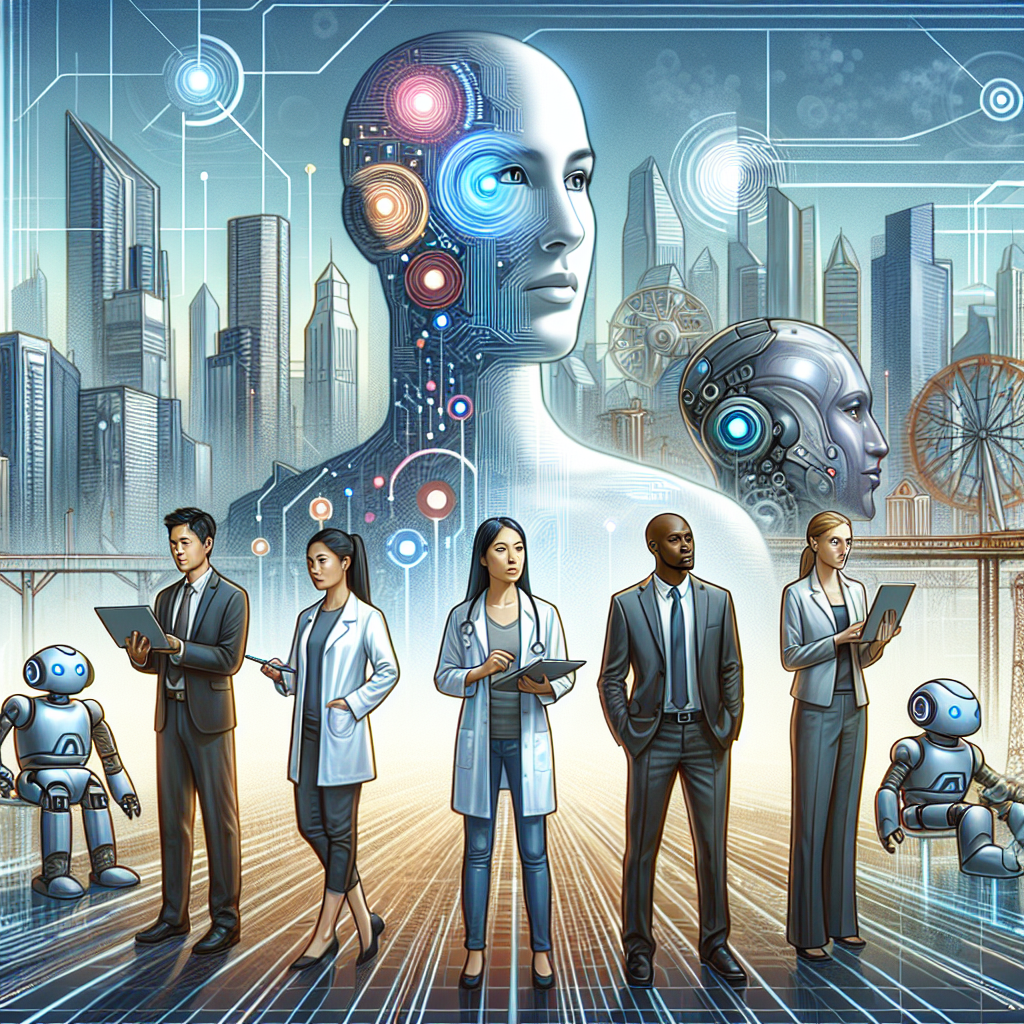
The Impact of Ethical AI on Job Displacement and Workforce Automation
Artificial Intelligence (AI) has become a ubiquitous presence in our society, with applications ranging from virtual assistants like Siri and Alexa to self-driving cars and automated customer service systems. As AI technologies continue to advance, there is growing concern about the impact they will have on jobs and the workforce. In particular, the rise of automation and AI-driven systems has raised fears of widespread job displacement and economic disruption.
One of the key concerns surrounding AI and automation is the potential for job displacement. As AI technologies become more advanced, they are increasingly capable of performing tasks that were previously the domain of human workers. For example, AI-powered chatbots can handle customer inquiries and support, while automated systems can process data and perform routine tasks more quickly and accurately than humans. This has led to fears that large numbers of jobs could be eliminated as companies adopt AI technologies to streamline their operations and cut costs.
In addition to job displacement, there are also concerns about the quality of the jobs that remain. As more tasks are automated, there is a risk that the jobs that remain will be lower-skilled and lower-paid, leading to greater income inequality and job insecurity for workers. There is also a concern that AI technologies could be used to monitor and control workers more closely, leading to increased stress and pressure in the workplace.
However, it is important to note that the impact of AI on jobs is not all negative. AI technologies have the potential to create new job opportunities in areas such as data analysis, machine learning, and AI development. In addition, AI can help to improve the efficiency and productivity of businesses, leading to economic growth and increased job creation in other sectors. For example, AI technologies can help companies to better understand their customers and target their marketing efforts more effectively, leading to increased sales and revenue.
Nevertheless, the potential for job displacement and workforce automation is a real concern that needs to be addressed. One way to mitigate the impact of AI on jobs is to focus on ethical AI development and deployment. Ethical AI refers to the development and use of AI technologies in a way that is fair, transparent, and accountable. This includes ensuring that AI systems are designed to enhance human capabilities rather than replace them, and that they are used in a way that respects the rights and dignity of workers.
By prioritizing ethical AI, companies can help to ensure that the benefits of AI technologies are shared more equitably among workers and that the negative impacts are minimized. This can include investing in training and retraining programs for workers whose jobs are at risk of being automated, as well as creating new job opportunities in emerging sectors that are driven by AI technologies.
In addition to ethical considerations, there are also practical steps that companies can take to minimize the impact of AI on jobs. This includes conducting thorough impact assessments before implementing AI technologies, consulting with workers and unions to address their concerns, and implementing measures to support workers who are affected by automation. For example, companies can provide severance packages, retraining programs, and job placement services to help workers transition to new roles.
FAQs:
Q: Will AI technologies completely replace human workers?
A: While AI technologies have the potential to automate many tasks currently performed by human workers, it is unlikely that they will completely replace humans in the workforce. AI is best suited for tasks that are repetitive, routine, and predictable, while human workers excel at tasks that require creativity, empathy, and critical thinking. In many cases, AI technologies will complement human workers rather than replace them, leading to new job opportunities and a more productive workforce.
Q: How can companies ensure that AI technologies are used ethically?
A: Companies can ensure that AI technologies are used ethically by prioritizing transparency, accountability, and fairness in their development and deployment. This includes conducting thorough impact assessments to assess the potential impact of AI on jobs and workers, consulting with workers and unions to address their concerns, and implementing measures to support workers who are affected by automation. Companies should also ensure that AI systems are designed to enhance human capabilities rather than replace them, and that they are used in a way that respects the rights and dignity of workers.
Q: What are some examples of ethical AI practices?
A: Some examples of ethical AI practices include ensuring that AI systems are transparent and explainable, so that users understand how they work and can trust their decisions. Companies can also ensure that AI technologies are fair and unbiased by eliminating biases in data and algorithms, and by regularly monitoring and auditing their systems for fairness. Additionally, companies can prioritize the privacy and security of user data when developing and deploying AI technologies, and ensure that their systems comply with relevant regulations and standards.
In conclusion, the impact of AI on job displacement and workforce automation is a complex and multifaceted issue that requires careful consideration and ethical decision-making. By prioritizing ethical AI development and deployment, companies can help to ensure that the benefits of AI technologies are shared more equitably among workers and that the negative impacts are minimized. By taking practical steps to support workers who are affected by automation, companies can help to create a more sustainable and inclusive workforce that embraces the opportunities of AI technologies while mitigating their risks.